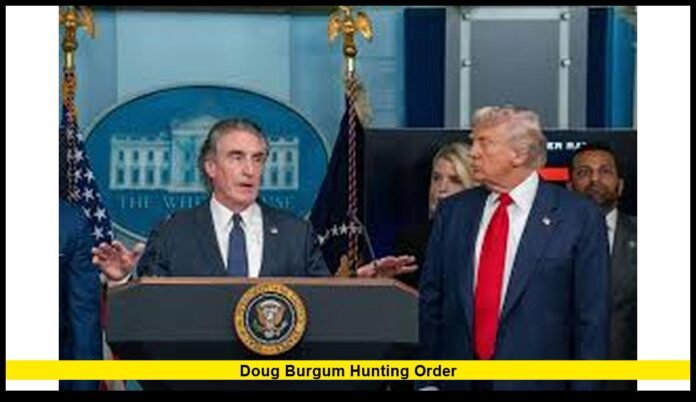

The political fight surrounding the doug burgum hunting order continues to intensify across the United States as federal agencies move forward with major changes affecting hunting and fishing access on public lands. The policy shift, directed by Interior Secretary Doug Burgum under the Trump administration, is already reshaping rules at national recreation areas, wildlife refuges, preserves, and other federally managed sites in 2026.
The order has quickly become one of the most controversial public lands issues of the year. Supporters say it restores access for hunters and anglers who help fund wildlife conservation programs nationwide. Critics argue the changes could weaken visitor protections, damage ecosystems, and alter the experience at popular federal recreation areas.
The policy now touches dozens of federal sites across the lower 48 states, placing hunting access at the center of a larger national conversation about conservation, recreation, wildlife management, and the future of America’s public lands.
Americans who care about outdoor recreation, national parks, conservation policy, or hunting traditions are closely watching what happens next as more federal sites review long-standing restrictions.
The Interior Department first issued Secretarial Order 3447 earlier this year. The directive instructed agencies under the department’s authority to identify and remove what officials called unnecessary regulatory barriers limiting hunting and fishing opportunities on federally managed lands and waters.
The policy also directed federal land managers to justify any restrictions they want to keep in place. According to the administration, hunting and fishing access should generally remain open unless a documented legal, environmental, or safety issue requires limits.
That language immediately sparked debate because the order affects lands overseen by agencies including:
- National Park Service
- U.S. Fish and Wildlife Service
- Bureau of Land Management
- Bureau of Reclamation
The administration argues the policy strengthens conservation efforts while supporting rural economies and expanding recreational access.
Why the Policy Became a National Story
The issue gained national attention after reports revealed that federal land managers had already started loosening restrictions at numerous recreation and conservation sites.
Several rule changes reported across different federal properties include:
- Removal of restrictions on certain tree stands
- Expanded use of hunting dogs in some areas
- Easier retrieval access for harvested animals
- Loosened rules involving trails and hunting zones
- Reduced equipment labeling requirements
- Expanded hunting opportunities in select recreation areas
Some local superintendent compendiums inside the National Park Service were also revised following the directive.
The changes have fueled strong reactions from both sides of the political spectrum.
Hunting advocates describe the order as a long-overdue correction that restores traditional outdoor access rights. Environmental organizations and park advocacy groups warn the policy could create conflicts between hunters and the millions of Americans who use federal lands for hiking, camping, photography, wildlife observation, and tourism.
Because many of the affected areas attract large visitor numbers each year, the debate quickly expanded beyond hunting communities.
How the Order Changes Federal Land Management
Historically, hunting access on federal lands depended heavily on local management decisions.
While hunting has long been legal in many national recreation areas, wildlife refuges, preserves, and certain park units, individual sites often maintained unique restrictions based on wildlife protection goals, visitor safety concerns, or environmental conditions.
Under the new Interior Department policy, the starting assumption has shifted toward keeping lands open for hunting and fishing unless restrictions are clearly justified.
That change represents a significant philosophical shift in federal land management.
Officials supporting the policy argue hunters and anglers have historically played a major role in conservation funding and wildlife stewardship. The administration says many previous restrictions became outdated over time or created inconsistent rules between neighboring federal and state lands.
Federal agencies are now reviewing regulations site by site.
Some parks and recreation areas have already implemented changes, while others continue internal evaluations.
Federal Sites Already Seeing Hunting Rule Changes
Several locations have emerged as major examples in the ongoing controversy.
Jean Lafitte National Historical Park and Preserve
Louisiana’s Jean Lafitte preserve became one of the most discussed sites after reports indicated that restrictions on alligator hunting had been loosened.
The preserve includes wetlands and marsh areas that support outdoor recreation and wildlife management activities.
Mississippi National River and Recreation Area
In Minnesota, changes involving tree stands and hunting access drew attention from both hunting groups and conservation advocates.
Reports also indicated that hunters may now clear vegetation in certain areas to create shooting lanes.
Cape Cod National Seashore
At the Massachusetts site, expanded hunting access and seasonal changes have become part of the broader federal review effort.
Big Cypress National Preserve
Changes in Florida reportedly removed some requirements related to wildlife reporting and equipment labeling for hunters operating in backcountry areas.
Lake Meredith National Recreation Area
Texas recreation sites also saw adjustments involving retrieval procedures and access rules tied to harvested game.
Federal officials continue to state that legally required safety and environmental protections remain in effect despite the policy changes.
Doug Burgum’s Growing Influence Inside the Interior Department
Doug Burgum has become one of the most influential figures shaping the Trump administration’s federal lands agenda.
Before becoming Interior Secretary, Burgum served as governor of North Dakota and built a reputation as a strong supporter of energy development, agriculture, and outdoor recreation access.
Since taking over the Interior Department in 2025, Burgum has promoted policies focused on:
- Energy production
- Expanded recreational access
- Reduced federal regulation
- Increased resource development
- State cooperation on land management
The hunting access order reflects many of those priorities.
In public remarks connected to the policy, Burgum emphasized that hunting and fishing remain important parts of American conservation traditions. Administration officials argue sportsmen contribute billions of dollars to wildlife programs through license fees, excise taxes, tourism spending, and conservation partnerships.
The administration also says increased public access can help boost participation in hunting and fishing activities, which have experienced long-term declines nationally.
Supporters Call the Order a Victory for Outdoor Traditions
Many hunting and fishing organizations praised the order shortly after it was announced.
Outdoor recreation groups supporting the changes argue federal agencies had imposed too many overlapping or unnecessary restrictions over the years. Some hunting advocates say inconsistent rules between federal and state lands created confusion for sportsmen.
Supporters also stress the financial importance of hunting and fishing activities.
Conservation programs in the United States rely heavily on revenue generated through:
- Hunting licenses
- Fishing licenses
- Excise taxes on firearms
- Ammunition taxes
- Outdoor sporting equipment purchases
- Waterfowl stamps
Many supporters argue expanding access could help increase participation rates and strengthen conservation funding in the future.
Some conservation organizations focused on habitat restoration also backed the policy direction, saying hunters and anglers remain among the nation’s strongest advocates for wildlife protection and land stewardship.
Environmental Groups Push Back
Environmental organizations and several former federal land managers strongly criticized the policy.
Critics argue national parks and protected recreation areas should prioritize conservation and public enjoyment over expanded hunting access.
Concerns raised by opponents include:
Visitor Safety Risks
Some critics question whether expanded hunting opportunities near trails or heavily visited recreation zones could increase safety concerns for hikers, campers, and tourists.
Wildlife and Habitat Impacts
Environmental advocates warn that reducing restrictions too aggressively may place additional pressure on sensitive wildlife habitats and ecosystems.
Reduced Local Oversight
Some former park officials argue local superintendents understand their sites best and should retain flexibility to impose rules based on environmental conditions and visitor use patterns.
Limited Public Review
Critics also say the speed of the policy rollout has left little room for public feedback or scientific review.
Several conservation organizations accused the administration of prioritizing political goals over long-established management practices developed through cooperation between scientists, wildlife experts, and local agencies.
The Political Battle Over Public Lands
The controversy surrounding the order reflects a much larger debate about how federal lands should be managed in the United States.
Public lands policy has become increasingly political over the last decade, especially involving issues such as:
- Oil and gas drilling
- Mining access
- Renewable energy development
- Wildlife conservation
- Recreation access
- Federal regulation
The Trump administration has consistently favored expanded resource access and reduced regulation across federal lands.
Supporters argue those policies create jobs, support rural economies, and improve public access.
Opponents say aggressive deregulation risks damaging ecosystems and undermining conservation goals.
The hunting access issue has become particularly visible because it affects places visited by millions of Americans every year.
How State Wildlife Agencies Could Gain More Influence
State wildlife agencies may play a larger role moving forward as federal agencies continue implementing the order.
The Interior Department has emphasized coordination with state and tribal wildlife authorities when reviewing hunting restrictions.
That cooperation could affect:
- Hunting seasons
- Species management
- Access rules
- Wildlife enforcement practices
- Conservation planning
Many states rely heavily on hunting participation to support wildlife management budgets. Because of that financial connection, state agencies closely monitor federal hunting access policies.
The administration believes expanded federal access could strengthen long-term conservation funding by encouraging greater participation in hunting and fishing activities.
Legal and Political Challenges May Be Coming
The policy changes could face additional legal scrutiny in the months ahead.
Environmental organizations may challenge certain rule adjustments in court if they believe federal agencies failed to follow required review procedures.
Congressional oversight could also intensify as lawmakers debate federal land priorities.
Several Democratic lawmakers have already criticized broader Trump administration efforts involving public lands, energy development, and environmental regulation.
Republican lawmakers largely support Burgum’s push for expanded outdoor recreation access and reduced federal restrictions.
Because the policy affects multiple agencies and dozens of federal sites, the issue could remain part of national political debates throughout 2026.
Why the Issue Matters Beyond Hunting Communities
Although the order focuses on hunting and fishing access, its broader impact reaches millions of Americans who use federal lands for many different purposes.
Federal recreation areas support activities including:
- Hiking
- Camping
- Wildlife photography
- Kayaking
- Birdwatching
- Family recreation
- Tourism
- Educational programs
Communities located near national parks and recreation areas also depend heavily on tourism revenue.
As more restrictions are revised, local economies, tourism patterns, and visitor experiences could all be affected.
The issue has therefore evolved into a larger debate about balancing recreation, conservation, wildlife management, and public access across America’s federal lands.
A Defining Public Lands Debate for 2026
The growing attention surrounding the doug burgum hunting order shows how deeply divided Americans remain over the future of public land management.
Supporters see the policy as a restoration of outdoor traditions and public access rights.
Critics believe it risks weakening environmental protections and changing the purpose of federally protected recreation areas.
With more sites continuing to review local regulations, additional rule changes are expected throughout the year.
The national conversation surrounding hunting access, conservation, and federal land management appears far from over as 2026 continues.