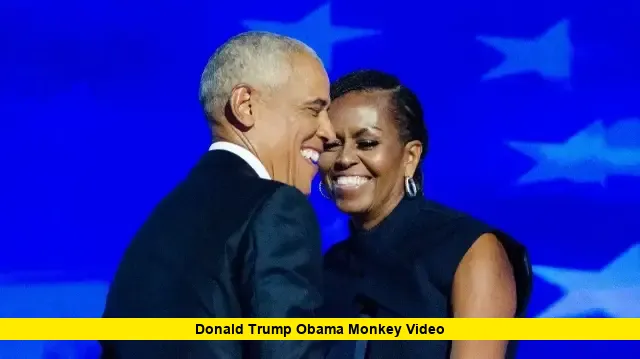

In a move that has gripped national attention, a Donald Trump Obama monkey video posted on the president’s social media platform has sparked fierce criticism from leaders across the political landscape, civil rights figures, and everyday Americans. The clip, which included a brief depiction of former President Barack Obama and former First Lady Michelle Obama animated as monkeys, was shared late Thursday night and removed by Friday afternoon amid an escalating backlash.
The episode has reignited debates about political speech, racial depictions in public discourse, and accountability in presidential communication. It has unfolded amid Black History Month, intensifying reactions from communities and public figures who see the imagery as offensive and rooted in historical racial stereotypes. The White House later said the post was made in error by a staffer, and the video was deleted amid mounting pressure. Despite that action, the incident has continued to reverberate across Washington and social media, raising serious questions about judgment, oversight, and the impact of digital political communication.
Initial Posting and Content of the Video
Late Thursday evening, the president’s Truth Social account shared a roughly one-minute video that combined misleading election-related assertions with visual sequences involving political figures. Near the end of the clip, a quick frame showed Barack and Michelle Obama’s faces superimposed onto animated monkey bodies for a fleeting moment, with the song “The Lion Sleeps Tonight” playing in the background. The optics of this brief sequence set off widespread alarm due to the long, painful history of racist imagery equating Black people with animals in the United States.
The video’s primary content focused on debunked claims tied to the 2020 presidential election, asserting falsely that voting systems and officials manipulated results. The Obamas’ appearance was not the primary theme of the clip but was enough to overshadow the rest of the message once it became public.
White House Reaction and Retraction
Within hours after the post went live, the White House faced an intense barrage of criticism. Initially, press officials sought to deflect outrage, suggesting that the video was part of an internet “meme” portraying President Trump as the “King of the Jungle” alongside caricatures of political opponents as various wild animals. The explanation was widely dismissed by critics who pointed out that the imagery and context were clearly racially loaded and insensitive.
By midday Friday, the post had been removed from the president’s account. White House officials acknowledged that the video was uploaded by an unnamed staffer without proper review, and that it should not have been posted. Despite this acknowledgment, the incident marked a rare instance of the administration admitting that a troublesome communication had been posted in error, and it underscored ongoing concerns about content oversight.
Political Leaders Respond Across Party Lines
Reaction to the video cut sharply across the political spectrum, reflecting deep unease about its content. Key Republican voices, including Senator Tim Scott — the only Black Republican in the Senate — openly rebuked the post, describing the imagery as blatantly racist and urging its removal. Other Republican lawmakers echoed Scott’s sentiment, with several emphasizing that association of Black figures with animalistic imagery has historically been used as a tool of racial contempt and division.
Democratic leaders responded with even stronger language, condemning the post as divisive and racially insensitive. They underscored the duty of the nation’s leaders to promote unity and respect, particularly during Black History Month when the country reflects on the contributions and struggles of Black Americans. Civil rights groups amplified these concerns, stressing that the imagery evoked harmful stereotypes that have long been used to demean Black individuals in American culture.
Because Barack Obama was the nation’s first Black president and Michelle Obama its first Black first lady — both trailblazers in public service and civic engagement — the depiction struck a particularly sensitive nerve among observers from all walks of life.
Historical and Cultural Context of Racial Imagery
The backlash cannot be divorced from the broader context of American history, where equating Black people with primates has been a painful and persistent form of racist portrayal. This trope dates back centuries and has been deployed to dehumanize Black individuals, justify discriminatory systems, and prop up racist ideologies. These associations are rooted in pseudoscientific beliefs and have long been condemned as harmful and abhorrent.
Consequently, the appearance of the Obamas — two of the most prominent Black figures in modern American history — in such a portrayal immediately resonated with that historical pain, provoking alarm and disapproval that cut across party and demographic lines.
Social Media’s Role in Political Messaging
This episode has once again highlighted the formidable influence of social media in American politics. Political leaders increasingly rely on digital platforms to communicate directly with supporters, bypass traditional media gatekeepers, and shape public narratives. At the same time, AI-generated content and user-generated memes can spread rapidly, often without sufficient oversight or contextual grounding.
Experts on digital communication and political ethics say this incident reflects a broader challenge: ensuring that powerful voices in public office maintain standards of responsibility and sensitivity when engaging with visual media, particularly when that content can be easily manipulated or misinterpreted.
The case also raises questions about editorial controls and decision-making processes for official presidential accounts and communications staff. The fact that an unvetted video could be posted from the president’s account suggests gaps in oversight that may warrant review.
Public Debate and Broader Discourse
Beyond the reactions from political leaders and civil rights organizations, the episode has sparked broader public debate. Citizens, commentators, and civic groups have taken to social platforms to discuss the implications for national dialogue, racial respect, and political civility. Many commenters stressed that while political disagreements are natural in a democratic society, communication from the highest office carries special weight and should not amplify divisive or racially insensitive tropes.
Some discussions have also connected this incident to ongoing concerns about misinformation online, the role of AI in shaping political narratives, and the responsibilities of public figures in steering discourse toward constructive engagement rather than hostility.
Strategic Implications for the Trump Administration
The controversy comes at a politically sensitive time, with the Trump administration navigating ongoing partisan tensions, policy debates, and efforts to solidify support among various demographic groups. This incident could pose challenges for the administration’s efforts to broaden its appeal, particularly among voters who view racial equity and respectful communication as essential values.
Political strategists say the event may prompt internal discussions within the administration about how social media content is vetted and approved. It may also influence how future messages are crafted and disseminated to avoid similar missteps.
Obama Camp Remains Silent Publicly
As of now, neither Barack nor Michelle Obama has issued a public statement about the video. The former president and first lady have largely stayed focused on their post-White House initiatives, which emphasize community engagement, leadership development, and national unity. Their silence on this particular event has left broader interpretation of the controversy largely in the hands of public commentators and political figures.
Lessons and Looking Forward
This episode has prompted reflection and dialogue about the power of political imagery, the boundaries of public communication, and the sensitivities inherent in a diverse society. For many observers, it serves as a case study in why leaders must exercise caution and thoughtfulness when using digital platforms to communicate messages to the public. It also underscores how quickly content shared online can ignite widespread controversy and overshadow broader policy discussions.
In light of this incident, conversations about racial respect, political accountability, and social media governance are likely to continue in the weeks ahead.