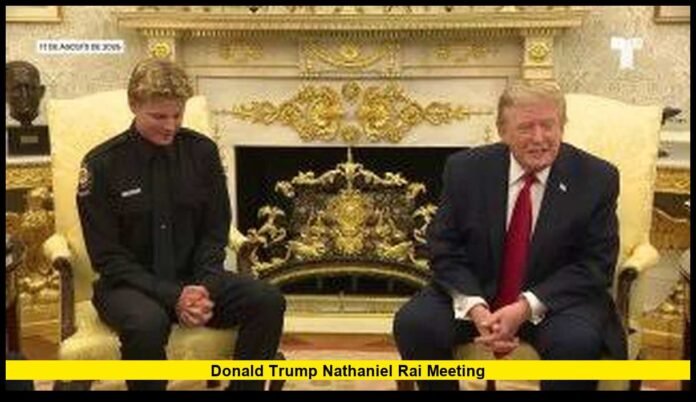

The donald trump nathaniel rai meeting took place at the White House on August 17, 2026, bringing President Donald Trump together with 10-year-old Nathaniel Rai and Ryder Williams, the 16-year-old California State Parks lifeguard who rescued the boy from dangerous surf in Santa Cruz.
The Oval Office gathering followed a dramatic July 25 rescue at Seabright State Beach. Williams was caught on video battling powerful waves while holding onto Nathaniel after the child was swept into deeper water. The footage later spread widely online and drew Trump’s attention.
During Monday’s meeting, Trump praised Williams for his courage and recognized Nathaniel for surviving the frightening ordeal. Williams’ family, Nathaniel’s family and fellow lifeguard Aaron Bohnen also joined the White House visit.
The event gave the two young people a chance to meet again after their lives became connected by an emergency that unfolded on a California beach.
Why Donald Trump Invited Nathaniel Rai and Ryder Williams
The White House visit grew out of a rescue that quickly became a national story.
On July 25, Williams was working at Seabright State Beach in Santa Cruz when he noticed a child lose his footing near the waterline. The boy was Nathaniel Rai, who was visiting California with his family.
The ocean conditions were especially dangerous that day. A significant swell event and high surf advisory were in effect. Waves generally reached several feet, with some sets estimated to approach 10 feet.
Williams recognized the danger almost immediately.
He radioed the emergency, left his radio and sunglasses at his tower and moved toward the child. He carried his rescue equipment and entered the water.
Nathaniel had already been pulled farther away from shore.
California State Parks said the boy was swept approximately 15 yards into the ocean before Williams reached him.
What happened next was captured by a bystander.
The video showed Williams holding onto Nathaniel as powerful waves repeatedly crashed over both of them. The teenager struggled to move the boy through the surf while keeping him secure.
The footage eventually reached Trump.
The president publicly praised Williams and said the teenager deserved recognition for what he had done.
That led to the invitation for the young lifeguard to visit the White House.
What Happened During the August 17 White House Visit
Trump met Williams and Nathaniel in the Oval Office on Monday.
The setting was dramatically different from the beach where the two first encountered one another.
Instead of fighting through waves, Williams sat beside Trump as the president discussed the rescue. Nathaniel and other members of both families were also present.
Trump praised Williams’ actions and described the rescue as extraordinary.
He recalled watching the video and being struck by what he saw. The president said he wanted to watch it again because the situation appeared so dangerous.
The meeting also gave Trump an opportunity to speak directly with Nathaniel.
The president congratulated the boy for making it through the incident and praised the composure displayed during the emergency.
The gathering included Aaron Bohnen, the lifeguard who entered the water to help Williams.
That detail is important because the rescue was not the work of Williams alone. His actions were central to the dramatic footage, but Bohnen also played a direct role in bringing Nathaniel safely back to shore.
How Nathaniel Rai Was Pulled Into the Ocean
Nathaniel’s ordeal began in shallow water.
Williams later explained that he was making a safety contact near the waterline when he noticed the child lose his footing in ankle-deep water.
The situation changed within seconds.
The ocean pulled Nathaniel away from the shoreline, sending him into much deeper water. Williams estimated that the boy was about 20 yards from his assigned tower when he saw the problem.
The lifeguard immediately called the situation over the radio.
He then moved toward Nathaniel.
Williams entered the water with his rescue equipment, but the conditions made the rescue extremely difficult.
After the first wave hit, Williams said he could not pull Nathaniel toward shore because the boy was limp and the force of the water was pushing against them.
More waves followed.
At that point, Williams continued holding onto Nathaniel while waiting for additional assistance.
Bohnen eventually entered the surf.
Together, the lifeguards worked to get Nathaniel back toward the beach.
Several bystanders also attempted to enter the water. Williams told them to stay back because the conditions were too dangerous.
The lifeguards eventually brought Nathaniel safely to shore.
Nathaniel Lost Consciousness During the Rescue
One of the most serious details to emerge after the incident was that Nathaniel lost consciousness.
His father, Sumit Rai, later described the terrifying experience in interviews.
Rai was not at the beach when the rescue occurred. He was in Dallas when he learned what had happened to his son.
Nathaniel told his father that he had drowned and gone unconscious.
The family later saw the rescue footage.
For Rai, watching the video provided a much clearer picture of how close his son had come to a far worse outcome.
The footage showed Williams repeatedly fighting through waves while keeping hold of Nathaniel.
Rai expressed deep gratitude to Williams and the other people involved.
The boy was medically evaluated after the rescue and did not suffer serious physical injuries.
That outcome became one of the most important parts of the story.
Ryder Williams’ Response to the Praise
Despite the enormous attention, Williams has remained focused on his role as a lifeguard.
He has described the rescue as part of his responsibility rather than something that should make him a celebrity.
Williams said his training helped him respond during the emergency.
When conditions became dangerous, he relied on the procedures he had learned as a lifeguard.
His comments after the rescue reflected that mindset.
He credited his training and fellow lifeguards rather than portraying himself as acting alone.
That attitude also shaped his response to the national recognition.
The teenager returned to his lifeguard duties after the rescue and continued working.
He has also expressed interest in becoming a firefighter in the future.
His actions at Seabright Beach have now become an important part of his public story as he considers that career path.
The Role of Aaron Bohnen
Aaron Bohnen’s role has also remained part of the confirmed account of the rescue.
Williams reached Nathaniel first.
However, the teenager faced extremely difficult conditions while trying to move the unconscious boy back toward land.
Bohnen entered the water to provide assistance.
The two lifeguards then worked together to complete the rescue.
That teamwork became especially important because the ocean was producing powerful waves.
The rescue video made Williams’ individual effort highly visible, but the successful outcome depended on additional assistance.
Bohnen was present at the White House meeting, giving him an opportunity to join the recognition alongside Williams and the Rai family.
The Video That Brought National Attention
The rescue might have remained a local Santa Cruz story if it had not been recorded.
A bystander captured video of Williams reaching Nathaniel and holding onto him in the surf.
The footage showed the scale of the challenge.
Large waves repeatedly broke over the pair. At points, Williams and Nathaniel disappeared beneath the water before resurfacing.
Williams continued to maintain his grip.
The video was shared widely across social media platforms and television news programs.
It eventually reached Trump.
The president’s public reaction helped push the story even further into the national spotlight.
Trump announced that Williams should receive a major civilian honor and invited him to Washington.
That announcement changed the trajectory of the story.
What began as a rescue at a California beach became a White House event.
What Nathaniel’s Father Has Said About Williams
Sumit Rai has repeatedly expressed gratitude toward Williams.
For Rai, the central issue is simple: his son survived because trained lifeguards were present and acted quickly.
He has described Williams’ decision to enter the water as an enormous act of courage.
Rai also recognized the danger faced by the teenager.
Williams was not entering calm water to perform a routine rescue.
He was moving into powerful surf while trying to secure an unconscious child.
Rai’s comments helped explain why the video affected viewers so strongly.
People could see the danger, but the father understood the potential consequences on a deeply personal level.
The White House meeting therefore had special meaning for Nathaniel’s family.
It allowed them to meet the teenager who became central to their son’s survival and to see him receive recognition from the president.
Why the Rescue Was So Difficult
Several factors made the Seabright Beach incident unusually dangerous.
The first was the size and force of the surf.
A high surf advisory was active, and waves generally measured several feet, with larger sets reaching much greater heights.
The second factor was Nathaniel’s condition.
Once Williams reached him, the child was not able to assist with the rescue.
Williams had to keep control of Nathaniel while dealing with the same waves that had pulled the boy away from shore.
The third factor was the distance from the beach.
Nathaniel had been swept roughly 15 yards into the ocean before Williams reached him.
The rescue therefore required the lifeguard to move through dangerous water before he could even begin bringing the child back.
These details explain why the video drew such a strong response.
Trump’s Recognition Went Beyond a Simple Visit
Trump’s interest in the rescue began before the White House gathering.
After viewing the footage, the president publicly praised Williams and said the teenager deserved significant recognition.
Trump later followed through by hosting the young lifeguard.
The August 17 meeting confirmed that the invitation had become an actual White House event.
The president also praised the people who trained Williams and helped him develop the skills needed for lifeguarding.
That point was significant because Williams himself has repeatedly credited his training.
The rescue required more than courage.
It required recognizing the emergency, communicating the situation, entering the surf with appropriate equipment and maintaining control of the victim while additional help arrived.
Williams’ training allowed him to respond quickly.
Nathaniel and Williams Meet Again
The most meaningful part of the White House gathering was the reunion between Nathaniel and Williams.
Their first meeting happened during a crisis.
Nathaniel was in the ocean and needed immediate assistance.
Williams was responding to an emergency that required him to put his training into action.
Their second meeting occurred under entirely different circumstances.
They were inside the Oval Office with the president, their families and other guests.
The contrast between the two moments is striking.
In July, Williams was fighting to get Nathaniel out of the surf.
In August, both boys were safely inside the White House discussing the event that had brought them there.
For Nathaniel’s family, the meeting offered an opportunity to express appreciation in a setting that would have been difficult to imagine before the rescue.
The White House Visit and the Bigger Message
The recognition also drew attention to the importance of lifeguard training.
Williams’ story demonstrates how quickly an apparently ordinary beach outing can turn into an emergency.
Nathaniel was initially in ankle-deep water.
Within moments, he had been pulled far enough offshore to require a rescue.
The incident showed why beach safety warnings matter and why swimmers should pay close attention to ocean conditions.
It also demonstrated the importance of trained professionals.
Williams did not enter the water blindly.
He reported the emergency, grabbed his rescue equipment and moved toward the child.
When the conditions became difficult, he maintained control until additional help arrived.
That combination of preparation and courage ultimately helped save Nathaniel.
What Happened After the Rescue
The attention surrounding Williams did not end when Nathaniel reached shore.
The video continued circulating online.
Williams later spoke publicly about the rescue through California State Parks and emphasized his appreciation for the opportunity to return Nathaniel safely to his family.
His comments reflected the professional attitude that has characterized his response throughout the story.
Nathaniel’s family also continued to discuss the experience.
His father remained outspoken about his gratitude for Williams and the other rescuers.
The national attention eventually reached entertainment circles as well, with the cast of the upcoming Baywatch reboot recognizing Williams for his actions.
Trump’s invitation then provided the most prominent recognition to date.
The August 17 White House event brought the story to its latest major milestone.
Latest Update on the White House Meeting
As of August 18, 2026, the White House meeting has taken place.
Trump met Williams and Nathaniel in the Oval Office on August 17.
The two families attended, and Aaron Bohnen was also present.
Trump praised Williams for his actions and recognized Nathaniel after the boy survived the dangerous July rescue.
The meeting followed Trump’s earlier public decision to honor Williams after seeing the viral rescue footage.
There is now a clear connection between the July emergency and the August White House gathering.
A 10-year-old boy was swept into dangerous surf.
A 16-year-old lifeguard responded.
Another lifeguard helped complete the rescue.
Video brought national attention to the incident.
Trump then invited Williams and the Rai family to the White House.
The result was a reunion between the child who was rescued and the teenager who helped bring him safely back to shore.
The Lasting Significance of the Meeting
The White House gathering is unlikely to be remembered simply as another presidential photo opportunity.
At its center was a real-life rescue involving two young people whose lives were changed by an unexpected moment at the California coast.
Nathaniel survived.
Williams received national recognition for acting when the situation became dangerous.
Bohnen’s contribution was also acknowledged.
For the Rai family, the event provided a chance to see their son’s rescuer honored in person.
For Williams, it represented recognition from the nation’s highest office after an act that began with a routine lifeguard shift.
The story also offers a straightforward reminder of how quickly ocean conditions can change.
A child can lose his footing in shallow water and be swept into a dangerous current within seconds.
Trained lifeguards can make the difference between a frightening incident and a tragedy.
That is ultimately what makes the story of Nathaniel Rai and Ryder Williams so compelling.
The latest White House reunion gave Nathaniel Rai and Ryder Williams a remarkable chance to meet again in safety, turning a terrifying California beach rescue into a story of courage, gratitude and recognition.
What do you think about the White House recognition for Ryder Williams and Nathaniel Rai? Share your thoughts and stay informed as new details emerge.