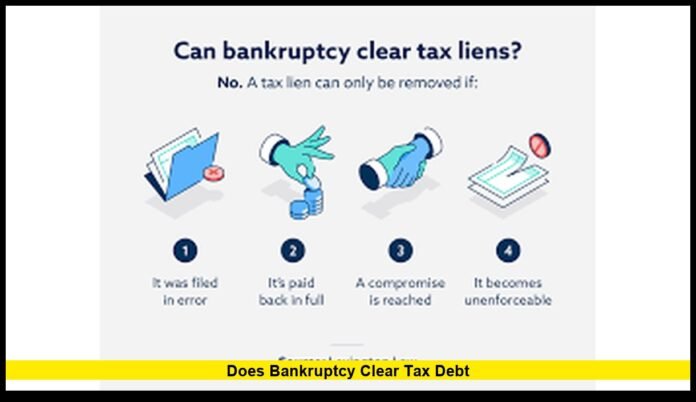

Does bankruptcy clear tax debt? Millions of U.S. taxpayers ask this every year when IRS notices pile up. The answer in 2025 remains straightforward: yes, bankruptcy can eliminate certain older income tax debts completely, but only if they satisfy precise federal requirements. Many other tax obligations survive the process no matter what chapter you file. Knowing the difference can save time, money, and unnecessary stress.
Back taxes create heavy burdens. Collection actions disrupt daily life through wage garnishments, bank levies, and constant calls. Bankruptcy provides powerful tools to stop those actions and, in the right circumstances, erase qualifying tax liabilities forever. The rules come from the U.S. Bankruptcy Code and IRS guidelines that have stayed consistent through recent years.
Why Tax Debt Gets Special Treatment
Congress treats tax claims differently from regular consumer debts. Government revenue depends on steady collection, so lawmakers built safeguards into the system. These protections ensure recent taxes and certain types get paid while allowing honest taxpayers a genuine fresh start.
The automatic stay takes effect the moment you file. This court order forces the IRS to halt all collection activity immediately. No more levies, liens, or offset of refunds during the case. That protection alone brings relief to many households.
Courts then classify each tax debt as priority or non-priority. Priority taxes must be paid in full through a repayment plan. Non-priority taxes may qualify for partial payment or complete discharge.
The Critical 3-2-240 Test for Income Tax Discharge
Income taxes stand alone as the main category that can disappear in bankruptcy. The deciding factor is the 3-2-240 test. Every condition must be met.
The three-year rule measures from the date the return was due, including valid extensions. The due date must fall at least three full years before your bankruptcy filing.
The two-year rule requires that you actually filed the return at least two years prior to the petition date. Late returns start the clock from the filing date, not the original due date.
The 240-day rule counts from the IRS assessment date—the day the agency officially records the balance due. At least 240 days must pass before you file.
Satisfy all three elements and the income tax debt, along with related interest and penalties, gets discharged. Miss any single part and the entire balance remains owed.
| Condition | Requirement | Example for a December 2025 Filing |
|---|---|---|
| Three-Year Rule | Return due ≥ 3 years ago | 2021 return (due April 2022) qualifies |
| Two-Year Rule | Return actually filed ≥ 2 years ago | Filed on or before December 2023 |
| 240-Day Rule | IRS assessment ≥ 240 days ago | Assessed on or before April 2025 |
Taxes That Qualify and Taxes That Never Do
Only federal and state income taxes can potentially qualify when the 3-2-240 test passes. Penalties tied to those same taxes discharge as well if they stem from honest mistakes.
Fraud penalties never go away. Courts block discharge if the IRS proves willful evasion or false statements on returns.
Payroll taxes withheld from employees remain completely non-dischargeable. These trust fund amounts belong to workers, not the business owner.
Sales taxes collected from customers carry the same protection. States view them as funds held in trust.
Excise taxes on alcohol, tobacco, or fuel almost always survive bankruptcy.
Property taxes assessed within one year of filing become priority claims.
Choosing Between Chapter 7 and Chapter 13
Chapter 7 delivers the quickest results. Courts liquidate non-exempt assets to pay creditors, then discharge remaining eligible debts. Qualifying income taxes vanish entirely with no repayment required. Cases typically close in four to six months.
The means test determines eligibility. Your household income must fall below your state’s median or pass a detailed expense review. Inflation adjustments in 2025 raised those median figures, allowing more people to qualify.
Chapter 13 creates a court-approved repayment plan lasting three to five years. You keep all assets while making affordable monthly payments.
Priority tax debts get paid 100% through the plan. Older, dischargeable income taxes join the unsecured creditor pool and often receive only partial payment before the balance disappears at completion.
Higher debt limits that took effect in 2025 expanded Chapter 13 access. Unsecured debts now cap at $526,700, while secured debts reach $1,580,125.
Recent 2025 Changes Affecting Tax Cases
Annual inflation adjustments arrived in April 2025. Key increases include:
- Higher income thresholds for the Chapter 7 means test across all states
- Larger homestead and vehicle exemptions in many jurisdictions
- Elevated debt ceilings for Chapter 13 eligibility
These updates help middle-income families carrying significant tax burdens file more easily. The fundamental rules for discharging taxes stayed identical to prior years.
Mistakes That Ruin Tax Discharge Opportunities
Filing too early tops the list. Rushing before the 3-2-240 periods fully expire guarantees the debt survives.
Skipping required tax returns blocks relief. You must file all delinquent returns, even late ones, and wait two years from the filing date.
Missing current-year tax payments during bankruptcy risks case dismissal. Courts demand ongoing compliance.
Trying to discharge fraud penalties or trust fund taxes wastes effort. Those categories never qualify.
Practical Steps Before Filing
Gather complete IRS transcripts showing filing dates, due dates, and assessment dates.
Run each tax year through the 3-2-240 test yourself first.
Meet with a bankruptcy attorney who handles tax discharge cases regularly.
File any missing returns immediately to start the two-year clock.
Continue making current tax payments and filing on time.
Consider IRS alternatives first, such as installment agreements or offers in compromise.
What Happens After Successful Discharge
The IRS can never collect on discharged taxes again. Collection letters stop permanently.
Credit reports show the bankruptcy for seven to ten years, but scores often begin climbing within 12 to 24 months.
New credit becomes available sooner than most expect. Secured credit cards and credit-builder loans speed recovery.
Financial peace returns. Families rebuild savings and plan for the future without the shadow of old tax debts.
Alternative Ways to Handle Tax Debt
Installment agreements let you pay over time with manageable monthly amounts.
Offers in compromise settle for less than owed if you prove genuine hardship.
Penalty abatement removes certain charges for reasonable cause.
Currently not collectible status pauses collection when income barely covers living expenses.
Innocent spouse relief protects one partner from joint liability in specific situations.
Real Scenarios from 2025 Filers
A nurse owed $32,000 in 2020 income taxes. All timing rules cleared. Chapter 7 discharged the full amount, ending years of garnishment.
A contractor faced $45,000 in recent payroll taxes. Non-dischargeable. He used Chapter 13 to pay over five years while keeping his business running.
A couple combined $18,000 old income taxes with credit card debt. Chapter 7 wiped both categories clean after passing the means test.
A retiree on fixed income owed mixed years. Chapter 13 paid priority portions while discharging the rest and protecting her home.
Building Stronger Finances Moving Forward
Create realistic budgets that include tax withholding adjustments.
Build emergency savings to avoid future shortfalls.
Use retirement accounts wisely—contributions reduce taxable income.
Monitor credit regularly and dispute errors promptly.
Learn from the experience. Most successful filers never return to bankruptcy court.
Frequently Asked Questions
Does bankruptcy clear all IRS debt? No. Only older income taxes that pass the 3-2-240 test qualify.
What happens to interest and penalties? They discharge along with the principal when the tax qualifies.
Can self-employment taxes be discharged? Only the income tax portion. The trust fund part never discharges.
Will filing stop wage garnishment right away? Yes. The automatic stay begins the day you file.
Do state taxes follow the same rules? Most states align closely with federal guidelines.
What if I owe taxes for the current year? You must file and pay on time or risk losing bankruptcy protections.
How soon can I expect relief? Collection stops immediately. Full discharge arrives in months for Chapter 7 or years for Chapter 13.
What’s weighing on you most about tax debt right now? Share your thoughts in the comments—we’re here to help.