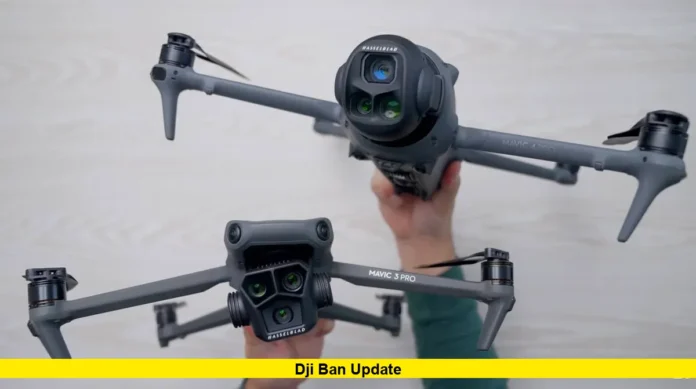

In the latest DJI ban update, U.S. drone owners and businesses face a critical moment: new restrictions could take effect by December 23, 2025, if required federal security review work remains incomplete. Currently, pilots and professionals can still buy, fly and use DJI equipment in the United States—but a looming deadline means that status may change fast. With an audit still uninitiated, this update matters for everyone in the drone ecosystem.
What the current status really is
For now, DJI drones remain legal in the U.S. market. Retailers still list key models, and hobbyists continue to fly without fresh regulatory barriers. Yet beneath this surface, significant pressure is building.
By law, a designated U.S. national-security agency must finish a formal audit assessing the company’s hardware, software and data flow practices. The deadline of December 23, 2025 is fixed. If the review is not done—or the company fails to clear it—then new DJI models will no longer receive the required authorization to be imported or sold in the United States.
What this means: even though everything appears normal today, the underlying regulatory machinery is on a timer. The audit acts as the trigger. As of now, no public announcement confirms that the review has started. This lack of progress places DJI and the U.S. drone ecosystem in a state of “wait and see.”
Key regulatory mechanisms and how they work
– Under the current legal framework, if DJI is added to a regulatory “Covered List,” the Federal Communications Commission (FCC) can block new product authorizations and imports.
– In late 2025 the FCC voted to give itself broader power to retroactively ban previously-approved devices if a manufacturer is deemed a security risk.
– The audit deadline is non-negotiable under the terms of the authorization: if no agency completes the review, the company will be added automatically—regardless of findings or litigation.
– Once that happens, new drones from DJI cannot receive the necessary approvals to operate on U.S. communication infrastructure; importation and sales would halt.
In short, the company is still operational today, but the regulatory safety net is shrinking. The audit acts like a gate-keeper: pass it and keep flying; miss it and new gear gets locked out.
What could change after December 23, 2025
If the deadline passes with no audit completion, the immediate effect would focus on new models. Existing DJI drones would still be legal to fly for now, but the ripple effects across spare parts, updates, warranty support and resale value could be substantial.
Here’s what might happen:
- New DJI model introductions may stop. Retailers will be unable to authorize fresh shipments.
- Stock of DJI drones already in the pipeline may be limited or delayed. Supply chains might tighten quickly.
- Firmware updates, warranty service, replacement parts may become harder to obtain or slower.
- Commercial users—mapping firms, agriculture operations, emergency services—face greater planning uncertainty.
- Secondary market values may change as buyers factor in risks around support and availability.
The practical takeaway: even if you have your drone today, the ecosystem behind it may begin to shift. For buyers and operators, the time to plan is now.
Who is most exposed to the change
While hobbyists feel the effect in availability and model choices, several sectors are especially exposed:
- Commercial operators: companies using drones for surveying, inspections, agriculture and filmmaking often rely on the latest models and consistent support. A disruption could force alternate platform evaluation.
- Public-safety agencies: fire departments, police aviation units and search-and-rescue teams often use DJI equipment due to its performance and cost-effectiveness. Transitioning mid-fleet is costly.
- Retail buyers: consumers waiting to purchase may see fewer model options, higher prices, or longer shipping times.
- Maintenance and parts providers: businesses that service DJI fleets may need to rethink parts sourcing and inventory strategies.
For all these groups, this isn’t just about hardware—it’s about warranties, software updates, parts availability, and operational continuity.
What U.S. drone users and buyers should do now
Given this looming regulatory pivot, here are actions to consider:
- If you already own DJI gear: check firmware and app updates now, back up flight logs and settings, ensure you have access to necessary parts and accessories.
- If you plan to buy soon: evaluate the risk–reward. Buying now may beat future shortages—but you should factor in potential support limitations.
- For commercial operations: start contingency planning. Research alternative drone manufacturers, evaluate dual-vendor strategies, and build inventory buffers.
- Retailers and service centres: monitor supplier communications, assess stock lead-times, and consider inventory strategies for key components.
- Stay informed: the next few weeks and months will determine whether the audit is launched, extended or bypassed. Watch regulator announcements.
By building in this preparation, you can reduce exposure to potential disruptions and maintain operational flexibility.
What DJI is doing and what to watch
DJI has publicly stated it stands ready for a formal security review and claims its products meet high standards for data security and supply-chain integrity. The company has called on U.S. agencies to begin the audit process.
While DJI continues to sell and support existing models, the lack of progress on the audit remains a red flag. The company is currently coasting on existing authorizations. What happens next may not be about product performance but regulatory timing.
Key watch-points:
- Formal announcement of the audit being initiated.
- Any legislative or regulatory moves to extend the deadline or adjust the criteria.
- Updates from the FCC or other agencies on new enforcement actions or equipment authorizations.
- Shifts in retail availability—stock reductions, delayed releases, or increased pricing.
If DJI continues to operate without the audit being launched, the risk of supply disruption becomes more real with each passing day.
How this reflects the broader U.S. drone market
This isn’t just about one company—it illustrates how the U.S. drone market, supply chains and regulatory ecosystem are evolving. Some broader themes:
- Reliance on foreign-manufactured drones is under growing scrutiny in Washington.
- U.S. commerce, tech and defense policy all intersect in the drone space.
- Manufacturers, distributors and service providers are reacting to regulatory uncertainty, which can ripple into product development, support and pricing.
- U.S. users are increasingly evaluating dual-vendor or domestic-manufactured backup options to hedge regulatory risk.
As the calendar moves toward year-end, the next few months may set a precedent for how drone regulation and trade evolve. The outcome will shape not just DJI’s access but the broader environment for drone innovation, deployment and business models.
Looking ahead: scenarios and timelines
- Scenario A – Audit completes in time: If the audit is launched and DJI clears review before December 23, 2025, DJI continues operations without interruption and the market stabilizes.
- Scenario B – Audit incomplete or extended: If no agency completes the review, DJI is added to the Covered List and new imports/authorizations halt. A transition period follows; existing models still operate but support may begin to degrade.
- Scenario C – Legal or legislative change: Congress or regulators could amend the deadline or criteria, which might delay or alter the impact of the restrictions. While possible, this remains uncertain.
Timeline-wise: the next few months are critical. Retailers may begin experiencing inventory and supply chain shifts now. By year-end, the effect may become obvious in model availability and support announcements.
Final thoughts
The latest DJI ban update signals that while nothing has changed overnight, the landscape is poised for a possible major shift. U.S. drone users, businesses and buyers should treat this as a window of opportunity to plan, prepare and act.
If you operate DJI equipment or intend to buy, now is the time to evaluate what could happen, secure your parts and data, and monitor regulatory developments closely. The countdown has begun—and the outcome will affect the entire drone market in the United States.
We invite you to share how you’re preparing in the comment section below, and stay tuned for further updates as events unfold.