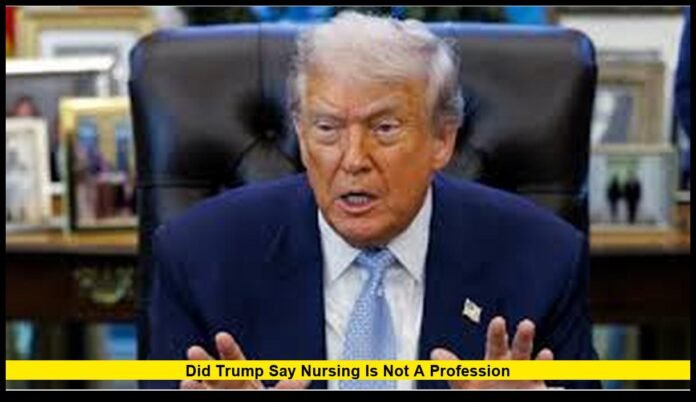

Did Trump say nursing is not a profession became one of the most discussed questions online after new federal loan-classification rules sparked intense debate across the healthcare and education sectors. The conversation intensified as students, educators, and nursing organizations examined how recent policy updates could reshape advanced nursing education. Although the topic spread quickly, the central question remains clear: there is no confirmed public statement from Donald Trump using those exact words. Instead, the controversy has emerged from policy decisions that many believe indirectly devalue the field of nursing by altering how graduate-level programs are categorized for federal student-loan purposes.
The discussion continues to grow because of its relevance to aspiring nurses, working clinicians planning to advance their credentials, and institutions preparing for long-term changes. Understanding why this question gained extraordinary attention requires looking closely at how the dispute began, what the new rules mean, and why the reaction has been so powerful across the United States.
Why the Question Started Trending
The viral question Did Trump say nursing is not a profession didn’t originate from a speech, interview, or off-hand comment. It started circulating when the Department of Education released a revised definition of what qualifies as a “professional degree” for federal student-loan classifications. Under this definition, graduate nursing programs—long grouped with traditional high-skill graduate tracks like medicine, dentistry, and law—were excluded.
This removal of nursing from the list of programs treated as “professional” sparked confusion and outrage. As the update circulated, many online discussions framed the policy as a statement about the worth of nursing itself. Social posts, short-form videos, and trending searches repeated the question, prompting thousands to believe Trump had publicly expressed that nursing is not a profession.
But a deeper look shows the controversy is rooted in regulatory language, not a spoken remark. The rule change is technical, but the consequences are significant enough that the public interpreted the shift as commentary on nursing’s legitimacy. That interpretation led to the widespread question—and the frustration that followed.
No Record of Trump Using the Statement
A clear point needs to be made early: no verified speech, press conference, interview, or written communication contains the quoted wording associated with the question Did Trump say nursing is not a profession. The words circulating online do not appear in any publicly available remarks.
This misunderstanding grew because the loan-classification update occurred during a period of heightened debate about higher education and healthcare workforce shortages. As a result, many tied the policy to the President personally, even though the change is tied to agency-level rulemaking rather than a public statement.
While the policy originated under the administration bearing Trump’s leadership, that still does not equate to a direct verbal claim from him about the status of nursing. Nonetheless, public perception was fast-moving, and the spread of the question created a messaging gap between what was actually written in the policy draft and what people thought had been said aloud.
Why the Loan Classification Change Matters
The central issue driving the controversy is the adjustment to how certain graduate programs are categorized. For years, advanced nursing degrees—such as Nurse Practitioner programs, Nurse Anesthetist degrees, and Nursing Education tracks—benefited from higher federal borrowing limits granted to “professional degree” programs.
When graduate nursing programs were removed from this category, several meaningful outcomes followed:
- Lower federal loan caps for nursing graduate students
- Reduced access to funding needed for clinical training and advanced certifications
- Greater reliance on private loans with higher interest rates
- Potential reduction in enrollment for advanced nursing tracks
- Long-term effects on healthcare staffing pipelines
These changes do not imply that nursing is unskilled or unprofessional. However, because loan policy shapes educational opportunity, many argue that the update indirectly creates barriers for aspiring advanced-practice nurses.
This ripple effect is what led many across social media to ask Did Trump say nursing is not a profession, turning a regulatory update into a perceived value judgment.
How Nursing Organizations Responded
Across the country, nursing associations quickly issued statements expressing alarm about the effect of the reclassification. While reactions varied in tone, they consistently highlighted these concerns:
- The U.S. is already facing nursing shortages across hospitals, clinics, and long-term-care facilities.
- Graduate-level nurses are essential to expanding care access, especially in underserved and rural areas.
- Advanced practice nurses often serve as primary-care providers where physician availability is limited.
- Reducing access to federal loans could shrink the number of qualified applicants pursuing advanced nursing careers.
- Colleges and universities may struggle to maintain enrollment and create faculty pipelines.
Faculty members added another layer of concern: fewer students entering graduate programs may also reduce the number of future nurse educators, worsening the existing shortage of instructors needed to train the next generation of nurses.
These responses reflect broader fears that the change undermines decades of progress in elevating nursing education to meet rising healthcare demands.
Why the Public Reaction Became So Intense
The reason this topic gained so much momentum is simple: nursing holds a deeply respected place in American life. Nurses serve as frontline responders, patient advocates, educators, care coordinators, and emotional anchors for families facing health crises. Any suggestion—real or perceived—that nursing is not a profession strikes millions as dismissive and inaccurate.
Three major factors amplified public emotion:
1. Timing During Workforce Shortages
Hospitals continue to report high turnover, early retirements, and staffing gaps. Many fear that any additional barrier to advanced education could worsen access to care.
2. Misunderstanding of Policy Language
Technical federal definitions often get misinterpreted when discussed outside regulatory circles. The term “professional degree” carries symbolic weight for many readers, even though it is used administratively for loan categories rather than career status.
3. Emotional Connection to the Work Nurses Do
Patients and families know firsthand how essential nurses are. The idea that their profession might be downgraded—whether intentionally or through policy design—triggered frustration and rapid public pushback.
These factors together created the environment in which the question Did Trump say nursing is not a profession gained traction despite no verbal statement matching those words.
What This Means for Current and Future Nursing Students
For those considering or pursuing graduate study in nursing, the loan-classification change is more than a political discussion—it is a practical financial issue. Students should prepare for the possibility of:
- Lower borrowing power through federal student-loan programs
- Increased need for private financing
- Adjusted financial-aid counseling from universities
- Potential changes in program costs over time
- Competitive shifts in admissions if fewer applicants enroll
Many institutions are actively reviewing how to support students under the new rules. This includes exploring scholarships, assistantships, or partnerships with healthcare systems willing to offer tuition support.
For aspiring advanced practice nurses, it will be essential to monitor how each institution adapts, as policies may differ across states and campus systems.
How Universities Are Preparing for the Change
Colleges and universities offering graduate nursing programs are already taking steps to address concerns. These include:
- Reviewing internal tuition models
- Planning expanded scholarship opportunities
- Consulting with state boards and nursing organizations
- Preparing updated financial-aid guidance for students entering in 2026 and beyond
- Reassessing clinical-training costs and placements
Many nursing programs depend on strong enrollment to sustain clinical partnerships, faculty hiring, and certification pathways, meaning these institutions have high motivation to support students navigating the new financial landscape.
Why This Debate Isn’t Likely to End Soon
Even though the question Did Trump say nursing is not a profession has been answered clearly—no, he did not—the debate surrounding the rule itself is unlikely to fade. Several reasons contribute to its ongoing relevance:
- The rule affects student access to advanced nursing education for years to come.
- Healthcare systems depend on graduate-trained nurses for staffing, leadership, and specialized care.
- Policymakers may revisit or modify the classification in response to public pressure.
- The story touches on broader concerns about affordability in higher education.
- Nursing organizations are expected to continue pushing for reconsideration or revision of the classification.
Because of all these factors, the conversation surrounding the topic will remain part of the national discussion on both healthcare and education policy.
Conclusion
The widespread question Did Trump say nursing is not a profession reflects a misunderstanding fueled by regulatory language rather than a direct statement. While the loan-classification change has serious implications for nursing education, it should not be confused with an official comment diminishing the work nurses do. What continues to matter most is how these changes influence students, educators, employers, and the future of healthcare delivery across the United States.
If this issue affects you, your workplace, or your educational goals, share your experience or thoughts below so others can stay informed and connected.