
Senate’s 60–40 Vote Signals Breakthrough in Longest Federal Shutdown in U.S. History
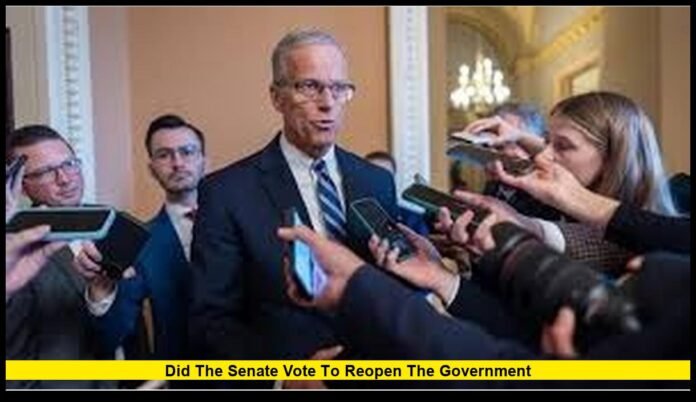
Americans across the nation are asking one urgent question — did the Senate vote to reopen the government? The answer is yes. On the evening of November 9, 2025, the United States Senate voted 60–40 to advance a bipartisan measure aimed at reopening the federal government after more than five weeks of closure. While this crucial vote has moved the process forward, the government is not yet fully reopened, as the bill still requires final approval from the House of Representatives and the President’s signature.
The Senate Vote: A Turning Point in the Shutdown Crisis
The Senate’s 60–40 vote marked a major step toward ending what has become the longest federal government shutdown in American history, lasting over 40 days. The measure — a continuing resolution — would temporarily fund government operations through January 30, 2026.
The vote saw all but one Republican voting in favor, joined by eight moderate Democrats who broke ranks with their party’s leadership to move the bill forward. Their decision underscored growing bipartisan fatigue over the political impasse that had paralyzed the country since October 1.
While the legislation has not yet become law, the successful procedural vote removed a major barrier known as the filibuster threshold, allowing the Senate to debate and finalize the bill for passage.
What the Bill Proposes
The proposed funding bill is designed to provide short-term relief rather than a permanent budget fix. Its main provisions include:
- Temporary Government Funding: The bill extends federal funding through January 30, 2026, giving lawmakers more time to negotiate a long-term budget.
- Back Pay for Federal Workers: Nearly 900,000 federal employees who were furloughed or working without pay would receive full back pay.
- Funding for Essential Services: Critical programs — including the Department of Veterans Affairs, Agriculture, and Homeland Security — would regain operational capacity.
- Support for SNAP and WIC Programs: Nutrition and welfare assistance programs would be reactivated, restoring benefits to millions of low-income families.
- Delayed ACA Decisions: The bill leaves the contentious Affordable Care Act (ACA) subsidy extension for separate debate in December.
Although this bill does not solve all budget issues, it provides a lifeline to millions of Americans and federal workers who have been directly affected by the shutdown.
How the Shutdown Began
The 2025 federal government shutdown began on October 1, when Congress failed to agree on a new budget or temporary funding extension for fiscal year 2026. The deadlock stemmed from partisan disputes over spending priorities, with health care and social program funding at the center of the conflict.
- Democrats pushed for an extension of ACA premium subsidies, which help millions of Americans afford health insurance.
- Republicans argued that the focus should remain on reopening the government first, then addressing policy matters afterward.
As negotiations broke down, the government entered a partial shutdown. Within days, national parks closed, small business loans were frozen, and vital services were disrupted.
Impact on Federal Workers and Public Services
The shutdown has taken a heavy toll on Americans across the country:
- Federal Workers: Over 900,000 employees were furloughed or working without pay. Many struggled to pay rent, mortgages, or basic utilities during the shutdown.
- Air Travel: Thousands of TSA and air traffic control workers called out due to financial stress, leading to flight delays and cancellations.
- Public Benefits: Funding interruptions affected the Supplemental Nutrition Assistance Program (SNAP) and the Women, Infants, and Children (WIC) program, impacting food access for millions.
- Healthcare Services: Hospitals and clinics that depend on federal grants saw reduced staffing and delayed reimbursements.
- Economic Impact: Analysts estimate that the shutdown has already cost the economy over $30 billion in lost productivity and delayed contracts.
The strain on essential services has also eroded public confidence in government efficiency, with polls showing a majority of Americans frustrated with both political parties for failing to act sooner.
Political Reactions to the Senate Vote
The Senate vote to advance the government funding bill drew strong reactions from both sides of the political aisle.
Senate Majority Leader John Thune praised the bipartisan support, calling it a “responsible step toward reopening government operations and restoring public trust.” He emphasized that “workers and families should never be pawns in political games.”
Senate Minority Leader Chuck Schumer, however, criticized the bill for not including healthcare subsidy extensions. “This bill reopens the government but leaves millions of Americans uncertain about their health coverage,” he said, urging the Senate to address the ACA issue before final passage.
Several moderate Democrats defended their decision to support the motion, arguing that ending the shutdown was the immediate priority. “People need paychecks, services need to run, and the country can’t wait,” one senator remarked.
President Joe Biden welcomed the Senate’s progress, urging the House of Representatives to act swiftly. “It’s time to end this shutdown and put the American people first,” he said during brief comments from the White House.
Next Steps Before the Government Reopens
The Senate vote is an essential milestone — but several steps remain before the government can officially reopen:
- Final Senate Passage: The Senate must hold a final vote to approve the bill in its entirety.
- House Approval: The House of Representatives must then pass the same version of the bill without major changes.
- Presidential Signature: President Biden must sign the bill into law. Only then can federal agencies resume normal operations.
If all these steps occur smoothly, furloughed federal employees could return to work as early as Thursday, November 13, 2025. However, if the House introduces amendments, the bill could be delayed again.
Public Sentiment and Economic Recovery
Public opinion polls reveal that nearly 70% of Americans blame Congress for the ongoing shutdown, with many expressing frustration over the political gridlock. Economists warn that even if the government reopens this week, the effects of the shutdown will linger — including slower hiring, postponed projects, and delayed tax refunds.
Small businesses that rely on federal contracts have been especially hard-hit, and many federal workers are expected to need several pay cycles to recover financially.
Still, the Senate’s vote represents a turning point. It signals to markets, employees, and citizens that Washington may finally be ready to move past weeks of stalemate.
Long-Term Implications
While the Senate’s vote is seen as a short-term victory, the broader fiscal challenges remain. Lawmakers will still need to pass a comprehensive spending bill by early 2026 to prevent another shutdown.
Some analysts believe this temporary resolution could become a model for future negotiations — separating immediate government funding from controversial policy debates. Others worry it simply postpones another crisis, especially with divisions still deep over healthcare, defense, and social spending.
For now, however, the Senate’s action has injected much-needed momentum into Washington. It has provided reassurance that bipartisan cooperation, though rare, is still possible in moments of national urgency.
The Road Ahead
As the House prepares to take up the Senate’s measure, all eyes are on how quickly lawmakers can act. If the House passes the bill in the coming days, federal employees could receive back pay by mid-November, and most federal programs would be restored before Thanksgiving.
The White House has signaled readiness to sign the bill immediately upon passage, which could bring the federal government fully back online before the holiday season.
However, if political disputes flare again — especially over healthcare and spending priorities — the reopening could be delayed, risking further harm to the economy and public services.
Conclusion
So, did the Senate vote to reopen the government? Yes, it did — and the 60–40 result marks the most significant step toward ending this historic shutdown. While the government has not yet fully reopened, the Senate’s action shows bipartisan determination to restore stability.
For millions of Americans affected by missed paychecks, closed services, and stalled benefits, this vote offers a long-awaited sign of hope. The next few days will determine whether that hope becomes reality — and whether Washington can finally put its citizens ahead of politics.
The nation now waits for the House and the President to complete the process — and for America’s government to get back to work.
Do you think Congress will act quickly enough to reopen the government this week? Share your thoughts below and stay informed on the latest developments.