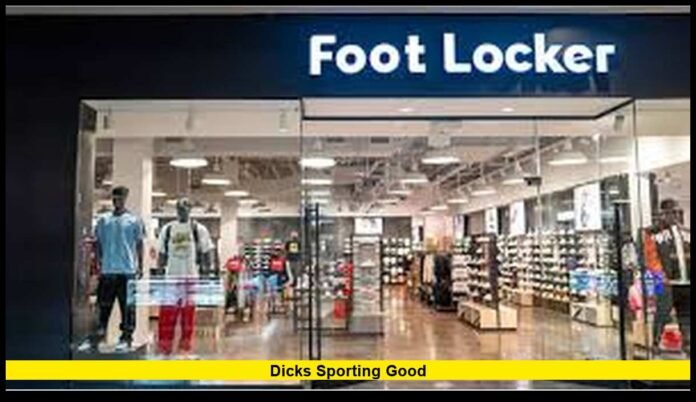

dicks sporting good continues to redefine its position in the U.S. retail landscape as the company moves through a pivotal year marked by a completed acquisition, rising sales, and heightened attention on store operations. With Foot Locker now officially part of the business, Dick’s Sporting Goods has become a broader, more complex retail organization that spans big-box sporting goods, specialty footwear, and lifestyle-driven athletic apparel.
As of December 13, 2025, the company’s direction is clearer than it was a year ago. Executives are focused on integrating a major acquisition, maintaining momentum at core stores, and protecting profitability in an environment where theft, staffing pressures, and shifting consumer habits remain constant concerns. These developments matter not only to investors, but also to millions of American shoppers who rely on Dick’s stores for everything from team sports equipment to everyday athletic wear.
Foot Locker deal closes and reshapes the business
The completion of the Foot Locker acquisition in September 2025 marked one of the most significant milestones in the company’s history. With the deal finalized, Dick’s Sporting Goods moved beyond its traditional identity as a domestic sporting goods chain and into a larger role within global athletic retail.
Foot Locker brought with it a strong presence in athletic footwear, sneaker culture, and mall-based retail. That addition immediately changed the scale of the company, increasing its reach into urban markets, international locations, and younger, style-focused consumers. While Dick’s has long carried footwear, the acquisition deepened its influence in a category that drives repeat visits and strong brand loyalty.
Now that the transaction is complete, the emphasis has shifted to execution. The company must align merchandising, supply chains, digital platforms, and store strategies across two businesses that historically operated in very different ways.
Third-quarter performance highlights growth and stability
In late November 2025, Dick’s Sporting Goods released third-quarter results that reflected both the impact of the acquisition and solid performance at its core stores. Consolidated net sales reached $4.17 billion, representing a sharp year-over-year increase tied to the newly combined business.
More closely watched by analysts and retail observers was the performance of the Dick’s Sporting Goods segment itself. Comparable sales for the Dick’s business rose 5.7% during the quarter, signaling healthy demand at existing locations and online channels. Comparable sales growth is often seen as a key indicator of brand strength because it shows how well stores are performing without relying solely on expansion.
Following the report, the company raised its fiscal 2025 outlook for the Dick’s business. The updated guidance reflected improved expectations for revenue and earnings, suggesting management saw resilience in consumer spending for sports, fitness, and athletic lifestyle products.
Integration brings restructuring and operational focus
Large retail acquisitions rarely come without internal adjustments, and the Foot Locker transaction is no exception. As Dick’s Sporting Goods works to integrate operations, restructuring efforts have become part of the process.
These changes are designed to streamline overlapping functions, improve efficiency, and ensure that each banner within the portfolio operates with clear goals. For employees, this can mean reorganized teams, new leadership structures, and revised performance benchmarks. For customers, integration often shows up in subtler ways, such as refreshed assortments, different promotional strategies, or changes to loyalty programs.
The company’s challenge is to preserve what made each brand successful while creating a unified operating model that supports long-term growth.
Experience-driven stores remain a key strategy
Long before the Foot Locker deal closed, Dick’s Sporting Goods had already been rethinking the role of physical stores. Rather than treating locations as simple fulfillment points, the company invested heavily in experiential retail.
The House of Sport concept represents this strategy most clearly. These large-format stores are designed to immerse shoppers in sports culture through interactive features, testing zones, and enhanced brand storytelling. The goal is to make stores destinations rather than errands, encouraging longer visits and deeper engagement.
In 2025, this approach continues to play a central role in how the company differentiates itself from online-only competitors and discount-focused chains. As e-commerce remains a dominant force, Dick’s is betting that hands-on experiences and community connection still matter to American consumers.
Footwear and apparel take center stage
With Foot Locker now under the same corporate umbrella, footwear has become an even more prominent category across the business. Sneakers, performance shoes, and athletic lifestyle footwear are among the most competitive segments in retail, but they also offer strong margins and frequent customer visits.
Dick’s Sporting Goods is positioned to leverage Foot Locker’s expertise in this area while continuing to serve athletes and families shopping for traditional sporting equipment. Apparel also plays a growing role, especially as consumers increasingly blur the line between performance wear and everyday clothing.
The combined portfolio allows the company to reach multiple customer types, from youth athletes and parents to sneaker enthusiasts and casual fitness consumers.
Retail theft incident underscores operational challenges
In December 2025, national attention briefly shifted to Dick’s Sporting Goods following a widely reported store-theft case in Florida. Authorities said a group of youth football players stole merchandise valued at more than $2,000 from a Dick’s store while traveling for a championship game. Several arrests followed.
While the incident itself was localized, it highlighted a broader issue facing retailers across the country. Theft, including organized retail crime, continues to affect store operations, inventory management, and customer experience.
For Dick’s Sporting Goods, the case reinforced the importance of loss prevention strategies, employee training, and store security. These measures are increasingly necessary, even as retailers work to maintain welcoming environments for shoppers.
Balancing security with customer experience
One of the ongoing challenges for large retailers is striking the right balance between security and convenience. Increased theft often leads to locked displays, security tags, and more visible monitoring, which can frustrate customers if not handled carefully.
Dick’s Sporting Goods must navigate this balance as it operates thousands of locations across diverse markets. The company’s investment in experiential stores makes this task even more complex, as interactive features require open access to products.
Effective store design, technology, and staff training all play a role in addressing these concerns without undermining the shopping experience.
What shoppers are likely to notice
For U.S. consumers, the changes underway at Dick’s Sporting Goods may be subtle but meaningful:
- Broader footwear selections influenced by Foot Locker’s expertise
- Continued emphasis on athletic apparel suited for both sports and daily wear
- More immersive store layouts in select locations
- Tighter in-store controls in response to theft concerns
Despite the corporate complexity behind the scenes, the company’s success ultimately depends on whether shoppers feel stores are convenient, engaging, and worth returning to.
Investor focus remains on execution
From an investment perspective, attention is centered on how smoothly the integration progresses and whether the company can sustain comparable sales growth. The raised fiscal 2025 outlook for the Dick’s business provided reassurance, but consistency over multiple quarters will matter more than a single report.
Investors are also watching how the company manages costs, staffing, and inventory as it operates at a much larger scale. Integration benefits take time to materialize, and the market tends to reward retailers that demonstrate discipline and clarity during periods of transition.
Competition in a crowded retail market
Dick’s Sporting Goods operates in a highly competitive environment that includes mass merchants, specialty athletic retailers, and direct-to-consumer brands. Many athletic brands continue to invest in their own stores and online platforms, increasing competition for customer attention.
The company’s size, national presence, and diversified portfolio give it advantages, but competition keeps pressure on pricing, innovation, and customer service. How effectively Dick’s leverages its expanded footprint will influence its standing in the years ahead.
Looking ahead to the next phase
As 2025 draws to a close, Dick’s Sporting Goods stands at a defining moment. The Foot Locker acquisition is complete, sales momentum at the core business remains positive, and management has signaled confidence through a higher outlook.
At the same time, challenges such as integration complexity, theft prevention, and evolving consumer expectations require constant attention. Success will depend on execution across stores, digital platforms, and supply chains.
dicks sporting good now operates as more than a sporting goods retailer. It is a multi-banner athletic retail organization navigating one of the most competitive sectors in American commerce.