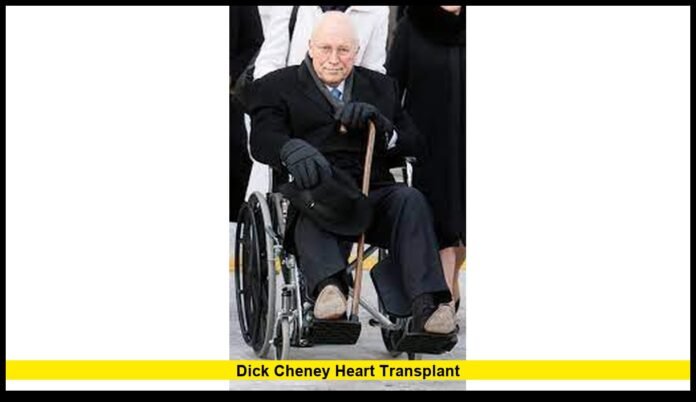

Dick Cheney heart transplant stands as one of the most extraordinary medical recovery stories among prominent American leaders. More than thirteen years after receiving his new heart in March 2012, the former vice president continues to defy medical expectations. In 2025, Cheney, now 84 years old, remains a living symbol of how far modern medicine has come in extending life and restoring vitality to even the most complex patients.
A Life Defined by Leadership and Health Challenges
Before his health struggles captured national attention, Dick Cheney’s name was already etched into history. Serving as Vice President of the United States from 2001 to 2009, Cheney was a key figure in shaping post-9/11 foreign policy and national defense. Yet, behind the scenes, he faced an ongoing battle — not in the political arena, but with his own heart.
Cheney suffered his first heart attack in 1978, at only 37 years old. Over the next three decades, he endured four more heart attacks, underwent multiple angioplasties, and had a quadruple bypass surgery in 1988. His health issues were chronic, severe, and public — a striking contrast to his otherwise controlled, steady public demeanor.
Decades of Medical Innovation Leading to a Transplant
By the late 2000s, Cheney’s heart function had deteriorated so severely that traditional treatments could no longer sustain him. In 2010, he was implanted with a left ventricular assist device (LVAD), a mechanical pump designed to circulate blood when the heart can no longer do so effectively.
This device, though lifesaving, came with challenges. It required an external battery and power source that had to remain connected at all times. Cheney later described life with the LVAD as “living tethered to technology,” constantly aware that a disconnected cable could be fatal.
Still, the LVAD bought him precious time as he awaited a donor heart. After 20 months on the national transplant waiting list, the call he had hoped for finally came in March 2012.
The Day of the Dick Cheney Heart Transplant
On March 24, 2012, Dick Cheney underwent heart transplant surgery at Inova Fairfax Hospital in Virginia. He was 71 years old at the time. The operation, lasting several hours, replaced his failing heart with that of an anonymous donor — a moment that Cheney has since described as both humbling and transformative.
He released a public statement just days after surgery expressing gratitude to his medical team and the donor’s family. Cheney’s acknowledgment of his donor struck a deeply emotional chord: “I will be forever grateful to the family of the donor for making the difficult decision to share this remarkable gift of life.”
Recovery: A Return to Strength and Clarity
Cheney’s recovery exceeded expectations. Within weeks, he began physical therapy, focusing on gradually rebuilding stamina after years of heart failure. By late 2012, he was strong enough to resume writing and public appearances.
In interviews, Cheney described his new heart as giving him “a new lease on life.” He said that after decades of limitations, he could once again enjoy normal activities like walking long distances, spending time outdoors, and engaging with his grandchildren.
The successful recovery also helped challenge long-standing assumptions about age restrictions and success rates in heart transplantation, especially for older patients. His survival became a case study cited in discussions of advanced cardiac care for patients in their 70s.
The Memoir That Shared His Journey
In 2013, Cheney co-authored a deeply personal book titled Heart: An American Medical Odyssey with his cardiologist Dr. Jonathan Reiner. The book chronicles his entire medical journey — from his first heart attack to the 2012 transplant — and provides an inside look at the emotional and scientific aspects of living with heart disease.
The memoir detailed how Cheney navigated years of uncertainty, the emotional toll of waiting for a donor, and his deep respect for the medical professionals who guided his care. It became a valuable source of insight for families dealing with similar health issues and drew attention to the transformative power of organ donation.
Medical Significance of Cheney’s Case
From a medical standpoint, Cheney’s heart transplant is significant for several reasons. At the time of his surgery:
- The average survival rate after a heart transplant was about 85% at one year.
- The median survival rate for recipients over 70 was much lower, around 5–7 years.
- Cheney has now lived more than 13 years post-transplant — far exceeding those expectations.
Cardiologists often cite Cheney’s case as an example of how medical technology, improved anti-rejection drugs, and post-operative care have dramatically improved outcomes for transplant patients, even those at advanced ages.
Public Reaction and Ethical Discussion
When news broke of Cheney’s transplant, public reactions were mixed. Some praised his perseverance and viewed his survival as a testament to the power of science. Others raised ethical questions about organ allocation for older recipients.
Medical experts later clarified that transplant eligibility is determined by a set of medical criteria, not by age alone or by personal status. Cheney’s candid discussions about his experience helped demystify the process and highlight how the U.S. transplant system operates based on fairness and medical need, not fame or influence.
Life After the Transplant: A Quieter Chapter
Since 2012, Cheney has intentionally stepped away from the public spotlight to focus on health and family. He divides his time between Wyoming and Virginia, leading a lifestyle marked by privacy and balance.
Those close to him say he remains disciplined about diet, exercise, and medical follow-ups. His wife, Lynne Cheney, and their daughters, Liz and Mary, continue to be pillars of support.
Even as he stepped back from politics, Cheney’s reflections on life, mortality, and gratitude have resonated widely. He has described his donor’s heart as a “gift beyond measure,” a sentiment that has made him an unexpected advocate for organ donation awareness.
Impact on Organ Donation Awareness
Cheney’s openness about his transplant played a notable role in increasing awareness about organ donation. In the months following his surgery, national registries reported a rise in donor sign-ups. Advocacy groups credited his public story for encouraging older Americans to consider both donating and receiving organs.
Key Takeaways for Organ Donation Awareness:
- Cheney’s survival emphasized that age alone is not a disqualifier for organ transplants.
- His recovery story encouraged more Americans to register as organ donors.
- The publicity helped reduce social stigma around transplants for senior citizens.
Today, Cheney continues to serve as a living example of how organ donation transforms lives — not just extending years, but restoring the ability to live fully.
Thirteen Years Later: The Legacy of Strength and Science
In 2025, the endurance of Cheney’s transplanted heart remains a powerful symbol of medical achievement. His case has been referenced in academic and healthcare circles for more than a decade, illustrating how advanced cardiac care can sustain long-term survival and quality of life.
His medical team once estimated that a successful transplant might grant him five to ten additional years. He has surpassed that prediction, demonstrating that determination, family support, and disciplined post-operative care can extend life well beyond statistical averages.
A Broader Reflection on Human Resilience
Beyond politics or science, Cheney’s heart transplant journey tells a deeply human story. It’s a story about hope, patience, and gratitude — qualities that transcend political lines. For millions of Americans affected by heart disease, his experience is a reminder that breakthroughs in medicine can give patients new opportunities to live with strength and purpose.
Cheney’s journey also underscores how crucial continued research funding is for cardiac innovation, from artificial heart devices to next-generation transplant medicine. His story, while personal, stands as a reflection of America’s broader advancements in health technology and compassion-driven care.
Looking Ahead: Cheney’s Health and Legacy in 2025
Now in his mid-80s, Cheney remains largely out of public politics but occasionally participates in private events and interviews. Those who have seen him describe a man who values each day, cherishes his family, and often reflects on the second chance he was given.
His case continues to inspire not just transplant recipients, but healthcare professionals, donors, and advocates who see in his survival a testament to what’s possible through courage, precision medicine, and faith in recovery.
Dick Cheney heart transplant is more than a medical event — it’s a remarkable story of endurance, innovation, and gratitude. Over a decade later, Cheney’s continued vitality reminds us that science, faith, and human resilience can work together to rewrite the boundaries of survival. What are your thoughts on his extraordinary recovery and its impact on modern medicine? Share your views below and stay informed.