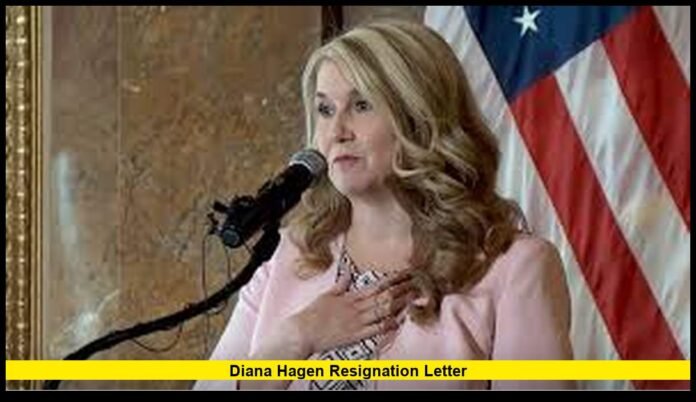

The diana hagen resignation letter has become one of the most talked-about legal and political developments in the United States after Utah Supreme Court Justice Diana Hagen stepped down amid a growing ethics controversy tied to a high-profile redistricting case and allegations involving attorney David Reymann.
Hagen officially resigned from the Utah Supreme Court on May 8, 2026, ending months of public scrutiny that placed the state judiciary at the center of a fierce political and legal battle. Her departure immediately sparked renewed debate about judicial ethics, political pressure on courts, transparency in disciplinary investigations, and the future direction of Utah’s highest court.
The resignation also intensified nationwide discussion about how judges should handle personal relationships, recusal decisions, and confidential misconduct complaints. While some Utah leaders viewed Hagen’s resignation as necessary to preserve confidence in the judiciary, others warned that the sustained pressure campaign against her could weaken judicial independence for years to come.
Why the Diana Hagen Resignation Letter Drew National Attention
Judicial resignations rarely dominate national headlines. Hagen’s departure became different because the controversy touched multiple sensitive issues at once.
The case involved allegations about a personal relationship, a politically explosive redistricting lawsuit, public release of confidential documents, and increasing tensions between Utah lawmakers and the judiciary.
As details surrounding the resignation spread across national media outlets and legal circles, the story quickly evolved beyond Utah politics. Legal analysts across the country began examining whether the controversy represented proper judicial accountability or an example of elected officials applying pressure to an independent court system.
The wording of Hagen’s resignation letter added even more public interest.
Instead of issuing a short procedural statement, Hagen described the personal cost of the controversy and spoke directly about the impact the public battle had on her family and the broader judicial system.
What Diana Hagen Said in Her Resignation Letter
Hagen addressed Utah Governor Spencer Cox in the resignation letter and announced her immediate departure from the court.
She wrote that serving the people of Utah had been one of the greatest honors of her life. At the same time, she acknowledged the emotional strain caused by the controversy surrounding her personal life and professional responsibilities.
Hagen emphasized that members of her family had not chosen a public role and should not continue facing intense public attention tied to the dispute.
The letter also referenced concerns about protecting the “effective functioning and independence” of Utah’s judiciary. That language became a major talking point after the resignation because it suggested Hagen believed the controversy had grown beyond a personal matter and had begun affecting the institution itself.
Many legal observers noted the unusually emotional tone of the letter. Others focused on her comments about judicial independence, which appeared to reflect growing concern about political pressure directed toward the court.
How the Controversy Began
The controversy started after allegations surfaced involving Hagen and attorney David Reymann, who worked on litigation challenging Utah’s congressional district maps.
The allegations reportedly emerged through a complaint connected to Hagen’s former husband. The complaint accused the justice of maintaining an inappropriate relationship with Reymann while legal matters involving redistricting moved through Utah’s court system.
The accusations quickly gained attention because the underlying litigation involved one of the most politically sensitive cases in Utah.
Voting rights organizations challenged Utah’s congressional district maps after lawmakers divided Salt Lake County among multiple districts. Critics argued the maps weakened urban voting influence and protected Republican control of all four congressional seats.
Because Reymann represented groups involved in the case, questions emerged about whether Hagen should have participated in matters connected to him.
Hagen Denied Wrongdoing
Throughout the controversy, Hagen denied allegations that her judicial conduct improperly affected any court proceedings.
She acknowledged reconnecting with Reymann during the collapse of her marriage but maintained that she acted appropriately regarding judicial ethics obligations.
Hagen also pointed out that she recused herself from matters involving Reymann after renewing contact with him.
Supporters argued that her recusal decisions demonstrated compliance with ethical standards once concerns about appearances emerged.
Critics, however, continued questioning whether earlier involvement in cases connected to Reymann created ethical concerns.
The disagreement fueled months of political and legal debate throughout Utah.
Judicial Conduct Commission Declined Further Action
The Utah Judicial Conduct Commission conducted a preliminary review of the allegations after receiving the complaint.
Following that review, the commission reportedly decided not to pursue a full disciplinary investigation.
Officials concluded that the available evidence did not justify additional action against Hagen.
That decision became one of the central dividing points in the controversy.
Supporters of Hagen argued the commission’s decision showed there was insufficient evidence of misconduct.
Opponents countered that the allegations still warranted independent review because of the public importance of the redistricting case.
Even after the commission declined to move forward, political pressure surrounding the controversy continued growing.
Release of Complaint Documents Intensified Public Scrutiny
Public attention escalated sharply after documents related to the complaint became public.
Utah House leaders released materials connected to the allegations following public records requests, leading to widespread media coverage and renewed political debate.
The release transformed what had largely remained a confidential judicial matter into a statewide political controversy.
Lawmakers began openly discussing whether outside investigators should examine the situation further.
Some Republican leaders argued the allegations damaged public trust in the judiciary and required additional scrutiny.
Meanwhile, legal advocacy groups warned that political officials were using the controversy to pressure the courts during a period of disagreement over major rulings involving abortion rights and election-related disputes.
The Redistricting Case Became Central to the Debate
The congressional redistricting lawsuit remained at the center of the broader controversy.
Utah’s congressional maps faced criticism after lawmakers divided Salt Lake County across several districts rather than keeping the county largely unified.
Opponents argued the maps diluted the political influence of Democratic-leaning urban voters.
The litigation carried major implications because Utah Republicans currently hold all four congressional seats despite population growth and increasing political diversity in urban areas.
As the case moved through the courts, scrutiny surrounding Reymann’s involvement intensified attention on Hagen’s interactions with him.
Although no evidence emerged showing judicial decisions were improperly influenced, critics insisted the appearance of potential conflict alone justified deeper examination.
Political Leaders Called for More Investigation
Several Utah lawmakers pushed for additional investigation even after the Judicial Conduct Commission declined further action.
Legislative leaders argued the public deserved greater transparency regarding judicial ethics complaints involving members of the state Supreme Court.
The calls for outside review created increasing tension between Utah’s legislative branch and judicial branch.
Critics of the investigation effort accused lawmakers of targeting the judiciary because of dissatisfaction with recent court rulings.
That accusation gained traction after some legal groups linked the controversy to broader political disputes involving abortion litigation and redistricting decisions.
The debate gradually shifted from the details of the allegations themselves to larger concerns about separation of powers and judicial independence.
Reaction From Utah Chief Justice Matthew Durrant
Utah Chief Justice Matthew Durrant publicly praised Hagen following her resignation.
He described her as a respected jurist with a long history of dedicated public service and highlighted her years working as a prosecutor and appellate judge.
Durrant also referenced Hagen’s role in prosecuting the man responsible for the kidnapping of Elizabeth Smart, one of Utah’s most well-known criminal cases.
Many within Utah’s legal community echoed those comments and emphasized Hagen’s reputation before the controversy emerged.
Her resignation therefore shocked many attorneys and judges who viewed her as an influential figure within the state judiciary.
Governor Spencer Cox Responds to the Resignation
Governor Spencer Cox thanked Hagen for her service after receiving the resignation letter.
Shortly afterward, Cox joined legislative leaders and Chief Justice Durrant in announcing plans to review possible reforms involving Utah’s judicial disciplinary system.
The joint announcement signaled that state leaders expected the controversy to have lasting institutional consequences.
Potential reforms under discussion reportedly include changes involving transparency, investigative procedures, and oversight authority related to judicial complaints.
Those discussions are likely to continue throughout 2026 as lawmakers evaluate how the current system handled the allegations involving Hagen.
Read More – House Judiciary Committee
Timeline of Key Events
| Date | Development |
|---|---|
| 2025 | Complaint involving Diana Hagen reportedly submitted |
| Early 2026 | Judicial Conduct Commission reviews allegations |
| April 2026 | Complaint details become public |
| May 2026 | Utah lawmakers call for outside investigation |
| May 8, 2026 | Diana Hagen officially resigns |
| May 2026 | State leaders discuss possible judicial reforms |
Who Is Diana Hagen?
Before joining the Utah Supreme Court, Diana Hagen spent decades working within the legal system.
She served as a federal prosecutor and later joined the Utah Court of Appeals before her appointment to the state Supreme Court in 2022.
During her career, Hagen earned recognition for handling significant criminal prosecutions and mentoring younger lawyers entering public service.
Her legal background and reputation made her rise to the state’s highest court widely respected at the time of her appointment.
The sudden collapse of her judicial career therefore surprised many observers across Utah’s legal community.
Debate Over Judicial Independence Intensifies
One of the biggest issues emerging from the controversy involves the future independence of Utah courts.
Several judicial advocacy groups warned that forcing a justice from office through sustained political pressure could discourage judges from handling controversial cases without fear of retaliation.
Those concerns became especially prominent because the Utah Supreme Court recently faced politically sensitive disputes involving abortion access and congressional redistricting.
Supporters of further investigation argued accountability remains essential for maintaining public trust in the courts.
Opponents argued the controversy risked turning judicial oversight into a political weapon.
The disagreement reflects a broader national debate taking place in several states over the balance between ethics enforcement and judicial independence.
Public Opinion Remains Divided
Reaction across Utah remains sharply divided.
Some residents believe Hagen made the correct decision by resigning before the controversy caused additional institutional damage.
Others argue she resigned mainly to protect her family from continued public attention rather than because of proven misconduct.
The fact that the Judicial Conduct Commission declined further disciplinary action continues shaping public opinion.
Supporters of Hagen frequently point to that decision as evidence that claims against her lacked sufficient proof.
Critics respond that ethical concerns involving Supreme Court justices deserve maximum transparency regardless of disciplinary outcomes.
What Happens Next for the Utah Supreme Court
Governor Cox now faces the task of selecting a replacement for Hagen on the Utah Supreme Court.
The appointment carries major significance because Utah lawmakers recently approved legislation expanding the court from five justices to seven.
That expansion means Cox will soon influence the composition of much of the court through multiple appointments.
Legal analysts expect intense scrutiny during the nomination process following Hagen’s resignation.
Questions involving ethics standards, recusal policies, and judicial accountability will likely dominate confirmation discussions.
Potential Changes to Judicial Ethics Rules
The controversy surrounding the diana hagen resignation letter could also lead to new ethics policies in Utah.
Lawmakers and legal experts are discussing several possible reforms, including:
- Stronger disclosure requirements for judges
- Revised recusal standards involving personal relationships
- Greater transparency in judicial complaint investigations
- Changes to confidentiality rules for disciplinary proceedings
- Expanded oversight authority for ethics reviews
Any reforms adopted after the controversy could shape Utah’s judiciary for many years.
National Legal Community Continues Watching Utah
Legal organizations outside Utah continue monitoring developments tied to Hagen’s resignation.
The case attracted nationwide attention because it combines several issues currently affecting courts across America, including public trust, political pressure, transparency, and judicial ethics.
Some experts believe the controversy may eventually become a case study in future discussions about judicial conduct and institutional independence.
Others view it primarily as a warning about how private disputes can escalate into statewide political crises when courts handle high-profile cases.
Regardless of perspective, the resignation has already left a major mark on Utah politics and the state judiciary.
Why the Story Still Matters
The diana hagen resignation letter remains a major national legal story because it raised difficult questions without producing easy answers.
The controversy forced Utah leaders, judges, attorneys, and voters to confront competing concerns involving ethics, privacy, accountability, and judicial independence.
It also reshaped the future of Utah’s highest court at a time when politically sensitive legal disputes continue reaching state supreme courts across the country.
As Utah prepares for new judicial appointments and possible ethics reforms, the effects of Hagen’s resignation will likely continue influencing debate well beyond 2026.
The conversation surrounding Diana Hagen’s resignation continues to divide legal and political communities across the country. Readers following the future of the Utah Supreme Court will likely keep watching as new developments unfold in the months ahead.