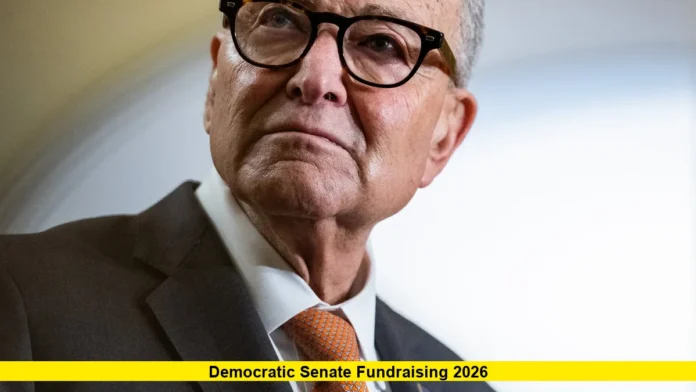

Democratic Senate fundraising 2026 has reached new heights, with several Democratic candidates reporting extraordinary third-quarter contributions ahead of the November midterm elections. The latest updates show James Talarico in Texas raising $64 million during the July–September period, while Georgia Sen. Jon Ossoff collected approximately $33.1 million. Candidates in Michigan, Ohio, Maine, Alaska, Iowa, North Carolina, and other competitive states have also reported substantial fundraising totals.
The latest figures, reported on October 15 and 16, highlight a significant financial surge for Democratic Senate campaigns. The money gives candidates additional resources for advertising, voter outreach, campaign staffing, and organizing before Election Day on November 3, 2026. However, fundraising does not guarantee victory, and Republican-aligned political groups continue to command substantial financial resources.
The central question is whether Democratic candidates can convert their fundraising momentum into enough votes to regain control of the U.S. Senate. The latest campaign finance numbers offer an important snapshot of the political competition, the strength of individual campaigns, and the financial challenges facing both parties.
Democratic Senate Fundraising 2026: Latest Numbers at a Glance
The latest third-quarter fundraising figures reported by major campaigns include the following:
| State | Democratic candidate | Third-quarter fundraising |
|---|---|---|
| Texas | James Talarico | $64 million |
| Georgia | Jon Ossoff | $33.1 million |
| Michigan | Abdul El-Sayed | $30.7 million |
| Ohio | Sherrod Brown | $23 million |
| Maine | Troy Jackson | $20.4 million |
| North Carolina | Roy Cooper | Approximately $20 million |
| Alaska | Mary Peltola | $17 million |
| Iowa | Josh Turek | $12 million |
| Kansas | Adam Hamilton | $11 million |
Source basis: campaign figures reported October 15–16, 2026. Reporting methods and committee coverage can differ, so these figures are not necessarily directly comparable.
These figures demonstrate the scale of Democratic fundraising in several Senate contests. They represent reported third-quarter totals, not necessarily the amount remaining in each candidate’s bank account.
James Talarico Sets a Historic Fundraising Pace in Texas
Texas Democrat James Talarico has emerged as one of the most prominent fundraising stories of the 2026 Senate election. His campaign announced $64 million in third-quarter receipts, a record-setting amount for a Senate candidate’s third-quarter fundraising haul.
Talarico, a Texas state representative from Austin, has raised more than $134 million over his Senate campaign, according to figures reported by his campaign. His fundraising success has drawn national attention because Democrats have struggled to win statewide elections in Texas for decades.
His Republican opponent, Texas Attorney General Ken Paxton, reported $18 million in third-quarter fundraising. That creates a substantial gap between the candidates’ reported campaign totals.
However, the comparison does not include every dollar spent by outside political organizations. Republican-aligned groups can spend independently to support their preferred candidates, potentially narrowing the practical advertising advantage created by direct campaign fundraising.
Talarico’s record-setting haul also illustrates how a competitive race in a traditionally Republican state can attract national donors. Contributions from across the country can help finance advertising, field operations, and voter mobilization.
Jon Ossoff’s Fundraising Strength in Georgia
Georgia Sen. Jon Ossoff has also reported a substantial fundraising quarter. His campaign brought in approximately $33.1 million, placing him among the leading Democratic Senate fundraisers in the country.
Ossoff is defending his seat in a state that has become central to national electoral competition. Georgia’s closely contested elections have made campaign funding particularly important for reaching voters across metropolitan Atlanta, suburban communities, and rural areas.
His reported third-quarter total substantially exceeded the $2.8 million reported for Republican candidate Mike Collins in the same comparison. Nevertheless, direct candidate receipts tell only part of the financial story.
Outside spending, advertising commitments, and the cash available at the start of the final campaign stretch will also influence how effectively each side communicates with voters.
Ossoff’s fundraising performance gives Democrats a significant resource base for the final weeks of the race. It also demonstrates the continued importance of individual contributions and national donor networks in competitive Senate contests.
Michigan and Ohio Add to Democratic Fundraising Momentum
Michigan and Ohio have contributed to the broader Democratic fundraising surge.
In Michigan, Democrat Abdul El-Sayed reported $30.7 million in third-quarter fundraising, compared with approximately $9.7 million for former Republican Representative Mike Rogers. The figures place Michigan among the major financial battlegrounds of the election cycle.
Ohio presents another important contest. Former Democratic Sen. Sherrod Brown reported $23 million in the latest comparison, while Republican Sen. Jon Husted raised approximately $5 million.
Other reporting has placed Brown’s combined fundraising across affiliated committees at $28.2 million. These totals differ because reports may cover different fundraising entities, so readers should not treat every published figure as an identical measure.
Both states have national significance because their Senate races could influence the balance of power in Washington. Strong fundraising allows campaigns to compete for advertising time and maintain voter-contact operations across large electorates.
Maine, North Carolina, and Alaska Report Strong Totals
Democratic fundraising has also expanded beyond the most widely discussed races.
In Maine, Democrat Troy Jackson reported $20.4 million in third-quarter fundraising. Republican Sen. Susan Collins raised approximately $5.2 million during the same period. The contest places financial pressure on both campaigns as they work to reach voters across the state.
North Carolina Democrat Roy Cooper reported approximately $19.5 million in one published account, while another comparison rounded his total to about $20 million. Cooper, the former governor, is running in a state where presidential and congressional contests have attracted substantial national attention.
In Alaska, Democrat Mary Peltola raised $17 million in the quarter, according to reported campaign figures. Her candidacy gives Democrats another opportunity to compete for a Senate seat in a state where geography makes voter outreach particularly challenging.
These campaigns need funding for more than television advertisements. Travel, local organizing, digital outreach, staff, and direct voter communication can all require substantial resources.
Iowa, Kansas, and New Hampshire Expand the Fundraising Picture
Democratic fundraising has also produced notable totals in states where Republicans remain formidable opponents.
In Iowa, Democrat Josh Turek reported approximately $12 million for the third quarter. Republican candidate Ashley Hinson raised about $3 million in the comparison published on October 16.
Kansas Democrat Adam Hamilton brought in approximately $11 million, compared with $800,000 for Republican Sen. Roger Marshall in the same report. The difference highlights the strength of Hamilton’s direct fundraising, although it does not establish which campaign has the greater overall financial resources.
In New Hampshire, Democratic Rep. Chris Pappas reported $8.1 million in third-quarter fundraising in a separate account of the latest campaign figures.
These numbers matter because fundraising can determine whether candidates have enough resources to introduce themselves to voters, respond to criticism, and maintain campaign operations through Election Day.
Nevertheless, each race has its own political circumstances. A large fundraising advantage does not automatically overcome an opponent’s existing support, statewide political trends, or spending by outside groups.
How Republican Super PACs Affect Democratic Fundraising
Despite the strong Democratic campaign totals, Republicans retain significant resources through outside political organizations.
The Senate Leadership Fund, a major Republican-aligned super PAC, raised approximately $273 million in the third quarter, according to reporting published on October 15. Its Democratic counterpart, Senate Majority PAC, raised approximately $151 million.
The figures show why direct campaign fundraising cannot be considered in isolation. Super PACs can independently finance advertising and other political communications, subject to applicable campaign finance laws. They cannot legally coordinate their independent expenditures with candidates’ campaigns.
Individual campaigns and outside groups also operate under different financial rules. Candidates receive contributions subject to federal limits, while super PACs can accept unlimited contributions for independent expenditures.
This distinction matters when comparing the resources available to Democrats and Republicans. A candidate who raises more money directly may have an important advantage, but an opponent supported by substantial outside spending can still compete aggressively.
Campaign fundraising reports therefore provide only one part of the overall financial picture.
What the Democratic Senatorial Campaign Committee Does
The Democratic Senatorial Campaign Committee, commonly known as the DSCC, is the national party organization dedicated to electing Democratic senators.
Its responsibilities include fundraising, candidate recruitment, campaign support, and efforts to help Democrats win competitive Senate races. The committee can direct resources toward contests where additional support could improve Democratic prospects.
The DSCC also emphasizes grassroots donations. Its public campaign materials report that 98% of donations it received during the 2024 election came from donors contributing less than $200.
That figure concerns DSCC donations during the 2024 election, not all donations to Democratic Senate candidates in 2026. Still, it illustrates the committee’s established reliance on small-dollar contributions.
Grassroots fundraising can help candidates build broad donor networks and demonstrate supporter engagement. Larger contributions and organized fundraising events can also provide substantial resources within the applicable legal framework.
The committee’s national role is particularly important when several competitive races need money simultaneously. Decisions about where to invest campaign resources can shape how effectively Democrats compete across the country.
Why Third-Quarter Fundraising Matters Before Election Day
The July–September fundraising period offers an important measure of campaign activity before the final weeks of the election.
Strong receipts can help campaigns expand their operations, pay for advertising, recruit staff, and maintain contact with voters. Candidates can also use fundraising performance to attract additional donors who want to support competitive races.
However, the amount raised during a quarter is different from cash on hand. Campaigns spend money throughout the election cycle, and some may have substantial existing reserves while others face considerable expenses.
Several factors matter when evaluating the financial position of a Senate campaign:
- Total fundraising: The amount a campaign collected during a specific reporting period.
- Cash on hand: The funds remaining in the campaign account at the end of the reporting period.
- Campaign spending: Money used for advertising, staff, travel, organizing, and other authorized activities.
- Outside spending: Independent expenditures by super PACs and other political organizations.
- Donor participation: The number and range of people contributing to a campaign.
Federal Election Commission filings provide a central source for examining campaign receipts, expenditures, and financial disclosures. Because newly filed information may take time to appear in public databases, early media comparisons and later official records can occasionally differ.
Readers should also distinguish between money raised by a candidate’s authorized committee and totals that include affiliated joint fundraising committees. Those categories do not always measure the same activity.
Can Democratic Senate Fundraising Change Control of the Senate?
The latest fundraising results give Democrats additional financial capacity as they pursue Senate seats in November. Their performance in Texas, Georgia, Michigan, Ohio, and other states shows that multiple campaigns are attracting substantial contributions.
Yet the path to a Senate majority depends on election outcomes, not fundraising totals alone. Candidates must win their individual races, and the overall result depends on the number of seats each party holds after the election.
Republican outside spending remains a major factor. Voter preferences, candidate approval, turnout, campaign strategy, and the political environment will also influence the final results.
The most useful assessment combines fundraising figures with cash-on-hand reports, spending disclosures, polling, and developments in each state. No single financial metric can reliably predict the outcome.
As the November 3 election approaches, the latest figures suggest that Democratic candidates have considerable direct fundraising momentum. Whether that momentum translates into Senate victories will become clearer as campaigns deploy their resources and voters make their decisions.
What do you think about the latest Democratic Senate fundraising numbers for 2026? Share your thoughts in the comments and stay updated as new verified election developments emerge.