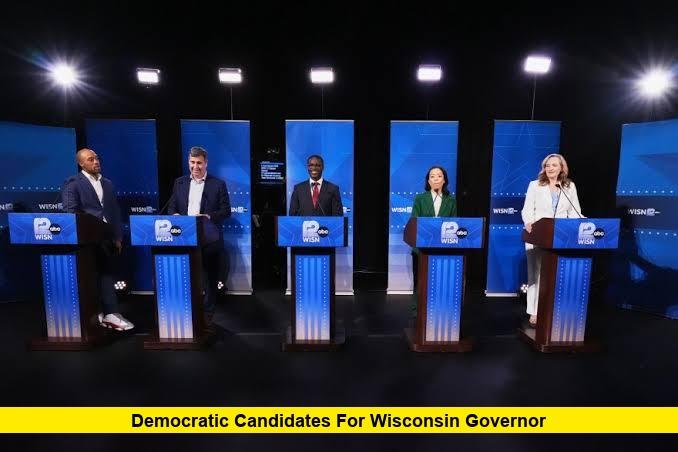

Wisconsin voters are deciding today, August 11, 2026, who will represent the Democratic Party in the race to become the state’s next governor. The field of democratic candidates for Wisconsin governor narrowed sharply over the summer, with several contenders dropping out amid endorsements, funding shifts, and shifting poll numbers. As of primary day, four Democrats remain on the ballot as active candidates: Francesca Hong, David Crowley, Joel Brennan, and Kelda Roys. The winner will face Republican Tom Tiffany in the November 3 general election to succeed Governor Tony Evers, who chose not to seek a third term.
This race has become one of the most closely watched Democratic primaries in the country this year, largely because of the rise of a democratic socialist candidate in a battleground state Donald Trump carried in 2024. Affordability has emerged as the defining theme of the campaign, shaping how each candidate has pitched themselves to voters heading into Election Day.
An Open Seat and a Crowded Field
Wisconsin’s governorship became an open contest once Evers announced he would not run again, setting off one of the most competitive Democratic primaries the state has seen in years. At various points, the field included Mandela Barnes, Sara Rodriguez, Missy Hughes, and several others alongside the four candidates who remained through primary day.
The primary field changed dramatically in the final weeks before the election. Lieutenant Governor Sara Rodriguez ended her campaign amid reported financial irregularities, and former Wisconsin Economic Development Corporation Secretary Missy Hughes dropped out earlier in the summer. Milwaukee County Executive David Crowley briefly suspended his own campaign and endorsed Rodriguez, only to re-enter the race after her exit, this time securing an endorsement from Evers himself. Mandela Barnes, the former lieutenant governor and 2022 U.S. Senate nominee, dropped out of the race in late July as scrutiny mounted and Hong’s polling lead widened, though he did not issue an endorsement when he exited.
That left Hong, Crowley, Brennan, and Roys as the four active democratic candidates for Wisconsin governor heading into the primary.
Meet the Candidates
Francesca Hong has been the dominant story of this primary. A three-term member of the Wisconsin Assembly representing Madison, Hong is a democratic socialist and the first Asian American elected to the state legislature. Before entering politics, she worked as a chef and restaurant owner, co-founding Morris Ramen and the Culinary Ladies Collective, a support network for women in the food industry. Her platform centers on what she calls “permanent affordability,” including a proposal to raise the state’s minimum wage from $7.25 to $20 an hour, a new top income tax bracket on high earners, expanded funding for public schools, and a moratorium on new data center construction until the state addresses energy and water concerns. Hong has consistently led in public polling throughout the summer, and supporters describe her campaign as an energetic, grassroots movement built on small-dollar fundraising and door-to-door organizing.
David Crowley currently serves as Milwaukee County Executive, a role in which he became the first Black official to hold the position. Before that, he served in the Wisconsin Assembly. Crowley has focused his campaign on property tax relief, expanded health care access, addiction treatment services, and accountability measures for data center developers, including requirements around union labor and energy use. He has positioned himself as the candidate best able to defeat Tiffany in November, pointing to his record of bipartisan negotiation with Republican lawmakers on funding deals for local communities.
Joel Brennan is a Milwaukee native who previously led Discovery World and the Greater Milwaukee Committee, and who served as Secretary of the Department of Administration under Evers. His campaign has emphasized a housing affordability plan, a new school funding formula aimed at easing local property tax burdens, and expanded health care access, particularly for children. Brennan has also said he would be willing to mobilize the Wisconsin National Guard to guard against federal interference in state elections.
Kelda Roys, a state senator from Madison, rounds out the field of active candidates. Roys has run on a platform touching affordability, reproductive rights, and government accountability, drawing on her legislative record in the state senate.
Affordability Takes Center Stage
Across nearly every candidate’s message, affordability has become the issue voters say matters most. Rising costs for groceries, housing, health care, and utilities have shaped the tone of the campaign, and each candidate has built policy proposals around easing that financial pressure on working families.
Hong’s supporters point to this focus as the core of her appeal. Campaign volunteers working out of her Madison headquarters on primary day described a candidate speaking directly to people struggling with everyday costs, from gas prices to rent. Her campaign has drawn comparisons to other democratic socialist candidates who have found success elsewhere in the country, including New York City Mayor Zohran Mamdani, and her rallies have taken on the feel of a movement-building effort aimed at bringing new and younger voters into the process.
Polling released in the weeks before the primary showed Hong building a substantial lead. A Marquette Law School poll conducted in late July found her with support from roughly 38% of likely Democratic primary voters, while other surveys showed her topping 40% support against the rest of the field. Notably, one poll found Hong leading among voters who named affordability as their top issue by a wide margin, though Crowley performed better among voters who prioritized electability against Tiffany above all else.
Crowley, Brennan, and Roys have each offered their own affordability proposals, though none has generated the same surge in polling or fundraising that Hong’s campaign has seen. Crowley’s campaign gained momentum after Evers’ endorsement and a reported influx of contributions in his first week back in the race, while Brennan and Roys have continued to campaign on more traditional platforms emphasizing housing, education funding, and health care.
Public Interest and National Attention
The Wisconsin primary has attracted attention well beyond the state’s borders. National progressive organizations and donors have taken notice of Hong’s candidacy, viewing it as a potential test of whether a democratic socialist can win statewide office in a true battleground state. At the same time, some members of Wisconsin’s Jewish community have expressed concern about Hong’s positions on foreign policy issues, and she has faced questions about past statements calling for defunding or abolishing police departments, positions she has since said she has moved away from in recent months.
Wisconsin is one of several Democratic-held governorships up for election this cycle in states carried by Trump in 2024, along with Arizona, Kansas, Michigan, and Pennsylvania. That dynamic has added weight to the outcome, since national Democratic strategists are watching closely to see which candidate profile performs best in a competitive general election setting against Tiffany, a sitting member of Congress and the Republican nominee.
Latest Updates on Primary Day
As of today, ballots are being cast across Wisconsin, with in-person voting, early voting, and absentee ballots all factoring into the outcome. Results are expected to become clearer later tonight as polls close and county-level tallies are reported. Given how tightly contested some elements of the race have been, particularly around electability arguments between Hong and Crowley, the final margin may take time to fully clarify. There is no official confirmation yet of a winner, and any reporting on results should be treated as developing until the state certifies outcomes.
Regardless of who wins the Democratic nomination, the party’s candidate will move directly into a high-profile general election matchup against Tiffany, with the campaign expected to center heavily on affordability, taxes, health care, and the future of Wisconsin’s growing data center industry.
Final Thoughts
The 2026 race among democratic candidates for Wisconsin governor has been shaped by late-breaking exits, shifting endorsements, and a surge of enthusiasm around Francesca Hong’s affordability-focused campaign. Whether that momentum translates into a primary win and, eventually, a general election victory over Tom Tiffany remains to be seen. What is clear is that this primary has forced Wisconsin Democrats to confront real questions about direction, electability, and how far the party’s progressive wing can go in a state that remains genuinely competitive between the two parties.
Voters looking to understand where the party stands heading into November will want to watch how tonight’s results unfold, and how the eventual nominee adjusts their message for a broader general election audience.
Stay tuned for live primary results and share your thoughts on Wisconsin’s Democratic governor race in the comments below.