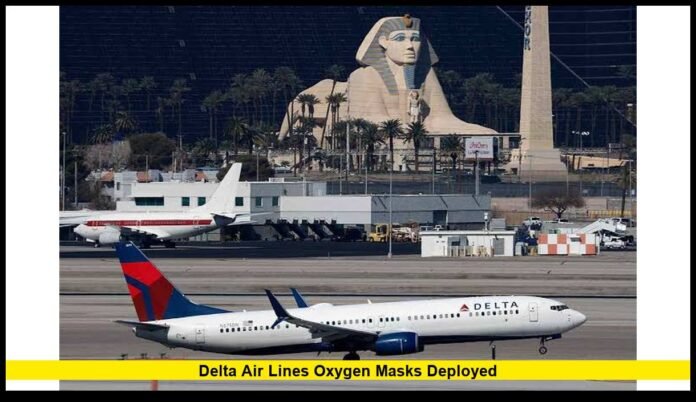

Delta air lines oxygen masks deployed during Flight 2311 after an unexpected pressurization problem forced the Boeing 737-900 to make a rapid descent and divert to Las Vegas. The incident occurred on September 6, 2026, while the aircraft was traveling from Los Angeles International Airport to Salt Lake City International Airport.
The aircraft was carrying 174 passengers and six crew members. During the flight, the crew initiated a rapid descent from approximately 36,200 feet to 9,000 feet in about 10 minutes. The passenger oxygen system deployed during the emergency.
The aircraft then diverted to Harry Reid International Airport in Las Vegas, where it landed safely. Passengers left the aircraft normally after arrival, and Delta arranged alternative transportation for travelers continuing to Salt Lake City.
The airline has described the event as an unexpected pressurization issue. Delta has not publicly identified a specific component or technical failure as the cause.
What Happened During Delta Flight 2311
Flight 2311 departed Los Angeles International Airport on September 6 for its scheduled journey to Salt Lake City.
The Boeing 737-900 climbed to cruising altitude during the flight. At one point, the aircraft reached approximately 36,200 feet.
The situation changed when the crew encountered an unexpected problem involving cabin pressurization. The pilots responded by bringing the aircraft rapidly down to a much lower altitude.
Air traffic control communications provided a clear indication of what was happening inside the cockpit. The crew reported that the aircraft was in a rapid descent and requested 9,000 feet while directing the aircraft toward Las Vegas.
The controller also asked whether the oxygen system had deployed. The crew confirmed that it had.
That exchange provides important confirmation about the sequence of events. The aircraft did not simply change altitude as part of normal operations. The crew was responding to a pressurization emergency.
The Aircraft Dropped More Than 27,000 Feet
One of the most striking details surrounding the incident was the speed and size of the altitude change.
Flight 2311 descended from approximately 36,200 feet to 9,000 feet in roughly 10 minutes.
That represents an altitude reduction of about 27,200 feet.
For passengers, such a descent can be extremely unsettling, particularly when oxygen masks suddenly appear from the overhead compartments.
The rapid descent had an important safety purpose. When cabin pressure becomes inadequate at cruising altitude, the air inside the aircraft may no longer provide enough oxygen for normal breathing. Moving the aircraft quickly to a much lower altitude reduces that risk.
The crew therefore did not attempt to continue the flight at cruising altitude.
Instead, the aircraft moved quickly toward a safer altitude before continuing toward an airport suitable for the diversion.
Why the Oxygen Masks Deployed
Passenger oxygen masks are designed to provide supplemental oxygen during a significant cabin-pressure problem.
Commercial aircraft cruise at altitudes where the outside air is far too thin to support normal breathing. The aircraft’s pressurization system creates a cabin environment suitable for passengers and crew.
If cabin pressure falls unexpectedly, oxygen masks can deploy automatically.
The masks provide passengers with an immediate source of supplemental oxygen while the pilots carry out the emergency descent.
That is what made the event on Flight 2311 particularly serious. The masks were not deployed as part of an ordinary flight procedure. They appeared because the aircraft experienced a pressurization problem at high altitude.
Once the aircraft descended to approximately 9,000 feet, the surrounding atmospheric conditions were much more suitable for normal breathing.
The oxygen system therefore served its intended emergency purpose during the most critical part of the event.
Flight 2311 Diverted to Las Vegas
After beginning the rapid descent, the crew redirected the aircraft toward Las Vegas.
Harry Reid International Airport became the aircraft’s new destination.
The decision meant the flight would not continue to Salt Lake City as originally scheduled.
Diverting after a pressurization problem allows the crew to land as soon as practical rather than continuing a longer journey after an emergency.
Las Vegas was also close enough to provide a practical landing location after the aircraft moved to a lower altitude.
The aircraft landed safely at Harry Reid International Airport at approximately 6:16 p.m. local time, based on flight-tracking information reported after the event.
Passengers then exited the aircraft normally.
Delta subsequently arranged another flight for passengers who still needed to reach their final destination.
Delta Confirms the Crew Followed Procedures
Delta has said that safety remained the airline’s priority during the incident.
The airline confirmed that the crew followed its training and procedures after the unexpected pressurization problem occurred.
That response is significant because cabin-pressure emergencies require pilots to act quickly.
The crew must manage the aircraft, communicate with air traffic control and ensure the flight moves to a safer altitude.
At the same time, passengers and flight attendants must respond to the oxygen-mask deployment.
The successful landing indicates that the crew completed those steps without a reported catastrophic outcome.
Delta also apologized to customers for the experience and thanked the flight crew and ground support teams involved in handling the situation.
What Passengers Experienced Inside the Cabin
For people aboard the aircraft, the emergency likely felt very different from the controlled response happening in the cockpit.
The sudden appearance of oxygen masks immediately signaled that the aircraft was experiencing an unusual situation.
Passengers were then confronted with a rapid change in altitude while the crew worked through the emergency procedures.
Oxygen masks are designed to give passengers a way to breathe supplemental oxygen while the aircraft reaches a lower altitude.
The most important passenger response during such an event is to follow the crew’s instructions and use the mask properly.
Flight attendants also have emergency procedures for these situations.
Once the aircraft reaches a safer altitude, the immediate need for supplemental oxygen decreases.
For the passengers on Flight 2311, that sequence ended with a safe landing in Las Vegas.
The Flight Was Carrying 180 People
Flight 2311 had 174 passengers and six crew members aboard.
That means 180 people were on the aircraft when the pressurization problem occurred.
Despite the emergency, the aircraft reached Las Vegas safely.
The available confirmed reports do not indicate any deaths or serious injuries associated with the incident.
Passengers were able to leave the aircraft after landing, and Delta worked on arrangements for those who needed to continue to Salt Lake City.
The safe outcome is one of the most important facts surrounding the event.
Although the oxygen-mask deployment and rapid descent were alarming, the emergency did not end in a crash or loss of life.
What Is Known About the Technical Problem
Delta has described the incident as an unexpected pressurization issue.
However, the airline has not publicly identified a final technical cause in the latest confirmed information.
That means it would be premature to claim that a particular valve, sensor, door seal, electrical component or other system caused the event.
Several parts of an aircraft’s pressurization system work together to maintain the cabin environment.
A problem involving one part does not necessarily mean another specific component failed.
Until Delta, investigators or regulators release additional technical findings, the confirmed description remains an unexpected pressurization issue.
That distinction matters because online discussions can quickly move beyond the facts established by the airline.
The available information confirms the emergency response. It does not establish the exact mechanical origin.
Why the Rapid Descent Was Necessary
The aircraft’s descent from approximately 36,200 feet to 9,000 feet was the central safety action during the emergency.
At normal cruising altitude, the atmosphere contains significantly less oxygen than people need to breathe comfortably.
The cabin pressurization system compensates for that environment.
When the system cannot maintain the required cabin pressure, the aircraft must descend.
The goal is to reach an altitude where the surrounding atmosphere provides enough oxygen for passengers and crew while the aircraft proceeds toward a suitable airport.
Flight 2311’s crew requested 9,000 feet during the emergency.
The aircraft reached that lower altitude before completing its diversion to Las Vegas.
The descent was therefore not an uncontrolled fall. It was an emergency maneuver carried out by the flight crew in response to the pressurization problem.
The Importance of the Cockpit Communications
The communications between the flight crew and air traffic control provide a useful timeline of the emergency.
The crew told controllers that Flight 2311 was in a rapid descent.
The pilots requested 9,000 feet and advised that they were heading directly toward Las Vegas.
A controller then asked whether the oxygen system had deployed.
The pilots confirmed that it had.
Those communications are consistent with the airline’s explanation that an unexpected pressurization issue required the crew to bring the aircraft to an appropriate altitude.
They also confirm that the oxygen-mask deployment was part of the emergency response.
Flight 2311 Did Not Continue to Salt Lake City
The original destination for the aircraft was Salt Lake City International Airport.
The emergency changed that plan.
Rather than continuing toward Utah, the crew diverted to Las Vegas.
That meant passengers would arrive at a different airport from the one shown on their original itinerary.
Delta then worked to rebook affected passengers so they could continue toward their final destination.
For travelers, a diversion can create delays and additional inconvenience. However, the priority during a pressurization emergency is reaching a suitable airport safely.
The successful arrival in Las Vegas allowed passengers to leave the aircraft and continue their journeys through alternative arrangements.
What the Incident Does Not Confirm
Several conclusions cannot currently be made from the available information.
The incident does not establish that the Boeing 737-900 suffered major structural damage.
It does not establish that a particular maintenance error caused the pressurization problem.
It does not establish a fleet-wide issue involving Delta’s Boeing 737 aircraft.
It also does not establish that the aircraft itself was permanently removed from service.
The confirmed information is much narrower.
An unexpected pressurization issue occurred during Flight 2311. The oxygen system deployed. The aircraft made a rapid descent. The crew diverted to Las Vegas. The aircraft landed safely.
Any additional technical explanation requires confirmation from Delta or the appropriate aviation authorities.
Why the Incident Matters for Airline Passengers
Most passengers board a commercial aircraft expecting a routine journey.
Events involving oxygen-mask deployment are rare and can be frightening because passengers immediately recognize the masks as emergency equipment.
The Flight 2311 incident illustrates why safety demonstrations remain important.
Passengers are shown how to locate and use oxygen masks before every flight.
During a real emergency, there may be little time to think through the instructions.
Knowing where the mask is located and understanding how to use it can help passengers respond more quickly.
The crew’s rapid descent also demonstrates the importance of coordinated action between pilots, cabin crew and air traffic controllers.
Each group has a specific role during an emergency.
Current Status of the Flight 2311 Incident
The latest confirmed information shows that Delta Flight 2311 completed its emergency diversion safely.
The aircraft was traveling from Los Angeles to Salt Lake City when an unexpected pressurization problem occurred.
The passenger oxygen system deployed during the response.
The aircraft descended from roughly 36,200 feet to 9,000 feet in about 10 minutes.
The crew then diverted to Las Vegas, where the Boeing 737-900 landed safely.
There were 174 passengers and six crew members aboard.
Passengers deplaned normally, and Delta arranged onward travel for affected customers.
As of the latest available update, Delta has not released a specific technical explanation for the pressurization problem.
That remains the key unanswered question surrounding the incident.
What Comes Next for the Investigation
Additional maintenance or regulatory information could eventually clarify what caused the pressurization issue.
Until such information becomes available, the most reliable account is based on the confirmed sequence of events.
The aircraft encountered a pressurization problem at cruising altitude.
The oxygen masks deployed.
The crew initiated a rapid descent.
The aircraft reached approximately 9,000 feet.
The flight diverted to Las Vegas.
Everyone aboard reached the ground safely.
Those facts provide a clear picture of what happened without adding unconfirmed explanations.
The incident remains notable because of the dramatic altitude change and the deployment of passenger oxygen equipment, but its outcome was ultimately safe.
The Latest Picture From Delta Flight 2311
The Delta Flight 2311 incident began as a routine trip between Los Angeles and Salt Lake City but quickly became an emergency involving cabin pressurization.
The rapid descent from approximately 36,200 feet to 9,000 feet took place over about 10 minutes.
The deployment of oxygen masks gave passengers supplemental oxygen while the aircraft moved to a safer altitude.
The crew then diverted to Las Vegas and landed without a reported catastrophic outcome.
At this stage, the exact cause of the pressurization problem remains unconfirmed publicly. That makes it important to distinguish established facts from claims that have not been verified.
For passengers, the most significant takeaway is the safe conclusion of the emergency and the coordinated response that brought the aircraft to the ground.
What do you think about the latest developments surrounding the Delta Flight 2311 emergency? Share your thoughts below and stay informed as more confirmed details emerge.