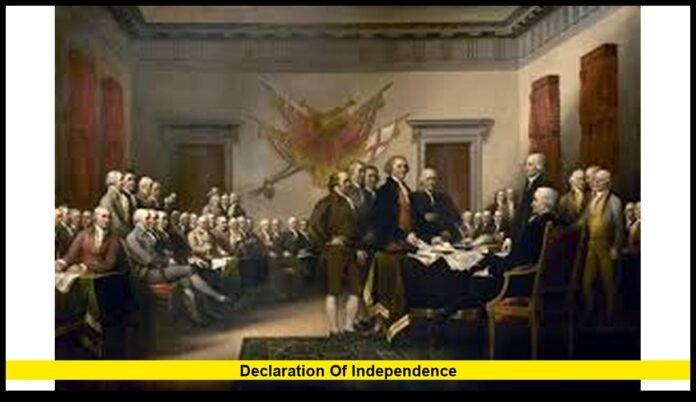

The declaration of independence remains one of the most powerful and influential documents in United States history, continuing to shape national values, civic understanding, and public dialogue today. More than a historical artifact, it stands as a statement of purpose that still informs how Americans think about liberty, equality, and the role of government in everyday life.
Even in the modern era, the declaration holds practical relevance. It is read aloud during national celebrations, studied in classrooms, referenced in political debate, and preserved as a symbol of the country’s founding ideals. Its meaning continues to evolve as each generation measures current realities against the promises made in 1776.
The Conditions That Led to Independence
The declaration of independence was born out of years of growing tension between the American colonies and British authority. Colonial leaders and citizens increasingly felt that decisions affecting their lives were being made without fair representation or consent.
Economic pressures played a major role. New taxes and trade restrictions placed burdens on colonial commerce and daily life. Political frustration deepened as colonial assemblies saw their authority overridden by royal officials. Over time, these grievances created widespread distrust toward British governance.
By the mid-1770s, reconciliation efforts had largely failed. Armed conflict had already begun, and many colonial leaders concluded that independence was the only path forward. The declaration formalized that decision in writing and presented it to the world.
The Purpose Behind the Document
The declaration of independence served multiple purposes at once. It announced separation from British rule, justified that decision, and articulated the political philosophy behind it.
Rather than acting as a technical legal document, it spoke directly to principles. It aimed to explain why the colonies believed their actions were justified, not only to Britain but also to potential allies and future generations.
This clarity of purpose helped unite diverse colonies around a shared vision. Even though their interests varied, the declaration provided common ground rooted in universal ideas about rights and self-government.
Ideas That Shaped the Declaration
The ideas expressed in the declaration of independence reflect broader intellectual movements of the time. Enlightenment thinking emphasized reason, natural rights, and limits on government power.
The document asserts that people possess inherent rights simply by being human. It also states that governments exist to protect those rights and derive their authority from the people they govern.
These ideas challenged long-standing assumptions about monarchy and inherited power. They helped redefine political legitimacy and laid the groundwork for a new form of governance.
How the Declaration Is Structured
The structure of the declaration of independence is deliberate and effective. It begins with an introduction that explains why a formal statement is necessary.
Next, it outlines core political beliefs. This section establishes the moral foundation for independence and frames the arguments that follow.
The document then lists specific grievances against British rule. These points detail actions viewed as abuses of authority and violations of colonial rights.
Finally, it concludes with a clear declaration that the colonies are free and independent states. This closing leaves no ambiguity about the colonies’ intentions.
Public Response at the Time
When the declaration of independence was made public, reactions were strong and varied. In many communities, public readings sparked celebration and renewed commitment to the cause.
At the same time, the decision carried serious risks. Declaring independence was considered an act of treason under British law. Those associated with the declaration faced the possibility of severe consequences.
Despite the danger, the document helped strengthen resolve. It provided a sense of legitimacy and purpose that sustained public support during uncertain times.
Role During the Revolutionary War
Throughout the Revolutionary War, the declaration of independence functioned as a unifying symbol. It reminded soldiers and civilians alike of the reasons behind the struggle.
The declaration also had international implications. By asserting independence, the colonies positioned themselves as a separate political entity capable of forming alliances.
This recognition proved vital in gaining foreign support. The document helped frame the conflict as a fight for self-determination rather than an internal rebellion.
Preservation and National Memory
Today, the original declaration of independence is carefully preserved to protect it for future generations. Conservation efforts focus on maintaining stable conditions that prevent further deterioration.
Preservation reflects more than technical care. It represents a national commitment to remembering the ideas that shaped the country’s founding.
Public display allows citizens to connect directly with the document. Seeing it in person reinforces its significance and enduring relevance.
Influence on American Governance
Although the declaration of independence does not function as law, its influence on American governance is undeniable. Its principles helped shape later foundational documents and political institutions.
The declaration established expectations about accountability and legitimacy. It introduced the idea that government authority is conditional, not absolute.
These concepts have continued to inform debates about policy, power, and individual rights throughout U.S. history.
Impact on Social Change
Over time, the declaration of independence has served as a reference point for social and political reform. Groups seeking greater rights have repeatedly turned to its language to highlight unmet promises.
Movements for abolition, voting rights, and equal protection under the law drew strength from its assertion of equality. The document’s universal language made it a powerful tool for advocacy.
This ongoing use demonstrates how its meaning has grown beyond its original context.
Teaching the Declaration Today
The declaration of independence remains a central part of education in the United States. Students encounter it at multiple stages, each time with greater depth and perspective.
Modern instruction often emphasizes both the ideals expressed and the limitations of their original application. This balanced approach encourages critical thinking and informed citizenship.
Classroom discussions increasingly explore how different groups experienced independence differently, adding nuance to the historical narrative.
National Traditions and Civic Life
Independence Day celebrations frequently feature readings of the declaration of independence. These events reinforce its role in American civic life.
Public ceremonies invite reflection as well as celebration. They provide opportunities to consider how closely the nation aligns with its founding ideals.
Such traditions help keep the document active in the public imagination.
Language and Lasting Appeal
The declaration’s language contributes significantly to its lasting appeal. Its tone is firm yet aspirational, combining moral clarity with emotional resonance.
The writing avoids unnecessary complexity. This accessibility has helped it remain relevant across centuries and social changes.
Its words continue to inspire speeches, art, and public discourse.
Addressing Common Misunderstandings
Despite its prominence, the declaration of independence is sometimes misunderstood. It did not create a new government structure, nor did it instantly secure equality for all.
Instead, it expressed ideals that required continued effort to achieve. Understanding this distinction helps clarify its role in American history.
Recognizing its limitations does not weaken its importance. It highlights the ongoing responsibility to pursue its principles.
Presence in Modern Culture
The declaration of independence frequently appears in films, books, and public art. These representations reflect its deep cultural impact.
Popular portrayals vary in tone, from reverent to critical. Together, they show how the document remains open to interpretation.
Cultural engagement keeps the declaration relevant beyond academic settings.
Role in Contemporary Debate
In today’s political environment, the declaration of independence is often cited to support a wide range of viewpoints. Its broad language allows for differing interpretations.
References to the document underscore its authority as a moral foundation. Even when opinions differ, its relevance is rarely questioned.
This continued use highlights its central place in American public life.
Global Influence
Beyond the United States, the declaration of independence has influenced movements for self-determination around the world. Its ideas helped inspire other nations seeking independence.
The document contributed to broader conversations about sovereignty and human rights. Its reach extends far beyond its original audience.
This global impact underscores the power of its core principles.
Why the Declaration Still Matters
The declaration of independence continues to matter because it defines aspirations rather than outcomes. It challenges each generation to consider how well those aspirations are being met.
Its relevance lies in its ability to provoke reflection and debate. It asks enduring questions about justice, authority, and responsibility.
That ongoing engagement ensures its place in national life.
Looking Forward
As the United States continues to evolve, the declaration of independence will remain a guiding reference point. Its principles will continue to be tested and reexamined.
Future generations will interpret the document through their own experiences. This process keeps it dynamic rather than fixed.
The declaration endures because it invites participation, accountability, and progress.
The declaration of independence remains a mirror through which Americans examine their past and their future—how do you believe its ideals should guide the nation today? Share your thoughts and stay connected to the conversation.