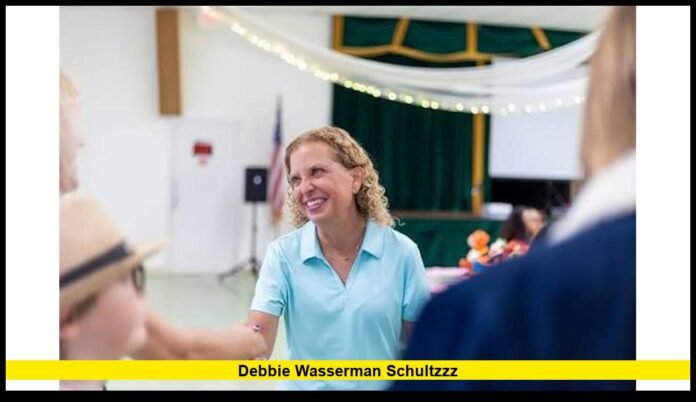

Debbie Wasserman Schultz secured the Democratic nomination for Florida’s newly redrawn 20th Congressional District in the August 18 primary, overcoming four challengers in one of South Florida’s most closely watched congressional contests of the 2026 election cycle. Her victory puts the longtime Democratic lawmaker on course for a November general election against Republican nominee Brent Andersen and marks another major chapter in a political career spanning state and federal office.
The result is significant not only because of Wasserman Schultz’s long congressional tenure, but also because of the unusual circumstances surrounding the race. Florida’s new congressional map forced her to seek another district after her previous seat was redrawn into a much more Republican-leaning constituency. Her decision to compete in District 20 generated a fierce debate about representation, political experience and the future of Democratic leadership in South Florida.
Primary Victory Reshapes the District 20 Race
The Democratic primary featured a crowded field with candidates representing different factions of the party.
Wasserman Schultz faced former U.S. Rep. Sheila Cherfilus-McCormick, former Broward County Mayor Dale Holness, teacher and activist Elijah Manley, and community activist and rapper Luther Campbell.
Rather than allowing the contest to become a straightforward incumbent-versus-challenger race, the field quickly developed into a debate over who should represent a district with a long history of electing Black members of Congress.
Wasserman Schultz ultimately prevailed, demonstrating the strength of her political organization and her ability to attract support despite criticism surrounding her decision to enter the race.
The victory means Democrats will now rally behind her as the party’s nominee for the November election.
Why Florida’s New Congressional Map Matters
Redistricting is at the center of the 2026 District 20 contest.
Florida’s congressional boundaries were dramatically reshaped before this year’s election, changing the political environment for several incumbents. Wasserman Schultz’s former district was transformed in a way that made remaining there substantially more difficult for a Democratic incumbent.
Instead of abandoning her congressional career, she chose to move into District 20.
That decision created an immediate political ripple effect. District 20 is heavily Democratic and includes predominantly Black communities in central and western Broward County. Because of that history, the decision by an established white Democratic incumbent to seek the seat attracted considerable attention.
Supporters argued that voters should have the freedom to select whichever candidate they believed was best qualified to represent them. Critics maintained that the district’s historical role in providing Black political representation deserved greater consideration.
The issue became one of the defining themes of the primary.
A Crowded Democratic Field
The large Democratic field was another important factor in the election.
Several candidates hoped to consolidate support among voters opposed to Wasserman Schultz’s candidacy. There were discussions about reducing the number of candidates in order to prevent votes from being divided among multiple challengers, but no agreement was reached before the qualifying deadline.
That fragmentation ultimately benefited Wasserman Schultz.
With several challengers competing for overlapping constituencies, the veteran congresswoman was able to maintain a strong base while her opponents divided the remaining vote.
The outcome illustrated an important feature of primary elections: a well-known incumbent does not necessarily need majority support when facing several challengers.
For Wasserman Schultz, name recognition, fundraising ability, congressional experience and established political relationships all provided advantages in a competitive field.
Wasserman Schultz’s Long Political Career
The 2026 primary victory adds another milestone to an unusually long political career.
Wasserman Schultz first gained prominence in Florida politics before moving into the U.S. House. Over the years, she became one of the most recognizable Democratic politicians in South Florida.
Her congressional career has included work on health care, women’s health, cancer research, environmental policy, immigration, foreign affairs and other national issues.
She also became a national Democratic figure after serving as chair of the Democratic National Committee.
That national experience continues to be one of her strongest political assets.
For supporters, it demonstrates that she understands how Congress operates and can use relationships developed over many years to advocate for federal funding and legislation.
For critics, however, her long tenure represents the establishment wing of the Democratic Party at a time when progressive activists are calling for new leadership.
The District 20 primary effectively became a contest between those competing visions.
Health Care Remains a Major Issue
Health care has remained closely associated with Wasserman Schultz’s legislative work.
One of the areas she has emphasized is breast cancer awareness and early detection. Her advocacy has been influenced by her own experience with breast cancer, making the issue particularly prominent in her public work.
During 2026, legislation connected to the continuation of federal breast cancer education and early-detection programs received overwhelming support in the House.
Her health policy agenda extends beyond cancer-related programs. She has also focused on access to medical care, affordability and federal policies affecting families.
These issues could remain important during the general election because health care costs continue to be a major concern for voters across the country.
Immigration Becomes Another Campaign Issue
Immigration enforcement has also emerged as a significant issue in Wasserman Schultz’s current political activity.
She has been involved in congressional oversight concerning federal immigration detention facilities in South Florida. Her attention to the issue reflects the growing importance of immigration enforcement in Florida politics.
For Democrats, immigration policy offers an opportunity to challenge Republican approaches to federal enforcement.
For Republicans, the issue provides a way to argue that Democrats have not done enough to address border security and immigration enforcement.
District 20 is unlikely to be immune from that broader national debate.
Local concerns could play an especially important role because South Florida has communities with deep connections to immigration and international affairs.
Affordability Could Shape the November Campaign
Economic concerns are another issue likely to influence the general election.
Voters continue to pay close attention to the cost of housing, groceries, utilities, health insurance and family expenses. These concerns have become central to political campaigns across the United States.
Wasserman Schultz has emphasized affordability as part of her policy agenda, focusing on household expenses and programs designed to reduce financial pressure on families.
The Democratic campaign will likely argue that federal policies should help working families manage rising costs.
Republicans, meanwhile, can be expected to emphasize government spending, taxation and economic policy from a different perspective.
How voters respond to those competing messages could help shape turnout in November.
Representation Remains a Sensitive Question
The debate over representation will not necessarily disappear now that the Democratic primary is over.
District 20 has historically been important to Black voters and Black political leadership in South Florida. That history made the primary unusually consequential.
Wasserman Schultz’s supporters point to her experience and her long record of representing diverse South Florida communities.
Opponents argued that the district should continue to provide a strong pathway for Black representation in Congress.
The debate is part of a much larger national discussion about redistricting.
When congressional boundaries change, questions about which communities should have political influence often become unavoidable. District lines can determine whether particular demographic groups have the opportunity to elect candidates who reflect their communities.
The 2026 Florida map has therefore become more than a technical redistricting issue. It has influenced candidate strategies, campaign messages and the balance of political power.
Who Will Wasserman Schultz Face in November?
The Republican nominee for District 20 is Brent Andersen, a Pompano Beach insurance broker who won his party’s primary on the same election night.
That sets up a Wasserman Schultz-Andersen general election contest for November.
The district’s strong Democratic orientation gives the Democratic nominee a significant structural advantage, but the race will still attract attention because of Florida’s changing political environment.
Republicans have remained highly competitive across Florida, and the state’s redistricting process has created opportunities for the party in several congressional districts.
For Andersen, the challenge will be convincing voters that District 20 should become more competitive despite its Democratic history.
For Wasserman Schultz, the task will be maintaining Democratic turnout and converting her primary coalition into a broader general-election coalition.
What the November Election Could Mean
The District 20 race will be closely watched by political observers because it touches several larger themes in the 2026 midterms.
One is the continued strength of longtime incumbents.
Another is the changing balance between Democratic moderates and progressive candidates.
A third is the impact of redistricting on minority representation.
The election also provides an indication of whether Democrats can maintain their advantage in heavily Democratic South Florida districts despite broader Republican strength elsewhere in the state.
If Wasserman Schultz wins, she would continue her congressional career while representing a district with a different political and demographic configuration from the one associated with much of her time in Washington.
A Test of Democratic Establishment Strength
The primary result was also notable because of the broader political environment within the Democratic Party.
Progressive candidates have made gains in several parts of the country during the 2026 primary season, while establishment Democrats have remained competitive in other contests.
South Florida produced both trends during the latest primary.
Wasserman Schultz defeated several challengers in District 20, while other races produced surprising results for progressive candidates.
Her victory therefore represents an important example of the continuing influence of established Democratic politicians.
It also shows that progressive enthusiasm does not automatically translate into victories against incumbents with deep local networks.
Why Voter Turnout Will Matter
Turnout could become one of the most important factors in November.
Primary elections typically attract fewer voters than general elections, and the composition of the electorate can change significantly between the two contests.
The general election will bring a larger and potentially more diverse group of voters into the process.
Wasserman Schultz will need to maintain support among the voters who backed her during the primary while also appealing to people who did not participate in the Democratic nomination contest.
Andersen faces an even more difficult mathematical challenge because he must persuade voters in a district where Democrats have historically held a substantial advantage.
The level of enthusiasm surrounding national issues, immigration, affordability and congressional control could influence participation.
What to Watch From Wasserman Schultz
Following her primary win, several issues are likely to receive attention as the general-election campaign develops.
Her congressional record will be a central part of her campaign. She is expected to highlight legislation and advocacy involving health care, women’s health, affordability, immigration and South Florida priorities.
Her experience in Washington will also remain a major campaign argument.
At the same time, opponents are likely to focus on her long tenure and the controversy surrounding her decision to run in the redrawn District 20.
That contrast could define much of the campaign.
A New Chapter in South Florida Politics
The 2026 District 20 race illustrates how quickly congressional politics can change when district boundaries are redrawn.
An incumbent who previously represented one constituency can suddenly find that the political landscape no longer works in his or her favor. At the same time, a newly configured district can attract multiple candidates seeking to shape its future.
For Wasserman Schultz, the primary victory represents a successful effort to remain politically relevant despite those changes.
Her ability to win the nomination also demonstrates the continuing value of experience, organization and established voter relationships.
But November will provide a different test.
The general election will require the Democratic nominee to reach beyond the voters who participated in the primary and persuade a broader electorate that her experience and policy priorities are the right fit for the newly configured district.
Final Outlook
The 2026 election has placed South Florida politics under an unusually bright spotlight, and the District 20 contest is one of the clearest examples of how redistricting can reshape an incumbent’s political future.
Wasserman Schultz enters the general election as the Democratic nominee after defeating four challengers in a closely watched primary. She now faces Republican Brent Andersen in a district that remains strongly Democratic but carries significant political and demographic importance.
The campaign will likely revolve around experience, affordability, health care, immigration, representation and the future direction of Democratic politics in South Florida.
Whatever happens in November, the race has already demonstrated that Florida’s new congressional map has changed the political calculations for both parties.
What are your thoughts on the District 20 race and the 2026 Florida elections? Leave a comment and stay connected for the latest political updates.