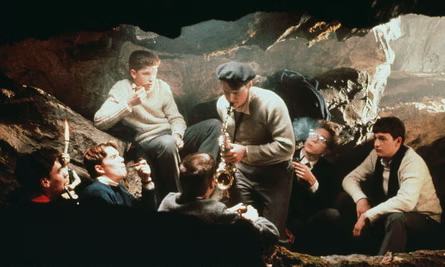

Dead Poets Society continues to hold a powerful place in American culture, even 36 years after its release. The film, celebrated for its themes of individuality, creative expression, and courage, is once again making headlines in 2025. From special university appearances to strong reactions among younger audiences, the story of John Keating and his students is finding fresh relevance in today’s world.
Earlier this year, Tom Schulman, the Academy Award–winning screenwriter of Dead Poets Society, visited the University of Georgia. His lecture drew widespread attention as he spoke candidly about the long journey of the screenplay. He recalled how the story was rejected many times before finally being accepted, noting that persistence and belief in one’s vision are crucial for any writer or artist. His message resonated with students, particularly those pursuing careers in creative fields.
Schulman also reflected on Robin Williams’s unforgettable performance as John Keating. He explained that while the character was carefully crafted in the script, Williams’s improvisation elevated Keating into something extraordinary. Students who attended the event described it as a rare opportunity to hear directly from a storyteller whose work continues to inspire generations.
Gen Z Brings Fresh Critique
While many continue to celebrate Dead Poets Society as an inspirational classic, younger audiences are offering new perspectives. Gen Z viewers, who are now encountering the film through streaming platforms and school screenings, often see it through a different lens.
Some young viewers express admiration for its emotional depth, powerful acting, and striking cinematography. However, others find the film’s message more complicated. A common critique is that the story romanticizes rebellion without showing meaningful structural change. John Keating’s dismissal at the end of the film, they argue, highlights how little actually changed within the rigid school system.
For many Gen Z voices, this raises questions: Is the film still a call to action, or does it ultimately reveal the limits of individual protest in the face of entrenched systems? These discussions are sparking debates in classrooms, online forums, and cultural commentary, showing that the film’s influence is far from fading.
The Timeless Appeal of Dead Poets Society
Despite these critiques, Dead Poets Society continues to inspire audiences. The film’s central message—seize the day—remains powerful for students, educators, and creatives alike. Its themes of individuality, mentorship, and courage resonate strongly in today’s fast-paced, uncertain world.
Educators frequently reference the film in discussions about teaching styles, noting that Keating’s unorthodox methods encourage students to think independently. Writers and artists still turn to the story for motivation, seeing in it a reminder that rejection is part of the journey toward success. And for general audiences, the emotional impact of the final classroom scene remains one of cinema’s most memorable moments.
Key Highlights in 2025
- University lecture: Tom Schulman’s visit to the University of Georgia emphasized perseverance, creativity, and the enduring influence of storytelling.
- Generational debate: Gen Z audiences are both inspired by and critical of the film, sparking conversations about whether its lessons remain relevant.
- Cultural longevity: Nearly four decades later, Dead Poets Society continues to inspire education, art, and popular culture in the United States.
Why It Matters Today
The resurgence of Dead Poets Society in 2025 underscores the lasting power of cinema to influence thought and spark debate. In a time when students face new pressures, from digital distractions to uncertain career paths, the film’s themes feel strikingly contemporary.
- For students: It offers a reminder to pursue passions and think independently, even in structured environments.
- For educators: It raises questions about balancing tradition with creativity in teaching.
- For culture at large: It demonstrates how stories can continue to evolve in meaning as society itself changes.
Closing Thoughts
Dead Poets Society is not just a film locked in the past—it is a living conversation. Its power lies in how it continues to inspire, provoke, and challenge new generations. Whether you see it as a timeless call to seize the day or as a story that needs to be reconsidered through a modern lens, one thing is certain: the dialogue it creates is far from over.
How do you feel about the film’s message in today’s world? Does it still inspire you, or do you think it reflects an earlier era’s struggles? Join the discussion and share your perspective.