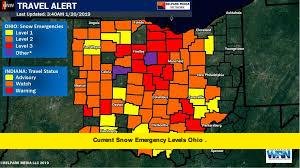

Winter’s return this week has prompted law enforcement and emergency officials across the Buckeye State to activate a range of alerts and restrictions. With fresh snowfall, gusty winds, and dangerously cold temperatures sweeping much of Ohio, counties from the northwest to the Miami Valley are now under officially declared snow emergencies. The current snow emergency levels Ohiowide reflect rapidly deteriorating travel conditions and heightened caution for motorists and residents alike.
Snow emergencies in Ohio are not issued lightly. They reflect real hazards on roadways and signal the severity of conditions that affect travel, safety, and daily life. As of the latest update this morning, multiple counties remain under Levels 1, 2, and even the most severe Level 3 designations, while weather advisories and travel warnings continue to expand. These developments follow a powerful winter storm that has brought significant snow accumulations along with drifting snow and slick surfaces.
Below is a comprehensive look at where snow emergencies have been declared, what these levels mean for residents and travelers, and local responses from authorities as the storm continues.
Overview: Ohio’s Snow Emergencies Toward Mid-January
Across northwest Ohio, a range of snow emergency levels have been activated by county sheriff’s departments as of early Thursday:
- Level 3 (Most Severe): Erie County
- Level 2: Defiance, Huron, Ottawa, Sandusky, Seneca, Wyandot Counties
- Level 1: Fulton, Hancock, Henry, Lucas, Putnam, Williams, Wood Counties
- None Declared: Paulding County currently reports no active snow emergency.
These designations reflect measured conditions on local roadways, severe enough in some areas to restrict travel to essential trips only.
Meanwhile, in southwest Ohio’s Miami Valley region, separate classifications have also been issued:
- Level 1 Snow Emergency: Auglaize, Champaign, and Mercer Counties have reported conditions that require caution on the roads.
- No Level 2 or 3 Emergencies were in effect in that area at the latest update, and no “Travel Advisory” category was separately listed.
These alerts are being updated continuously as county authorities monitor snow accumulations, drifting conditions, and surface ice.
Understanding the Ohio Snow Emergency System
Ohio’s classification system for snow emergencies is designed to clearly communicate the level of risk associated with winter weather and road conditions:
- Level 1 Snow Emergency: This lowest emergency level means that roadways have become hazardous due to blowing and drifting snow, often combined with ice. Drivers are advised to exercise caution and adjust travel plans accordingly.
- Level 2 Snow Emergency: This middle tier signals more dangerous travel. Roads are hazardous enough that only those who deem travel essential should be on the road, and employers may be advised to adjust reporting expectations.
- Level 3 Snow Emergency: The highest level indicates severe conditions. Roads are effectively closed to all non-emergency travel unless an absolute necessity exists. Law enforcement may stop or detain drivers who are out without valid cause.
These criteria are established by the Ohio Committee for Severe Weather Awareness and implemented locally by county sheriffs and emergency management teams.
Where Conditions Are Most Severe
Erie County currently stands out as Ohio’s only county under a Level 3 snow emergency, signaling that non-essential travel is strongly discouraged and restrictions may be enforced. This reflects high accumulations, poor visibility, and treacherous road surfaces that have left many major roads unplowed or icy.
Several neighboring counties are under Level 2 conditions, where drifting snow and slick surfaces have made many roadways dangerous. In these areas — like Defiance and Seneca — officials are advising residents to postpone travel until conditions improve.
Communities under Level 1 warnings may not be closed entirely, but officials still caution drivers to watch for drifting snow, black ice, and variable visibility, especially on rural and secondary roadways.
School Closures and Community Response
In addition to emergency declarations, the storm’s impact on daily life has been significant. Hundreds of schools in Northeast Ohio have canceled classes in light of hazardous travel conditions. Winter weather advisories and lake-effect snow warnings have compounded risks across many counties and are expected to persist through the day based on regional weather reporting.
Local public safety and emergency agencies have also emphasized parking bans in certain cities to ensure snowplows and emergency vehicles can move freely on primary routes. These parking restrictions help crews clear snow more efficiently and reduce secondary hazards caused by parked vehicles on narrow streets.
Travel and Safety Tips for Residents
Given the current emergency declarations and ongoing winter storm conditions, Ohio residents should follow several precautions:
- Avoid Non-Essential Travel: Especially in Level 2 and Level 3 areas, staying off the road can reduce risk to both drivers and emergency responders.
- Check Local Alerts Often: Snow emergency levels and advisories can change quickly as conditions evolve. County sheriff offices often issue updates through local media, social platforms, and alert systems.
- Prepare Your Vehicle: Ensure your car has sufficient fuel, winter tires, and emergency supplies if travel is unavoidable.
- Watch for Secondary Hazards: Drifting snow can create hidden snowbanks and block visibility at intersections.
Communities across Ohio are also reminding residents to look out for neighbors, especially older adults and individuals with mobility challenges, during the storm.
What to Expect Next
Forecasters are tracking this winter storm as it continues to move through Ohio. The heaviest precipitation and drifting snow are forecast to occur where Lake Erie influences local weather patterns, especially in the northern tier of counties. Ohio weather officials expect additional advisories and potentially expanded snow emergency announcements as conditions change.
In the coming hours, temperatures are expected to stay below freezing statewide, which means newly fallen snow is unlikely to melt quickly. That prolongs dangerous travel conditions and elevates the risk of black ice forming overnight.
Emergency agencies recommend residents sign up for local alert systems to receive real-time updates specific to their county.
What has your experience been with travel or weather challenges in your area? Share your observations and stay connected for updates.