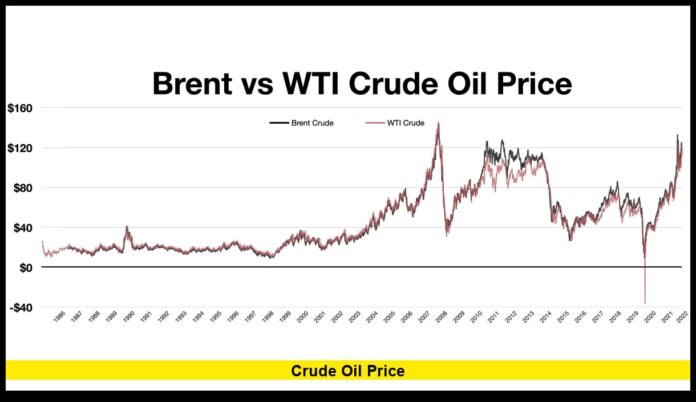

Crude oil price is holding steady today, with U.S. benchmark rates moving within a narrow range as global supply controls and consistent demand continue to shape the market.
As of March 23, 2026, West Texas Intermediate (WTI) crude is trading in the mid-$70s per barrel, while Brent crude remains slightly higher, close to the upper-$70s range. Price movement has stayed relatively stable in recent sessions, although intraday fluctuations continue as traders respond to fresh economic signals and production updates.
Latest Crude Oil Price Levels
The current crude oil price reflects a balanced market with no sharp breakout in either direction.
| Benchmark | Price (USD per barrel) | Market Direction |
|---|---|---|
| WTI (U.S.) | $73–$76 | Range-bound |
| Brent (Global) | $77–$80 | Slightly firm |
This pricing range highlights a market that is stable but highly sensitive to sudden developments.
Why Crude Oil Price Is Moving Right Now
Several confirmed factors are influencing crude oil price trends across global and U.S. markets.
OPEC+ Supply Management
Production policies from OPEC+ remain a major influence. Output limits introduced earlier are still affecting supply levels.
Producers are maintaining a cautious stance, avoiding rapid increases. This controlled supply continues to support prices and prevent sharp declines.
Strong U.S. Production, But Controlled Growth
The United States continues to produce oil at near-record levels. However, companies are not rushing to expand aggressively.
Instead, producers are focusing on financial stability. This disciplined approach prevents oversupply and helps maintain price stability.
Stable Demand Across Key Sectors
Demand for crude oil remains consistent, especially in:
- Transportation and travel
- Industrial production
- Commercial logistics
In the U.S., gasoline consumption remains steady. Global demand also continues to recover, keeping pressure on supply.
Geopolitical Sensitivity
Crude oil price often reacts quickly to geopolitical developments. Even small disruptions in oil-producing regions can affect expectations.
Markets remain alert, which explains the short-term price swings seen in daily trading.
How Crude Oil Price Impacts the U.S. Economy
Changes in crude oil price directly affect everyday life in the United States.
Fuel Costs
When oil prices rise, gasoline prices usually follow. This impacts:
- Daily commuting
- Road travel expenses
- Airline ticket pricing
Inflation and Consumer Spending
Energy costs influence overall inflation. Higher fuel costs can lead to increased prices for goods and services.
This affects household budgets and overall consumer spending patterns.
Business and Industry Effects
Many industries depend heavily on fuel. Crude oil price changes can influence:
- Shipping and logistics costs
- Manufacturing expenses
- Profit margins
Companies often adjust pricing strategies based on energy costs.
Recent Crude Oil Price Trend
Over the past few weeks, crude oil price has shown a clear pattern:
- Prices have remained within a defined range
- Minor increases have followed supply-related news
- Short dips have occurred due to economic uncertainty
The market has avoided extreme volatility but remains reactive to new developments.
Supply and Demand Balance Explained
The current crude oil price environment is shaped by a delicate balance.
Supply Factors
- Controlled output from major oil producers
- High but stable U.S. production
- Limited rapid expansion in supply
Demand Factors
- Consistent U.S. fuel usage
- Ongoing global consumption recovery
- Seasonal travel demand
This balance is keeping prices stable without sharp upward or downward movement.
Short-Term Crude Oil Price Outlook
In the near term, crude oil price is expected to stay within the current range unless a major shift occurs.
Key factors to monitor include:
- Production decisions from major oil producers
- U.S. inventory levels
- Economic data releases
- Global political developments
Any sudden change in these areas could quickly move prices.
Long-Term Market Direction
Several long-term factors will shape crude oil price trends going forward.
Energy Transition
Renewable energy adoption continues to grow. However, oil remains essential for transportation and industry.
This means demand is likely to stay strong in the near future.
Investment Trends
Lower investment in new oil projects could limit future supply. This may support higher prices over time.
Global Economic Growth
Economic expansion increases energy demand. Strong growth supports higher crude oil price levels, while slowdowns can reduce demand.
What Consumers Should Watch
Consumers can track crude oil price trends to better manage expenses.
Helpful steps include:
- Monitoring fuel price changes
- Planning travel based on price trends
- Using fuel-efficient transportation
- Adjusting household budgets
Awareness helps reduce the impact of rising energy costs.
Conclusion
Crude oil price today reflects a stable but sensitive market, shaped by controlled supply, steady demand, and ongoing global uncertainties. Prices remain within a predictable range, but the situation can change quickly with new developments.
What do you think will happen next with crude oil price? Share your thoughts and stay updated as the market continues to evolve.