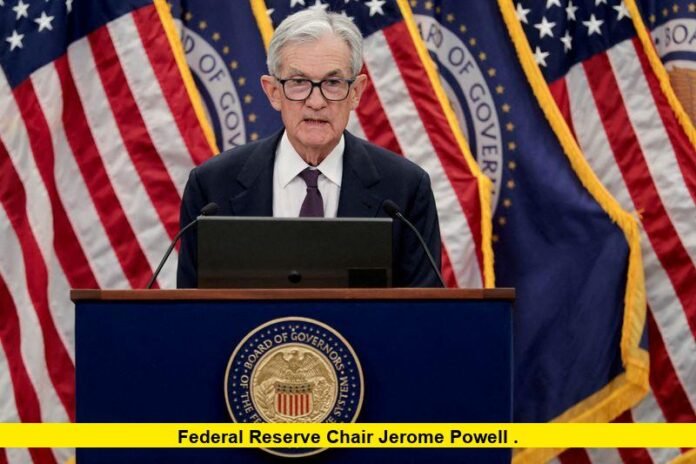

The legal firestorm surrounding Federal Reserve Chair Jerome Powell reached a dramatic turning point Friday when a federal judge dealt a stunning blow to the Justice Department’s criminal investigation into Powell, gutting the probe and sending shockwaves through Washington, Wall Street, and living rooms across America.
This is the story everyone is talking about — and it touches your mortgage, your savings, and the independence of the most powerful financial institution in the world.
Follow every development closely, because what happens next could fundamentally change how America’s economy gets managed.
How We Got Here: A Building, a Hearing, and a Criminal Probe
It started with bricks and mortar. The Federal Reserve has been renovating its historic headquarters in Washington, D.C., a project that began with an initial budget of roughly $1.9 billion in 2019 and has since ballooned to approximately $2.5 billion. Critics inside the Trump White House put the real cost even higher, claiming it could reach $4 billion.
In June 2025, Powell testified before the Senate Banking Committee about those renovation costs. He denied that the project included luxury features like VIP dining rooms, special elevators, or elaborate new marble installations, stating that existing materials were simply being reused. The White House was not satisfied with those answers.
By November 2025, U.S. Attorney for the District of Columbia Jeanine Pirro had opened a criminal investigation into whether Powell made false or misleading statements during that testimony. In January 2026, the Federal Reserve was formally served with grand jury subpoenas threatening a criminal indictment — an event with no modern precedent in the history of the central bank.
Powell’s Unprecedented Response
Powell did not stay quiet. Days after receiving the subpoenas, he released a video statement that immediately went viral, calling the investigation a direct attack on the Fed’s independence rather than a genuine legal matter.
He argued that the subpoenas were not about his testimony or the building project at all. In his words, the real issue was whether the Federal Reserve could continue setting interest rates based on economic evidence — or whether monetary policy would instead be shaped by political pressure and intimidation. He reminded the country that he has served under four administrations, Republican and Democratic, and has never made decisions out of political fear or favor.
The Judge’s Bombshell Ruling
On Friday, March 14, 2026, Chief Judge James Boasberg of the U.S. District Court for Washington, D.C., unsealed a ruling that quashed the Justice Department’s subpoenas entirely.
The language in his opinion was striking. Boasberg wrote that the government produced essentially zero evidence to suspect Powell of any crime, and that the justifications offered for the subpoenas were so thin and unsubstantiated that they appeared to be nothing more than a pretext. He found an abundance of evidence suggesting the dominant purpose of the subpoenas was to pressure Powell into voting for lower interest rates — or to force him out so the White House could install a more compliant Fed chair.
The judge ruled that the investigation appeared designed to bulldoze the Federal Reserve’s statutory independence — a protection that has existed for decades specifically to prevent central bank decisions from being made under political influence.
Pirro Fires Back, Promises an Appeal
U.S. Attorney Jeanine Pirro did not accept the ruling quietly. She called Boasberg an activist judge and blasted his decision at a hastily organized news conference, saying he had neutered the grand jury’s ability to investigate potential crimes. She announced the Department of Justice would appeal the ruling, keeping the legal battle alive.
The appeal means this story is far from finished. Powell may remain in legal limbo even as his term as Fed chair approaches its May 2026 expiration date.
The Senate Standoff Nobody Expected
Here is where the political stakes get even higher. Republican Senator Thom Tillis of North Carolina has placed a firm hold on the Senate confirmation of Kevin Warsh — Trump’s chosen nominee to succeed Powell — until the criminal probe is fully dropped.
Republicans hold only a slim majority on the Senate Banking Committee, which must approve any Fed chair nomination. Tillis has the votes to derail the process entirely. As of Friday, he had not budged, calling the investigation a failed attack on Fed independence. He said seven Republican members of the banking committee have already stated they believe no crime was committed at Powell’s June hearing.
That means the DOJ’s decision to appeal could delay Warsh’s confirmation, leaving the Federal Reserve in a prolonged period of leadership uncertainty just as major economic decisions loom.
What This Means for Everyday Americans
This is not just a Washington drama. The Federal Reserve controls interest rates that directly affect car loans, home mortgages, credit card rates, and business borrowing costs. President Trump has repeatedly pushed for aggressive rate cuts, which Powell and the Fed have resisted based on their assessment of inflation and economic conditions.
If political pressure succeeds in reshaping how the Fed operates, those everyday financial realities could shift in ways that affect millions of households. Economists have consistently warned that forcing premature rate cuts could weaken the dollar and stoke long-term inflation — the same kind of price increases that have squeezed American families for years.
Powell’s current term ends May 15, 2026. Until then, he has said he intends to continue doing his job with full independence and integrity, regardless of the legal cloud hanging over him.
What Comes Next
The DOJ appeal will move into the court system, likely stretching the legal battle past Powell’s final day as chair. The Senate confirmation standoff for Warsh remains unresolved. The Federal Open Market Committee is scheduled to meet again soon, and Powell will preside over that meeting as if nothing has changed — because, legally speaking, nothing has changed yet.
Whether the appeals court sides with the judge’s ruling or opens the door for the investigation to resume, the precedent being set here will shape the relationship between the White House and the Federal Reserve for generations.
What do you think — should the DOJ continue pursuing this case, or has the judge settled the matter? Drop your thoughts in the comments and keep watching this story as it develops.