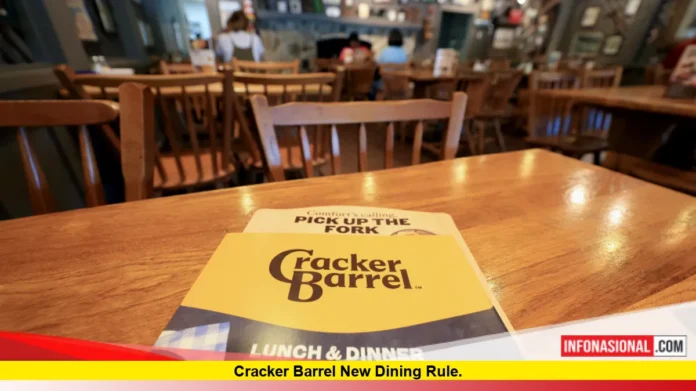

Cracker Barrel Old Country Store has introduced a notable change to how its traveling employees handle meals, and the decision is drawing attention far beyond corporate accounting circles. The cracker barrel new dining rule adjusts expectations for business travel dining and expense coverage, signaling a sharper focus on internal discipline as the company navigates a complex period of operational recalibration.
This policy does not affect customers directly, but it offers a revealing look into how one of America’s most recognizable restaurant brands is responding to financial pressure, public scrutiny, and evolving corporate norms.
What Changed Behind the Scenes
Under the updated internal policy, employees traveling on company business are expected to eat their meals at Cracker Barrel restaurants whenever feasible. The guidance applies primarily to corporate staff, trainers, and regional leaders whose roles require frequent travel between locations.
The rule also removes alcohol from standard reimbursable travel expenses. Alcohol purchases during work trips are no longer covered unless leadership approval is granted in advance. Employees may still choose to purchase alcoholic beverages on their own, but the company will not absorb those costs under routine circumstances.
While the policy includes flexibility for situations where a Cracker Barrel location is unavailable or impractical to reach, the direction is clear: company dining is preferred, and spending limits are tighter than before.
Why the Company Is Tightening Travel Spending
Cracker Barrel’s move comes at a time when many U.S. companies are reassessing discretionary expenses. Travel-related costs, including meals, are among the easiest areas to adjust without altering wages or benefits. For restaurant operators in particular, internal spending can rise quickly when travel schedules expand.
For Cracker Barrel, the timing also aligns with a broader effort to steady the business following a year marked by operational shifts and public debate over brand identity. Leadership has been working to balance customer expectations with the realities of rising costs and competitive pressures in the casual dining sector.
Encouraging employees to dine at company locations during travel serves multiple purposes: reducing reimbursement expenses, reinforcing brand familiarity, and ensuring consistent exposure to the food and service being delivered to guests nationwide.
Employee Experience and Practical Realities
Employees affected by the policy are adapting to a more structured approach to travel meals. For some, the change is relatively seamless, especially in regions where Cracker Barrel restaurants are common along highways and suburban corridors. For others, particularly those traveling to dense urban areas or regions with fewer locations, planning meals may require extra coordination.
The rule’s flexibility clause allows for exceptions when dining at a Cracker Barrel is not realistic. However, employees are expected to document those circumstances when submitting expenses, adding an extra layer of administrative responsibility.
The removal of alcohol reimbursement has also shifted how employees approach client dinners or team meals while traveling. Social settings that once included company-covered drinks are now more restrained, reflecting a cultural shift toward stricter expense accountability.
A Reflection of Broader Corporate Trends
Cracker Barrel’s dining directive mirrors a larger movement across corporate America. Companies in multiple industries have revised travel policies to reflect tighter budgets and changing workplace norms. Reduced per diem allowances, capped meal reimbursements, and narrower definitions of reimbursable expenses have become increasingly common.
What sets Cracker Barrel apart is the symbolic nature of its policy. By steering employees toward its own restaurants, the company is not just managing costs but also reinforcing internal alignment with its core product.
This approach blurs the line between expense management and brand immersion, making the policy as much about culture as accounting.
The Brand Identity Factor
Cracker Barrel occupies a unique space in American dining culture. Known for its homestyle meals, country décor, and roadside appeal, the brand has cultivated deep loyalty over decades. Any internal change tied to the dining experience naturally draws interest, even when customers are not directly impacted.
By emphasizing internal dining, the company subtly underscores confidence in its menu and service standards. Employees who regularly eat at the restaurants they support may be better positioned to identify inconsistencies, suggest improvements, and understand customer feedback firsthand.
At the same time, critics argue that mandatory dining preferences risk feeling performative if not paired with genuine operational improvements.
Public Reaction and Perception
News of the policy has circulated widely, prompting discussion among customers, industry analysts, and workers in similar roles at other companies. Some observers view the change as a reasonable cost-saving measure, especially given the economic realities facing the restaurant industry.
Others see it as an example of corporate penny-pinching that places additional constraints on employees without offering clear benefits in return. The conversation reflects a broader tension between fiscal responsibility and workplace flexibility.
For many customers, the policy serves as another data point in assessing how Cracker Barrel is navigating its current chapter. While the rule does not alter menu prices or dining room experiences, it contributes to the narrative surrounding the company’s internal priorities.
Operational Implications Beyond Travel
While the rule focuses on travel dining, its implications extend further. Expense policies often set the tone for broader operational behavior. Clear boundaries around spending can influence decision-making at multiple levels of an organization.
Managers may become more mindful of scheduling travel only when necessary. Teams may rely more heavily on virtual meetings where feasible. Over time, these shifts can reshape how a company allocates resources and evaluates efficiency.
The dining rule also signals a renewed emphasis on internal accountability, a theme that has gained prominence across industries in recent years.
How This Fits Into Cracker Barrel’s Recent Direction
Over the past year, Cracker Barrel has taken steps to recalibrate its approach after experimenting with changes that did not resonate as intended. Leadership has emphasized returning focus to the brand’s foundational strengths while addressing cost structures that affect long-term sustainability.
The updated travel dining policy fits squarely within that framework. It is not a headline-grabbing overhaul but a targeted adjustment that reflects a more conservative operational stance.
Such moves often fly under the radar, yet they can have a cumulative impact on financial performance and organizational culture.
Looking Ahead
Whether the policy becomes a permanent fixture or evolves over time will depend on how effectively it meets its goals. If the rule delivers measurable savings without creating friction for employees, it may serve as a model for other restaurant groups exploring similar strategies.
If challenges arise—such as logistical difficulties or morale concerns—leadership may refine the approach to strike a better balance between control and flexibility.
For now, the change stands as a clear indicator of where Cracker Barrel is placing its emphasis: disciplined spending, internal consistency, and a renewed focus on the core dining experience.