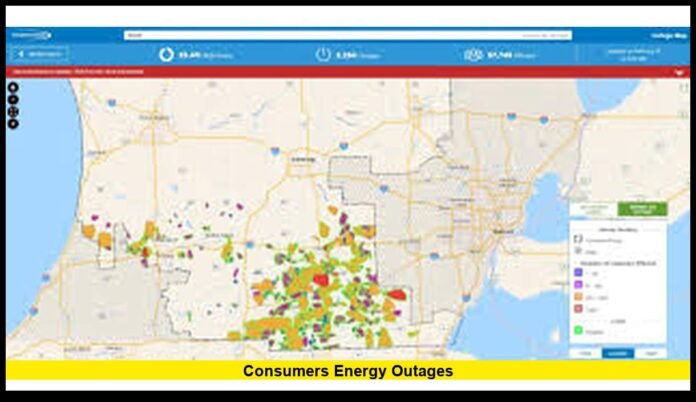

Consumers Energy outages remain a major concern for Michigan residents as widespread power disruptions continue to impact homes, businesses, and essential services across the state. Ongoing weather-related damage, combined with seasonal demand and infrastructure strain, has resulted in intermittent and extended power losses for thousands of customers. Utility crews remain active across multiple regions as restoration efforts continue under challenging conditions.
The situation has drawn widespread attention as affected customers navigate cold temperatures, disrupted routines, and uncertainty about restoration timelines. While many areas have already seen service restored, others continue to experience outages that require complex repairs and careful safety coordination.
The Scale of the Current Power Disruptions
Consumers Energy operates one of the largest electric systems in the Midwest, serving millions of customers across Michigan. When outages occur at scale, the impact spreads quickly across residential neighborhoods, commercial corridors, and rural communities. The current disruption reflects one of the more demanding operational periods of the season.
Power interruptions range from short-lived service losses to extended outages lasting several hours or longer. In some cases, customers experience multiple interruptions as temporary repairs are made and additional damage is discovered. The scale of the disruption underscores how interconnected and weather-sensitive the electric grid remains.
Consumers Energy continues to manage thousands of active outage reports while balancing safety, access challenges, and system stability.
Weather as the Primary Driver of Outages
Michigan’s winter weather plays a central role in the current outage situation. Ice accumulation, heavy snow, and high winds place enormous stress on power lines, poles, and surrounding vegetation. Even well-maintained systems can suffer damage when extreme conditions persist.
Ice storms are particularly damaging because frozen buildup adds weight to tree limbs and overhead lines. When combined with strong winds, branches snap and fall onto energized equipment. These events often lead to delayed outages, occurring hours after the initial storm passes.
Rapid temperature changes further complicate conditions by increasing electricity demand for heating while stressing older infrastructure components.
Infrastructure Challenges and Grid Strain
Beyond weather, infrastructure stress contributes to outage frequency and duration. Portions of Michigan’s electric grid rely on overhead lines that remain vulnerable to falling trees and debris. While upgrades continue, large sections of the system still face exposure during severe weather.
High seasonal demand places additional strain on transformers and substations. When usage spikes suddenly, protective systems may shut down portions of the grid to prevent equipment damage. These protective outages help avoid larger failures but can temporarily leave customers without power.
The combination of weather damage and load-related strain explains why outages sometimes spread even after storms weaken.
How Restoration Efforts Are Prioritized
When large-scale outages occur, Consumers Energy follows a structured restoration strategy designed to maximize safety and efficiency. Crews do not restore power on a first-come basis but instead follow a priority-based approach.
Restoration generally begins with:
- Securing dangerous conditions such as downed live wires
- Restoring power to emergency services and critical facilities
- Repairing major transmission lines serving large populations
- Addressing neighborhood-level distribution damage
- Restoring individual customer connections
This method allows power to return to the greatest number of customers as quickly as possible while minimizing risks to workers and the public.
Why Some Areas Take Longer to Restore
Customers often wonder why neighboring areas regain power sooner. The answer lies in how electric circuits are designed and how damage occurs. Two homes on the same street may be served by different circuits or substations.
Some outages involve simple fixes such as resetting protective devices. Others require replacing poles, restringing lines, or removing fallen trees. Rural areas often experience longer restoration times due to distance between customers and limited access routes.
These factors mean restoration progresses unevenly, even within the same community.
Temporary Repairs and Repeated Outages
During major outage events, crews may perform temporary repairs to restore service quickly. These fixes stabilize the system but may not fully resolve underlying damage. If weather conditions persist or demand increases, temporary repairs can fail, leading to additional outages.
Once conditions allow, crews return to complete permanent repairs. While frustrating for customers, this approach restores power faster overall while allowing crews to manage limited resources effectively.
Repeated outages during the same event often reflect this balance between speed and long-term reliability.
Safety Risks During Power Outages
Power outages pose serious safety concerns beyond inconvenience. During winter, loss of electricity can affect heating systems, medical equipment, and water supply in some homes. Reduced visibility and disabled traffic signals increase accident risks.
Downed power lines represent one of the most dangerous hazards. Lines may appear inactive but can remain energized. Contact with these lines can cause severe injury or death.
Consumers Energy consistently urges residents to treat all downed lines as live and maintain a safe distance until crews arrive.
Generator and Heating Safety Concerns
As outages continue, many households turn to alternative power and heating sources. Improper use of generators or heating devices presents significant risks, particularly carbon monoxide exposure and fire hazards.
Generators should never be operated indoors or near windows. Portable heaters must be kept clear of flammable materials. Candles, while commonly used, pose fire risks and should be used with caution.
Safety awareness remains essential during extended outage periods.
Impact on Homes and Daily Life
Extended power outages disrupt nearly every aspect of daily life. Families may struggle to keep homes warm, preserve food, and maintain communication. Remote work, online schooling, and medical care can be interrupted without reliable electricity.
Households with young children, elderly residents, or individuals with medical needs face heightened challenges. Even short outages can create stress when temperatures drop or services are interrupted.
Community support and preparedness help mitigate these impacts during prolonged outages.
Economic Effects on Businesses
Businesses across Michigan feel the effects of power disruptions quickly. Retailers, restaurants, manufacturers, and service providers may face lost revenue, spoiled inventory, and operational downtime.
Small businesses are particularly vulnerable, as even brief outages can disrupt payment systems and customer access. Extended outages may require temporary closures, affecting employees and local economies.
Rapid restoration remains a priority to limit economic fallout during major outage events.
Critical Facilities and Priority Restoration
Hospitals, emergency response centers, water treatment plants, and communication facilities receive priority during restoration efforts. These locations support public safety and must remain operational during emergencies.
Restoring power to critical infrastructure often involves repairing high-voltage transmission lines that also serve surrounding communities. As a result, nearby customers may regain power sooner once these major repairs are completed.
This priority system helps stabilize communities during widespread outages.
Vegetation and Tree-Related Damage
Tree contact remains one of the leading causes of Consumers Energy outages. Michigan’s heavily wooded areas create ongoing challenges for overhead power lines, especially during storms.
While regular trimming reduces risk, extreme weather can cause trees outside trimmed zones to fall onto lines. Ice-laden branches and uprooted trees often damage multiple spans of line at once.
Vegetation management remains a key focus for reducing future outage frequency.
Modernization Efforts and Reliability Improvements
Consumers Energy continues to invest in system upgrades aimed at improving reliability. These efforts include stronger poles, smarter grid technology, and automated switching systems that isolate damage more quickly.
Modern equipment allows unaffected sections of the grid to restore power automatically while crews address damaged areas. These improvements reduce outage duration but cannot eliminate weather-related disruptions entirely.
Continued investment remains essential as climate patterns evolve.
Why Winter Outages Can Increase After Storms End
Many outages occur after storms appear to have passed. Ice-weakened trees may fall hours or days later, especially when temperatures rise or winds increase. Meltwater can also refreeze, adding stress to equipment.
This delayed damage explains why outage numbers sometimes rise even during clear weather following a storm. Crews must remain vigilant during these periods.
Understanding this pattern helps manage expectations during restoration.
Customer Reporting and Outage Awareness
Customer reports play a critical role in identifying localized outages. While monitoring systems detect major disruptions, individual reports help confirm service loss at the neighborhood or home level.
Prompt reporting ensures issues are logged accurately and prioritized appropriately. Even if nearby customers are already without power, individual confirmation can improve response accuracy.
Clear communication benefits both customers and restoration teams.
Emotional and Community Impact
Extended outages affect mental well-being as much as physical comfort. Uncertainty, cold temperatures, and disrupted routines increase stress and frustration. Community cooperation becomes especially important during these times.
Checking on neighbors, sharing accurate information, and supporting vulnerable residents help communities cope more effectively. Outage events often highlight both challenges and resilience at the local level.
What Customers Can Expect Going Forward
As restoration continues, outage numbers typically decline in phases. Major repairs restore service to large areas, followed by slower progress addressing scattered individual issues.
The final stages of restoration often take the longest, as crews resolve complex or hard-to-access damage. Patience remains essential during this phase.
Consumers Energy continues to focus on safety, accuracy, and steady progress as conditions allow.
Preparing for Future Outages
Preparation remains one of the most effective ways to reduce outage impacts. Maintaining emergency supplies, charging devices ahead of storms, and reviewing household safety plans can make a significant difference.
Simple steps such as identifying warming locations and checking heating alternatives help households respond more confidently when outages occur.
Prepared communities recover more quickly from power disruptions.
Looking Ahead for Michigan’s Power Grid
Consumers Energy outages highlight the ongoing challenge of maintaining reliable service in a state with demanding weather conditions. Infrastructure improvements, smarter technology, and customer preparedness all play roles in strengthening resilience.
While outages cannot be eliminated entirely, lessons learned from each event help guide future improvements. Continued focus on safety, reliability, and communication remains essential.
Have Consumers Energy outages affected your area recently? Share your experience and stay informed as restoration efforts continue across Michigan.