

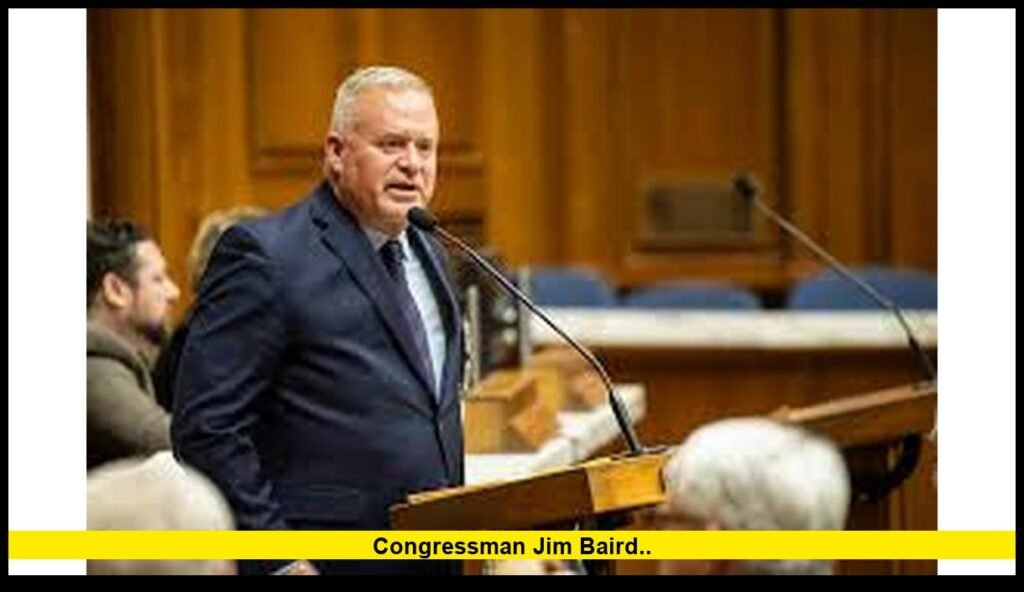
Congressman Jim Baird is the Republican U.S. Representative for Indiana’s 4th Congressional District, serving in the House since 2019.
Congressman Jim Baird remains a central figure in Indiana and national politics as he continues to serve Indiana’s 4th Congressional District while navigating a pivotal moment in both his personal recovery and political career. His long-standing presence in Congress, combined with recent developments that have drawn national attention, has placed renewed focus on his leadership, legislative priorities, and the direction of representation for west-central Indiana.
This article presents a fresh, original, and fully factual account of Congressman Jim Baird’s background, current status, legislative work, constituent impact, and outlook as the 2026 election cycle unfolds. It is written for a U.S. audience and reflects confirmed information available as of today.
Who Is Jim Baird?
Jim Baird has served as the U.S. Representative for Indiana’s 4th Congressional District since 2019. His district stretches across west-central Indiana and includes a mix of agricultural communities, small towns, and growing suburban areas. The region’s economy is deeply tied to farming, manufacturing, and logistics, factors that have strongly shaped Baird’s policy focus.
Before entering Congress, Baird built decades of experience in public service. He served in the Indiana House of Representatives and held local leadership roles as a county commissioner. Long before elected office, he also served in the U.S. Army during the Vietnam War, an experience that continues to influence his views on national defense and veterans’ affairs.
His career reflects a steady progression from local governance to state leadership and eventually to the national stage, rooted in a reputation for prioritizing district interests over political theatrics.
Recent Developments and Current Status
In early 2026, Congressman Jim Baird and his wife were hospitalized following a serious car accident in Indiana. Officials confirmed that both were responsive and in stable condition. While limited medical details were released publicly, the incident prompted widespread attention due to Baird’s role in Congress and the timing amid a closely divided House of Representatives.
Since the accident, his congressional office has continued normal constituent operations, signaling continuity of representation for the district. Lawmakers, political observers, and constituents alike are watching for updates regarding his recovery and return to Capitol Hill, particularly as major legislative votes approach.
Indiana’s 4th Congressional District: The Region He Represents
Indiana’s 4th District is one of the state’s most politically significant regions. It combines:
- Large agricultural operations producing corn, soybeans, and livestock
- Manufacturing hubs tied to automotive and industrial supply chains
- Expanding suburban communities with growing infrastructure needs
Voters in the district tend to prioritize economic stability, affordable healthcare, agricultural support, and national security. These concerns have consistently shaped Congressman Baird’s legislative agenda.
Legislative Priorities That Define His Tenure
Agriculture and Rural Investment
Agriculture remains the backbone of Indiana’s 4th District. Congressman Jim Baird has repeatedly supported policies designed to:
- Protect American farmers from unfair trade practices
- Expand access to export markets
- Stabilize farm income during economic uncertainty
He has emphasized the importance of ensuring that federal policy reflects the realities faced by family farms and rural producers, particularly in times of global market volatility.
Beyond farming itself, Baird has supported rural investment initiatives that address infrastructure gaps, including transportation networks and broadband access. These efforts aim to keep rural communities competitive and economically viable.
Healthcare Access in Rural Communities
Healthcare access remains one of the most pressing challenges in Baird’s district. Many rural hospitals operate on thin margins, and residents often face long travel times for specialized care.
Baird has backed federal funding streams aimed at:
- Strengthening rural hospitals
- Expanding access to primary and emergency care
- Supporting long-term sustainability of healthcare facilities
These efforts have been framed as essential not only to public health but also to economic stability in rural areas, where hospitals often serve as major employers.
National Defense and Veterans’ Issues
As a veteran, Congressman Jim Baird places particular emphasis on national defense and the welfare of service members. His legislative record reflects consistent support for defense authorization measures that address:
- Military readiness
- Equipment modernization
- Support services for veterans
He has also supported initiatives focused on improving veterans’ access to healthcare and benefits, drawing on his own military background to inform policy positions.
Committee Responsibilities and Influence
Much of Jim Baird’s influence in Congress is exercised through committee work rather than public-facing headlines. These assignments place him at an early and influential stage of the legislative process, where policy direction is often set well before proposals reach the House floor for final debate and voting. For a district with strong agricultural roots and rural priorities, this behind-the-scenes role is especially significant.
Through his committee responsibilities, Baird helps shape decisions involving agricultural policy and rural economic development, ensuring that federal programs reflect the realities faced by farmers, producers, and small-town economies. His input frequently centers on farm stability, rural investment, and long-term economic sustainability for communities that depend on agriculture as a primary driver of growth.
In the area of national security and foreign affairs, Baird’s participation allows him to weigh in on matters affecting military readiness, defense posture, and international engagement. His background informs discussions on defense priorities and the practical impacts of policy decisions on service members and national security interests.
Baird also contributes to science, technology, and innovation policy, an area that increasingly intersects with agriculture, manufacturing, and national defense. Committee work in this space influences federal research priorities, workforce development, and technological competitiveness, with downstream effects on both rural and urban communities.
By engaging at the committee level, Congressman Baird is able to advocate for district priorities early in the process, often shaping how legislation is written, amended, and advanced. This role gives him a lasting impact on policy outcomes, reinforcing his influence long before final votes determine a bill’s passage.
Relationship With Constituents
Congressman Jim Baird’s relationship with constituents has drawn both support and criticism over the years. Some residents have expressed frustration about limited opportunities for direct engagement, including fewer public town halls compared to other lawmakers.
Supporters, however, point to his emphasis on results-driven representation. They note that his office remains active in constituent services, assisting with federal agency issues, veterans’ benefits, and agricultural program navigation. For many voters, legislative outcomes and district funding matter more than frequent public appearances.
As the 2026 election cycle progresses, constituent outreach is expected to increase, with greater emphasis on voter engagement across the district.
House Majority and National Political Impact
The timing of Jim Baird’s recent hospitalization has intensified focus on the fragile balance of power in the U.S. House of Representatives. With margins remaining tight, the availability of every member can influence how and when leadership advances legislation. Even brief absences can affect the legislative calendar, particularly when party-line votes are expected or when leadership is counting votes with little room for error.
In closely divided chambers, short-term absences often shape internal decision-making in several ways:
- Vote scheduling on contested legislation, where leadership may delay or accelerate floor action depending on member availability
- Committee activity and negotiations, as attendance can affect markups, amendments, and consensus-building
- Strategic planning by party leadership, including decisions about which bills to prioritize and when to bring them forward
Beyond raw vote counts, Baird’s participation also matters in shaping policy direction behind the scenes. Committee discussions and informal negotiations frequently determine outcomes long before legislation reaches the House floor. As Congress weighs major spending packages, defense measures, and broader policy initiatives, Baird’s return to full participation will be closely watched in Washington, not only for its impact on legislative math but also for how it influences momentum on key priorities during a closely balanced session.
The 2026 Election Landscape
Congressman Jim Baird is seeking another term in the U.S. House, and the 2026 election cycle is already taking shape.
Republican Primary Dynamics
The Republican primary in Indiana’s 4th District has attracted multiple challengers, signaling internal competition. Primary contests often center on:
- Fiscal responsibility
- Federal spending priorities
- Representation style and accessibility
Baird enters the race with strong name recognition and an established voting record, but the presence of challengers suggests a competitive environment.
General Election Considerations
Historically, Indiana’s 4th District has leaned Republican. However, broader national trends, voter turnout, and economic conditions will all play a role in shaping the final outcome.
Key issues likely to influence voters include:
- Cost of living pressures
- Healthcare access
- Agricultural policy
- National security
Past Administrative Issue
In a previous election cycle, Baird’s campaign resolved a compliance issue involving a delayed financial disclosure. The matter resulted in a civil fine and was classified as an administrative reporting error. It did not involve misuse of funds or criminal findings and was resolved through standard regulatory procedures.
Why Congressman Jim Baird Continues to Matter
Congressman Jim Baird’s relevance in 2026 is rooted in experience, policy consistency, and district alignment. His background in agriculture, military service, and local governance resonates with many voters across west-central Indiana.
As debates over federal spending, defense priorities, and rural investment continue, his role places him squarely within decisions that affect both his district and the nation.
Looking Ahead for Indiana’s 4th District
The months ahead are expected to be a consequential period for Indiana’s 4th Congressional District as both political and policy developments continue to unfold. One of the most closely watched factors will be updates on Jim Baird’s recovery and his full return to legislative duties in Washington. His presence on the House floor and in committee work will matter as Congress moves through a busy legislative calendar that includes budget decisions, defense measures, and program funding critical to rural communities.
At the same time, attention will remain focused on the progress of rural healthcare funding and agricultural support initiatives. Local hospitals, farming operations, and small businesses are closely monitoring how federal programs are implemented and whether additional legislative action is needed to address staffing shortages, rising costs, and long-term sustainability. These policy outcomes have a direct impact on access to care, farm viability, and job stability across west-central Indiana.
The political landscape will also continue to take shape as the Republican primary and general election campaigns intensify. Candidate messaging, voter outreach, and turnout efforts are expected to increase as Election Day approaches. For many voters, the race will hinge on experience, accessibility, and the ability to deliver measurable results for the district.
For residents of Indiana’s 4th Congressional District, these developments go beyond politics alone. Decisions made in the coming months will influence healthcare access, agricultural livelihoods, infrastructure investment, and economic growth. As the year progresses, constituents will be watching closely to see how leadership, policy priorities, and electoral choices shape the future of their communities.
As events continue to unfold, readers are encouraged to share their views and stay engaged with ongoing updates surrounding Congressman Jim Baird and the future of Indiana’s 4th District.