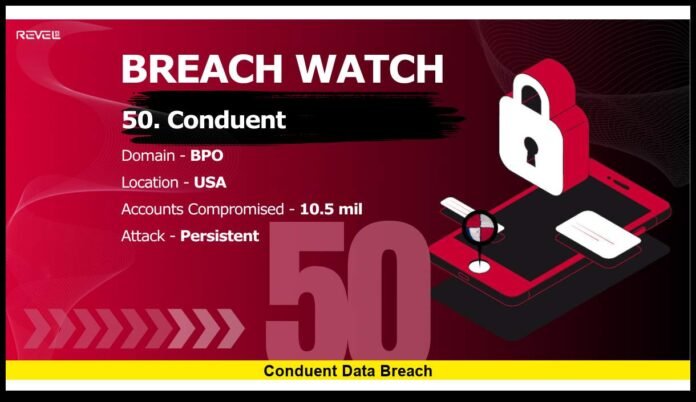

The Conduent data breach remains one of the most far-reaching cybersecurity incidents affecting U.S. healthcare and government service users, with more than 10.5 million people confirmed to have had their personal and medical details exposed. New updates continue to reveal the depth of the event, how long attackers had access, and what this means for individuals whose information is now at risk of misuse.
Latest: Conduent Data Breach Update – 1 March 2026
As of March 1, 2026, the fallout from the massive Conduent Business Services cyberattack continues to grow, with new disclosures and investigations underscoring the severity of the incident.
Updated Scope of Impact:
Recent state breach notices now indicate that at least 25 million people nationwide have had their personal information exposed in the breach — a significant increase from earlier estimates. Notices filed with Wisconsin regulators and others show major impacts in states like Texas (where more than 15 million residents have been affected) and Oregon (about 10.5 million), with additional notifications issued in Massachusetts, New Hampshire, Washington, Delaware, Georgia, South Carolina, New Jersey, Maine, and New Mexico.
Data Compromised:
The breach exposed highly sensitive personal details, including names, addresses, dates of birth, Social Security numbers, health insurance information, and medical records. These elements make the incident particularly dangerous for victims, fueling concerns about identity theft and long-term fraud risk.
Cause and Timeline:
Investigators have determined that the unauthorized access began on October 21, 2024, and continued unnoticed until January 13, 2025 — nearly three months inside Conduent’s network. A ransomware group known as SafePay publicly claimed responsibility and posted about exfiltrating more than 8 terabytes of data, though Conduent has not confirmed the full extent of those claims.
Regulatory and Legal Developments:
State authorities are stepping up scrutiny. Texas Attorney General Ken Paxton has launched an investigation, calling the breach “likely the largest in U.S. history,” and seeking details on Conduent’s security policies and compliance. At least nine class-action lawsuits have already been filed alleging negligence and delayed notification.
Company Response:
Conduent has maintained that it engaged third-party forensic specialists to contain and investigate the incident and has been issuing notifications as state filings require. The company states there’s no evidence that stolen data has yet been misused or publicly posted, but continues to monitor the situation closely.
Comparisons and Context:
Even with more than 25 million affected, this incident remains smaller than the 2024 Change Healthcare breach, which impacted about 190 million individuals. Nonetheless, the Conduent breach is now among the largest third-party and healthcare-related data breaches ever disclosed in the U.S.
How the Breach Started and What Investigators Found
The intrusion that triggered this crisis began in October 2024, when unauthorized actors gained access to sections of Conduent’s internal environment. Their presence went undetected for nearly three months, providing a long window for the extraction of sensitive files. The company did not discover the intrusion until January 2025, initiating containment and forensic analysis soon afterward.
Specialists spent months reviewing internal logs, examining affected systems, and identifying the types of information accessed. As the investigation progressed, the scale of the exposure expanded significantly, eventually covering millions of individuals across different states and insurance programs. Only after the internal review reached a concrete understanding of the compromised records did Conduent begin notifying individuals in late 2025.
The long duration between the initial breach and consumer notification has fueled public concern and intensified legal scrutiny, especially given the highly sensitive nature of the data involved.
Why Conduent’s Role Made This Breach So Large
Conduent is widely known in the United States for its administrative and operational support for government agencies, commercial insurers, and health service networks. These services include:
- Claims processing
- Eligibility verification
- Payment and billing functions
- Member communications
- Document management for state programs
Because the company processes data on behalf of a broad range of programs, a breach within its systems affects not just one agency or insurer, but many organizations across the country. Millions of people whose data passed through Conduent for legitimate administrative reasons found themselves swept into the breach.
This interconnected role explains why the incident reached such a large population, spanning state Medicaid systems, regional insurance organizations, and public service agencies.
Details of the Information Exposed
The data accessed in the incident included deeply personal identifiers and health-related information. Confirmed compromised categories include:
- Names
- Dates of birth
- Social Security numbers
- Member identification numbers
- Medical treatment or claims information
- Insurance policy details
Some individuals had multiple categories of data exposed at the same time. The combination of personal identifiers with medical and insurance data is especially concerning, as it increases the risk of long-term identity theft and fraudulent activity involving healthcare benefits.
Medical identity theft can be difficult to detect because fraudulent claims may not immediately appear on traditional credit report systems. This adds a layer of complexity for those trying to protect themselves following the breach.
A Clear National Impact
Notifications issued to state authorities reveal how widespread the effects are. Some states reported millions of affected residents, while others had smaller but still significant numbers. Because Conduent works with clients across many regions, the breach touched populations in both densely populated and rural areas.
This nationwide reach makes the incident one of the largest public-private sector data breaches affecting health-related information. It also highlights how a single breach at a major vendor can cascade across multiple systems, exposing millions of people whose service providers rely on shared infrastructure.
Why Detection Took Months
One of the most troubling elements of the Conduent data breach is the length of time the attackers remained unnoticed. Cybersecurity analysts reviewing the timeline identified several contributing factors:
- Complex system architecture across multiple environments
- Large volumes of data flowing through the company’s platforms
- Delayed alerts triggered by irregular network activity
- Attack methods designed to blend in with legitimate processes
Organizations of Conduent’s size often process massive amounts of data daily. In such environments, malicious activity can remain hidden unless specialized detection systems or human analysts flag unusual behavior.
The prolonged dwell time — the period attackers remain in a system before detection — significantly increases the damage potential. By the time the breach was identified, attackers had months to view or extract data from multiple systems.
Legal Actions Intensifying Nationwide
Following disclosure of the incident, lawsuits began to accumulate rapidly. Multiple class-action complaints have been filed by individuals asserting that Conduent failed to adequately safeguard their private data and did not notify them within a reasonable timeframe. These legal filings argue that the prolonged exposure, combined with delayed notification, placed victims at a heightened and unnecessary risk.
Plaintiffs are seeking compensation for potential identity theft, emotional distress, time spent securing accounts, and the ongoing risks associated with the exposure of medical information that cannot be permanently “changed” like a password.
Additional lawsuits are likely as more individuals become aware of their involvement and as legal teams continue to evaluate the company’s security practices and incident-response timelines.
Regulatory Review and Future Compliance Requirements
Because the breach involves personal and health-related data, it falls under the jurisdiction of several regulatory frameworks. Government agencies responsible for overseeing privacy protections and data security are reviewing the timeline, scope, and handling of the incident.
Regulators may assess:
- Whether appropriate security safeguards were in place
- How quickly Conduent acted once the breach was detected
- Whether notification processes met state and federal requirements
- What corrective steps are planned to prevent future incidents
Depending on the findings, the company may face penalties or mandated operational changes. These may include updated encryption standards, expanded monitoring requirements, or independent audits to ensure compliance with evolving cybersecurity expectations.
Financial Toll on the Company
In addition to regulatory exposure and legal risk, Conduent faces ongoing financial strain tied to the breach. Costs associated with forensic investigations, remediation, system upgrades, legal defense, consumer notification, and identity protection services have mounted steadily.
Preliminary figures already show tens of millions of dollars allocated to breach-related expenses, with additional liabilities expected to emerge as lawsuits progress. Cyber insurance may offset some costs but will not eliminate the overall financial impact, especially as long-term litigation unfolds.
Significant reputational damage also poses a risk for future government contracts and private-sector partnerships, potentially affecting revenue for years to come.
What Affected Individuals Should Do Immediately
Anyone notified that their information may have been accessed in the Conduent data breach should take practical steps to protect themselves. Early action can reduce the risk of fraudulent activity and prepare individuals for long-term monitoring.
Recommended steps include:
Review Credit Reports
Look for unfamiliar accounts, credit inquiries, or address changes. Even small irregularities may signal misuse.
Place a Fraud Alert or Credit Freeze
These actions make it harder for unauthorized individuals to open new accounts using your personal information.
Monitor Medical and Insurance Statements
Check for services you did not receive, claims you did not file, or providers you do not recognize.
Safeguard Personal Documents
Keep Social Security cards, insurance IDs, and medical documents secured. Avoid sharing sensitive details unless absolutely necessary.
Use Identity Protection Resources
If monitoring services are offered, enrolling can help detect suspicious activity early. Even if not provided, individuals may choose to use paid or free tools to stay informed.
Because medical data cannot be replaced, ongoing vigilance is essential long after the initial notification.
Broader Lessons for the Healthcare and Government Sectors
The Conduent data breach highlights several key lessons that extend far beyond one company:
- Vendors are critical security points. Organizations must ensure that partners handling sensitive data maintain robust security measures.
- Detection speed matters. Faster identification of unauthorized access can dramatically reduce data exposure.
- Transparent communication is vital. Clear and timely notifications help individuals take protective actions sooner.
- Security needs continuous investment. Advanced threats require proactive monitoring, updated infrastructure, and regular assessments.
As data ecosystems grow more interconnected, a single breach can have national consequences, affecting millions of people who never directly interacted with the breached company.
The Road Ahead
More developments are expected as legal proceedings advance, regulatory findings are released, and additional individuals review their notification letters. The incident serves as a powerful reminder that cybersecurity is a shared responsibility across the entire ecosystem of healthcare and government services.
Consumers, businesses, and policymakers will continue watching closely as the long-term impact of this breach unfolds.
If you were affected or have insight into how data protection can improve across large service networks, share your thoughts in the comments below and join the discussion.