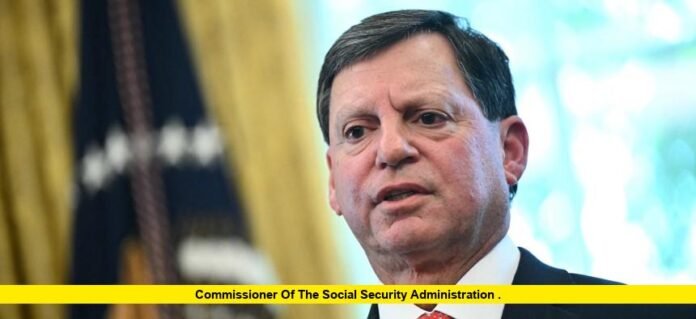

The commissioner of the social security administration of the united states is Frank J. Bisignano, who leads the federal agency responsible for administering Social Security retirement, disability, survivors, and Supplemental Security Income (SSI) programs. As of October 16, 2026, Bisignano remains the agency’s commissioner, following his Senate confirmation and swearing-in on May 7, 2025. His leadership has focused on modernizing agency operations, improving customer service, expanding digital services, and strengthening efforts to prevent fraud. The latest developments under his administration also include the announcement of a 3.6% Social Security cost-of-living adjustment for 2027.
Who Is the Current Commissioner of the Social Security Administration?
Frank J. Bisignano is the current commissioner of the Social Security Administration (SSA). He became the agency’s 18th Senate-confirmed commissioner in May 2025 after President Donald Trump selected him to lead the organization.
Bisignano previously served as chairman and chief executive officer of Fiserv, a financial technology and payments company. His professional background includes decades of experience managing large organizations, overseeing financial operations, and implementing technology-driven business changes.
His appointment brought an executive with extensive private-sector experience to an agency that serves millions of Americans through retirement benefits, disability assistance, survivors benefits, and income support programs.
As commissioner, Bisignano oversees the administration of these programs and the agency’s broader efforts to deliver reliable services. His responsibilities include setting operational priorities, supervising senior leadership, and directing improvements in how Americans access Social Security.
When Did Frank Bisignano Become Commissioner?
Bisignano was sworn in as commissioner on May 7, 2025. His appointment followed Senate confirmation, establishing him as the agency’s confirmed leader rather than an acting commissioner.
The distinction matters because the Social Security commissioner occupies a major federal leadership position with responsibility for administering benefits that support older Americans, people with disabilities, surviving family members, and eligible individuals with limited income and resources.
Before Bisignano took office, Social Security had experienced persistent challenges involving customer service, processing delays, staffing, and access to agency representatives. His administration made operational improvements and technology modernization central priorities.
In September 2025, the SSA announced changes to its executive leadership structure. The agency organized important operational responsibilities around field operations, processing centers, and digital services. The changes aimed to strengthen accountability and improve service delivery.
In January 2026, Arjun Mody joined the agency as deputy commissioner, serving as its chief operating officer. His appointment added another senior leader responsible for supporting the commissioner’s operational agenda.
By May 2026, Bisignano had completed his first year in office. The SSA used the anniversary to highlight reported improvements in customer service, digital transactions, and internal operations.
What Does the Social Security Commissioner Do?
The commissioner provides executive leadership for the Social Security Administration and oversees the implementation of federal Social Security laws and programs.
The position carries substantial administrative responsibility because the agency must process claims, maintain earnings records, determine eligibility, issue payments, and respond to questions from the public.
The commissioner’s principal responsibilities include:
- Retirement benefits: Overseeing the administration of retirement benefits for eligible workers and their families.
- Disability benefits: Supervising programs that provide financial assistance to qualifying workers and individuals with disabilities.
- Survivors benefits: Overseeing benefits for eligible spouses, children, and other qualifying family members of deceased workers.
- Supplemental Security Income: Administering SSI payments for eligible older adults and people who are blind, have qualifying disabilities, and meet income and resource requirements.
- Customer service: Improving access to agency representatives, online services, field offices, and telephone support.
- Technology modernization: Directing efforts to improve digital applications, online accounts, and the systems used to process claims.
- Program integrity: Supporting efforts to prevent fraud, protect personal information, and ensure that benefits reach eligible recipients.
The commissioner also works with senior agency officials, federal policymakers, and other government organizations on matters affecting Social Security administration.
Although the commissioner directs the agency’s operations, the position does not give its holder unlimited authority to change Social Security law. Major statutory changes generally require congressional action and presidential approval through the legislative process.
Frank Bisignano’s Priorities for Social Security
Bisignano’s leadership agenda has emphasized technology, efficiency, accountability, and customer service. These priorities reflect the challenge of managing a nationwide benefits system while responding to the needs of an aging population and millions of other beneficiaries.
One major focus is reducing the time Americans spend waiting for assistance. The agency has worked to improve its national telephone service and streamline interactions with field offices.
Another priority is expanding digital access. Online services allow eligible users to complete certain transactions without visiting an office or waiting for telephone assistance.
The commissioner has also emphasized efforts to strengthen fraud prevention and reduce improper payments. These initiatives involve improving internal controls and identifying weaknesses that could expose the agency or beneficiaries to financial losses.
However, improving efficiency requires balancing several competing needs. The SSA must protect sensitive personal information, verify eligibility, process claims accurately, and provide assistance to people who cannot easily use online services.
Digital modernization therefore does not eliminate the need for accessible in-person and telephone support. Older adults, people with disabilities, and individuals with limited internet access may still require direct assistance.
Social Security Customer Service Improvements Under Bisignano
Customer service has been one of the most prominent subjects during Bisignano’s tenure.
In May 2026, the SSA reported that the average speed of answer on its national 800 number had fallen to 6.6 minutes. The agency described this as its lowest level in a decade.
The SSA also reported a 20% increase in online transactions, with nearly 90 million more transactions completed in fiscal year 2025 than in fiscal year 2024.
Other reported improvements included a 30% reduction in field office wait times. The agency also expanded telephone technology across more than 1,200 locations, allowing some callers to resolve issues through automated self-service options or callbacks.
These figures reflect the agency’s own reported performance measures. They indicate progress in several service areas, but they do not mean every caller experiences the same wait time or every claim receives an immediate decision.
Actual processing times can vary depending on the type of benefit, the complexity of a case, the availability of supporting documents, and the need for additional medical or earnings information.
For beneficiaries, the practical goal is straightforward: access accurate information, complete necessary transactions, and receive eligible payments without avoidable delays.
Latest Update: 2027 Social Security Cost-of-Living Adjustment
One of the most significant recent developments during Bisignano’s leadership is the announcement of the 2027 cost-of-living adjustment (COLA).
The Social Security Administration announced a 3.6% increase in Social Security and Supplemental Security Income benefits for 2027. The adjustment is designed to help beneficiaries manage rising prices and preserve some of their purchasing power.
For Social Security retirement, disability, and survivors benefit recipients, the increase generally takes effect with payments beginning in January 2027. Eligible SSI recipients are scheduled to receive the higher payment beginning December 31, 2026.
The SSA has estimated that the adjustment will increase the average monthly Social Security benefit by approximately $75. Individual increases will vary according to each recipient’s existing benefit amount.
The adjustment is calculated using changes in the Consumer Price Index for Urban Wage Earners and Clerical Workers, commonly known as CPI-W. This measure tracks price changes for a defined group of urban consumers and helps determine annual Social Security benefit adjustments.
The commissioner oversees the agency responsible for implementing the adjustment and communicating updated benefit amounts to recipients.
However, the commissioner does not independently select the COLA percentage. Federal law establishes the formula used to calculate the annual adjustment, and the relevant inflation data determines the result.
For beneficiaries, the 2027 increase is an important development, although its practical value will depend on individual expenses. Housing, food, utilities, insurance, and healthcare costs can affect how much additional money recipients have available each month.
How the Commissioner Oversees Retirement, Disability, and Survivors Benefits
The SSA administers several major federal benefit programs. Each program has different eligibility requirements, application procedures, and payment rules.
Retirement benefits represent one of the agency’s most widely recognized responsibilities. Eligible workers can claim benefits based on their earnings records, subject to applicable age and work-credit requirements.
Disability programs provide support to qualifying individuals whose medical conditions meet the applicable federal standards. Social Security Disability Insurance generally depends on a person’s covered work history, while Supplemental Security Income uses financial eligibility requirements.
Survivors benefits provide financial support to eligible family members of deceased workers. Depending on the circumstances, qualifying spouses, children, and certain other family members may receive benefits.
SSI serves eligible people with limited income and resources who are aged 65 or older, blind, or disabled. Unlike Social Security retirement and disability insurance, SSI is a needs-based assistance program funded through general federal revenues.
The commissioner oversees the administration of these programs but does not personally decide every application. Agency employees, claims specialists, medical consultants, and other authorized personnel handle individual cases under established rules.
This separation is important. The commissioner’s role is to manage the system, establish priorities, and oversee performance. Individual eligibility decisions must follow the applicable laws, regulations, and administrative procedures.
The Commissioner’s Role in Preventing Social Security Fraud
Fraud prevention is another important part of the SSA’s operational responsibilities.
The agency processes substantial benefit payments and maintains sensitive personal information, making security and accurate recordkeeping essential. Fraudulent claims, identity theft, improper payments, and unauthorized access can harm both beneficiaries and public confidence.
Bisignano’s administration has emphasized strengthening internal controls and improving the agency’s ability to identify and address potential fraud.
These efforts must distinguish intentional wrongdoing from ordinary administrative mistakes. An incorrect payment does not automatically establish that a recipient committed fraud, and cases require appropriate review.
The SSA also needs to protect beneficiaries against scams involving people who impersonate agency employees. Scammers may claim that a person’s Social Security number has been suspended, threaten arrest, or demand payment to resolve a fabricated problem.
Beneficiaries should be cautious when receiving unexpected calls, messages, or emails requesting sensitive information or immediate payment. They can independently contact the agency through its established official channels to verify whether a communication is legitimate.
The commissioner oversees the agency’s broader security and program-integrity efforts, while specialized offices and authorized personnel handle investigations, reviews, and enforcement matters within their respective responsibilities.
Who Works With the Social Security Commissioner?
The commissioner leads a broader executive organization rather than managing every SSA function personally.
The deputy commissioner assists with agency leadership and operational management. Other senior officials oversee areas such as information technology, field operations, financial management, disability adjudication, communications, and legal policy.
Arjun Mody became deputy commissioner in January 2026. His appointment placed him in a key role supporting the commissioner’s management responsibilities.
The SSA’s leadership structure also includes the Office of the Inspector General, which has oversight and investigative responsibilities relating to agency programs and operations. The inspector general’s role is distinct from the commissioner’s direct management responsibilities.
This organizational structure allows different teams to address specialized challenges while operating under the agency’s broader mission.
For example, technology officials can oversee digital systems, field operations leaders can manage local office services, and processing-center leaders can focus on handling claims and related administrative work.
The commissioner establishes the agency’s overall direction and supervises its major components. Effective coordination among these teams is essential because many benefit applications require information and decisions from multiple parts of the organization.
How Is the Commissioner Accountable to the Public?
The Social Security commissioner leads a federal agency and operates within the limits established by federal law.
Congress creates and amends the laws governing Social Security programs. The executive branch oversees federal administration, while the SSA implements the applicable rules and manages the delivery of services.
Congressional committees can examine agency performance, request information, and conduct oversight hearings. Government audits and inspector general investigations can also identify operational weaknesses or recommend improvements.
Public reporting provides another way to assess agency performance. Statistics on processing times, telephone response rates, online transactions, and payment accuracy help show whether the SSA is meeting its service objectives.
The commissioner must also address the practical effects of administrative decisions. Changes to staffing, technology, office procedures, and identity-verification requirements can influence how easily people access benefits.
Beneficiaries and other members of the public can raise concerns through established SSA complaint and feedback channels. Congressional offices may also assist constituents experiencing unresolved difficulties with federal agencies.
These accountability mechanisms matter because Social Security affects retirement planning, household income, and financial stability for millions of Americans.
Why the Social Security Commissioner’s Position Matters
The commissioner’s decisions can influence how efficiently the agency processes claims, communicates with beneficiaries, and manages its resources.
For retirees, reliable administration helps ensure that eligible monthly benefits arrive as expected. For people with disabilities, timely claims processing can affect access to essential income support. Survivors may also depend on benefits to help meet household expenses after losing a family member.
The position also matters because the SSA operates a complex nationwide system. Its responsibilities include maintaining earnings records, administering eligibility rules, issuing payments, protecting personal information, and supporting people who need help navigating federal programs.
Nevertheless, the commissioner cannot resolve every challenge independently. Staffing and administrative resources, technological limitations, economic conditions, and laws enacted by Congress all influence the agency’s work.
Long-term Social Security financing also involves decisions that extend beyond the commissioner’s administrative authority. Changes to payroll taxes, benefit formulas, retirement rules, or other statutory provisions generally require action by Congress.
Consequently, evaluating the commissioner requires looking at both agency performance and the legal boundaries of the position.
What Should Americans Watch Next?
Several issues remain important for monitoring the commissioner’s leadership and the agency’s performance.
First, beneficiaries can watch for updates on the implementation of the 2027 COLA. Individual payment amounts will depend on existing benefits and applicable deductions.
Second, customer service remains a key measure of the administration’s progress. Continued reporting on telephone response times, field office waits, and claims processing can help determine whether reported improvements are sustained.
Third, digital modernization and fraud prevention will remain important as the SSA seeks to improve service while protecting personal information.
Finally, developments involving Social Security financing deserve attention. The commissioner can explain the agency’s operational needs and administer enacted policies, but long-term changes to the program’s financing structure require broader federal policymaking.
Americans seeking information about their own benefits should use the SSA’s official services rather than relying on unofficial claims about eligibility, payment dates, or policy changes.
Conclusion
As of October 16, 2026, Frank J. Bisignano serves as commissioner of the Social Security Administration of the United States. Since taking office in May 2025, he has emphasized customer service, digital modernization, operational efficiency, and program integrity. The agency’s reported improvements and the recently announced 2027 COLA are important developments, although continued attention to service quality, payment accuracy, and long-term program sustainability remains essential. The commissioner’s leadership will continue to shape how the agency delivers benefits and serves the American public within the limits of federal law.
What do you think should be the Social Security Administration commissioner’s top priority? Share your thoughts in the comments and stay updated on the latest developments.