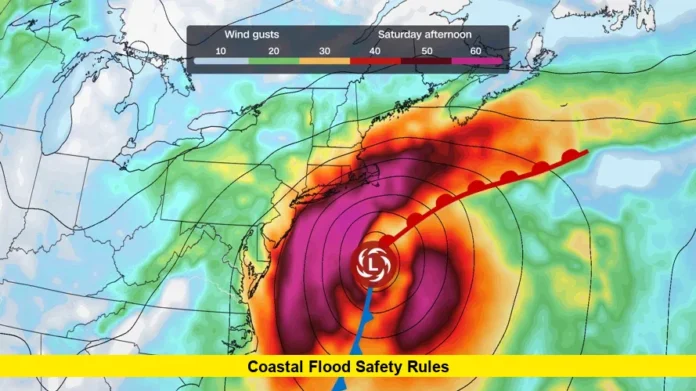

COASTAL FLOOD SAFETY RULES are especially important as a powerful coastal storm brings flooding, high winds and dangerous surf to parts of the U.S. East Coast. As of September 24, 2026, the National Weather Service has coastal flood warnings and watches in effect across portions of the Mid-Atlantic and Northeast, while eastern Massachusetts and Rhode Island are preparing for another period of coastal flooding and strong winds Friday and Saturday.
The current storm threat makes basic flood preparation particularly important for people who live near beaches, bays, tidal rivers, marshes, inlets and other low-lying coastal locations. Floodwater can cover roads quickly, block evacuation routes and create dangerous conditions even when rainfall is not especially heavy.
Knowing what to do before water rises can reduce the risk of injury and help residents respond quickly when local officials issue an advisory, watch or warning.
What Coastal Flooding Means
Coastal flooding occurs when ocean or tidal water moves onto normally dry land. Several factors can contribute to the problem, including high tides, strong onshore winds, coastal storms and unusually high water levels.
A strong coastal storm can push seawater toward the shoreline while waves and tides raise water levels further. The combination can cause flooding in locations that may remain dry during ordinary high tides.
NOAA identifies minor, moderate and major levels of high-tide flooding based on the amount of water above the normal high-tide level and the resulting impacts. Moderate and major flooding can create increasingly serious threats to roads, buildings, infrastructure and people who enter dangerous areas.
For residents, the important point is simple: coastal water does not need to reach a dramatic depth before it becomes dangerous.
Know the Difference Between a Coastal Flood Watch and Warning
Understanding weather alerts is one of the most important coastal flood safety steps.
A Coastal Flood Watch means conditions could produce coastal flooding. People in the affected area should monitor forecasts, review evacuation plans and be prepared to move to safer ground if a warning is issued or flooding begins.
A Coastal Flood Warning means coastal flooding is occurring, imminent or expected within the warning period. Residents should take immediate action to protect life and property.
The National Weather Service currently has examples of both types of alerts along the East Coast. In eastern Massachusetts, a Coastal Flood Watch remains in effect from Friday afternoon through Saturday afternoon. In parts of the Mid-Atlantic, coastal flood warnings are already in effect.
Because alert times vary by location, residents should rely on the National Weather Service and local emergency officials for the alert covering their specific community.
Move Away From Rising Water
The most important coastal flood safety rule is to leave an area when flooding becomes dangerous.
Do not wait until water completely surrounds your home or blocks the road. Rising water can make an evacuation route unusable and can prevent emergency responders from reaching people who remain behind.
The National Weather Service advises people near the coast to move inland when coastal flooding is observed and to avoid remaining near the shoreline as water rises.
Nighttime flooding deserves particular caution because darkness can make it harder to recognize water covering roads, walkways and other surfaces.
If local authorities issue an evacuation order, follow it promptly. Use the designated evacuation route and avoid attempting to find a shorter route through flooded areas.
Never Drive Through Floodwater
Flooded roads can look passable while hiding serious hazards.
Water can be deeper than it appears, and the road surface underneath may have been damaged or washed away. Moving water can also affect a vehicle’s ability to maintain traction.
The National Weather Service specifically advises people never to drive into floodwater during a nor’easter or other flooding event. Coastal flood safety guidance also warns drivers against attempting to cross flooded roadways.
If a road is flooded, turn around and find a safe alternative. Never drive around a barricade simply because the water appears shallow.
Floodwater can also contain debris, contaminants and hidden obstacles. Even when the water looks calm, conditions beneath the surface can be unpredictable.
Stay Away From Beaches, Jetties and Exposed Structures
Coastal flooding can occur alongside dangerous surf.
Large waves can suddenly reach areas that appeared dry moments earlier. People standing on rocks, jetties, seawalls, piers or other exposed coastal structures can be swept into the water.
The National Weather Service warns that fishing or observing waves from exposed coastal structures can be extremely dangerous during heavy surf. Large waves may reach previously dry areas without warning.
That risk is particularly relevant during the current East Coast storm. The Boston/Norton National Weather Service office has a High Surf Advisory for Friday through Sunday, with breaking waves of 6 to 17 feet possible in the surf zone.
People should therefore avoid approaching the shoreline simply to watch storm waves.
Secure Your Property Before Flooding Begins
Preparation should start before water reaches the property.
Residents in coastal flood-prone areas should secure loose outdoor objects that could be moved by strong winds or water. Items such as outdoor furniture, equipment and other unsecured objects can become hazards during severe weather.
The National Weather Service also recommends protecting vulnerable windows and knowing evacuation routes before coastal flooding becomes imminent.
Property preparation should never delay an evacuation. Protecting belongings is secondary to getting people to safety.
Residents should also consider moving important items to higher locations when flooding is expected. Important documents, medications, electronics and other essential belongings should be kept away from areas that could flood.
Prepare an Emergency Supply Kit
A coastal flood can cause road closures and power interruptions, particularly when flooding occurs together with strong winds.
The National Weather Service recommends having at least three days of food, water and other emergency supplies available when a nor’easter threatens.
A basic emergency kit should include:
- Drinking water
- Nonperishable food
- Flashlights
- Extra batteries
- A portable radio
- Essential medications
- First-aid supplies
- Phone chargers or backup power
- Important personal documents
- Basic sanitation supplies
The supplies should be easy to access if residents need to leave quickly.
Know Your Evacuation Route Before Water Rises
Every coastal household should know where to go if flooding becomes severe.
Do not wait for water to cover the usual road before deciding which direction to travel. Review local evacuation routes ahead of time and identify higher ground or an approved shelter location.
The National Weather Service advises coastal residents to know their evacuation routes and be prepared to leave immediately when flooding becomes imminent.
Residents should also consider how they would evacuate if a primary road became inaccessible. A second route can be useful, but drivers should follow official instructions if authorities close roads or redirect traffic.
People who require assistance with transportation should make arrangements before an emergency develops.
If You Become Stranded, Move to Higher Ground
If flooding prevents you from leaving, stay indoors and move to the highest safe floor.
The National Weather Service recommends bringing water, food, a flashlight and a portable radio if a person becomes stranded during coastal flooding.
Do not enter floodwater to reach another building or vehicle. If water is entering a structure, move to a safer elevated area while following emergency instructions.
Call emergency services when necessary, but avoid placing yourself or rescuers in unnecessary danger.
Do Not Assume Flooding Requires Heavy Rain
Coastal flooding can occur even when rainfall is not the main problem.
NOAA explains that high-tide flooding can result from unusually high water levels combined with tides, winds, ocean conditions and relative sea-level changes. Coastal storms can make those conditions more serious.
That means a person can face coastal flooding even during a storm where rainfall totals are not extreme.
This is one reason residents should pay attention to coastal flood alerts rather than relying only on rain forecasts.
Current East Coast Conditions Make Preparation Important
The current East Coast storm illustrates why these safety rules matter.
The National Weather Service Boston/Norton office says an unusually strong early-season coastal storm is expected to affect the region with strong winds and coastal flooding or erosion Friday and Saturday, particularly across eastern Massachusetts. A High Wind Watch covers portions of eastern, northeastern and southeastern Massachusetts and northern and southern Rhode Island from Friday morning through Saturday evening, with north winds of 20 to 30 mph and gusts up to 50 mph possible.
The same office has a Coastal Flood Watch for eastern Essex, Suffolk, eastern Norfolk, eastern Plymouth, Barnstable, Dukes and Nantucket counties. Up to one foot of inundation above ground level is possible in low-lying areas near shorelines and tidal waterways.
Elsewhere, the Mid-Atlantic is already dealing with coastal flood warnings. National Weather Service forecasts show coastal flood warnings affecting portions of Delaware, Maryland, Virginia, Washington, D.C., New Jersey and nearby coastal areas.
The exact threat varies by community, tide cycle and local geography. Residents should therefore use location-specific alerts rather than assuming conditions are identical along the entire coast.
A Simple Coastal Flood Safety Checklist
Before coastal flooding develops, make sure you can answer these questions:
- Do I know whether my home is in a flood-prone area?
- Do I know my evacuation route?
- Do I have drinking water and nonperishable food?
- Do I have a working flashlight and batteries?
- Can I receive local emergency alerts?
- Have I secured loose outdoor objects?
- Do I know where important documents and medications are?
- Do I know where to go if authorities order an evacuation?
- Do I have a backup route if my normal road floods?
- Have I discussed the emergency plan with everyone in my household?
These steps are simple, but they can make a major difference when water begins rising.
Why Coastal Flood Safety Rules Matter
Coastal flooding can affect roads, homes, businesses, utilities and transportation systems. NOAA notes that high-tide flooding can produce road closures, storm-drain problems and temporary business disruptions, while more serious flooding can cause broader property and infrastructure impacts.
Flooding also becomes more dangerous when people underestimate the water or attempt to drive through it.
The safest approach is to treat a coastal flood alert seriously, stay away from rising water and follow instructions from local officials.
The current East Coast storm is another reminder that coastal hazards can develop quickly and can affect multiple tide cycles. Preparation should happen before the first road floods, not after water has already surrounded a property.
Final Thoughts on Coastal Flood Safety
The most effective response to coastal flooding begins with preparation. Know your evacuation route, monitor official alerts, stay away from rising water, never drive through flooded roads and avoid exposed coastal structures during dangerous surf.
Conditions can change as a coastal storm approaches, so residents should continue checking their local National Weather Service forecast and emergency-management instructions for updated warnings.
Stay alert, follow local safety instructions and share your coastal flood safety tips in the comments as conditions develop.