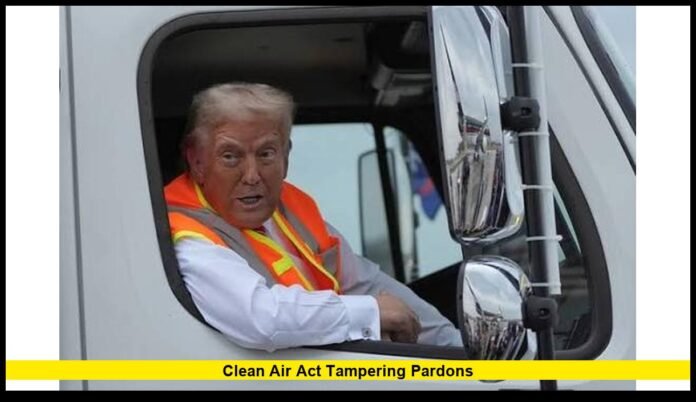

Clean Air Act tampering pardons remain a major topic in the United States as federal environmental enforcement continues to evolve in 2026. Recent presidential pardons, changes in Department of Justice enforcement priorities, and ongoing Environmental Protection Agency civil actions have reshaped the national conversation about emissions regulations and criminal prosecutions. While the federal government has adjusted how certain cases are handled, the Clean Air Act itself remains in effect, and emissions-control tampering continues to be illegal under federal law.
For truck owners, diesel repair businesses, legal professionals, environmental advocates, and policymakers, these developments represent one of the most significant shifts in environmental enforcement in recent years. Understanding what has changed—and what has not—is essential for anyone following federal emissions policy.
Why Clean Air Act Tampering Pardons Are Receiving National Attention
The issue gained widespread attention after President Donald Trump granted clemency to individuals convicted of federal crimes involving diesel emissions-control tampering. Those pardons reignited debate over whether criminal penalties are the appropriate response to violations involving vehicle emissions systems.
Supporters of the pardons argue that some business owners received overly harsh punishment for regulatory violations that could have been handled through civil enforcement. Others believe criminal convictions were necessary because emissions tampering can affect air quality and public health.
The discussion has since expanded beyond individual cases to include broader questions about federal enforcement priorities, executive authority, and environmental regulation.
Understanding the Clean Air Act
The Clean Air Act is one of the nation’s most important environmental laws. Originally enacted in 1970 and strengthened through later amendments, it authorizes the federal government to regulate air pollution and establish national air quality standards.
Under the law, the Environmental Protection Agency (EPA) oversees emissions standards for motor vehicles, heavy-duty trucks, engines, and numerous industrial sources.
Vehicle manufacturers must certify that their engines and emissions-control systems comply with federal standards before those vehicles can be sold in the United States.
The law also prohibits anyone from removing, disabling, or altering federally required emissions-control equipment installed by manufacturers.
What Is Vehicle Emissions Tampering?
Vehicle emissions tampering occurs when federally required pollution-control equipment is removed, modified, or disabled.
Common examples include:
- Removing diesel particulate filters (DPFs)
- Disabling exhaust gas recirculation (EGR) systems
- Removing selective catalytic reduction (SCR) equipment
- Eliminating diesel exhaust fluid (DEF) systems
- Installing software that bypasses emissions controls
- Selling or installing illegal defeat devices
These modifications are often marketed as performance upgrades or maintenance solutions. However, federal law generally prohibits these changes on vehicles used on public roads because they increase emissions beyond certified limits.
The Troy Lake Case Became the Center of the Debate
One of the most closely watched cases involved Wyoming diesel mechanic Troy Lake, owner of Elite Diesel Service.
Federal prosecutors accused Lake of participating in a conspiracy involving emissions-system modifications performed on commercial diesel trucks over several years. The government alleged that the business intentionally removed or disabled emissions-control equipment in violation of the Clean Air Act.
Lake ultimately pleaded guilty to conspiracy charges.
His sentence included:
| Penalty | Outcome |
|---|---|
| Prison sentence | One year and one day |
| Financial penalty | More than $50,000 in fines |
| Criminal record | Federal felony conviction |
President Donald Trump later granted Lake a full presidential pardon, eliminating the legal consequences associated with the federal conviction.
The pardon immediately became one of the most discussed environmental enforcement stories in the country.
Why Supporters Back the Pardons
Many supporters believe criminal prosecution was too severe for cases involving emissions-system modifications.
Their arguments generally include:
- Small repair shops faced aggressive federal enforcement.
- Civil penalties would have been more appropriate than imprisonment.
- Criminal convictions placed lasting burdens on business owners.
- Federal agencies should focus enforcement resources on more serious environmental crimes.
Some industry groups also argue that modern diesel emissions systems can be expensive to repair and maintain, creating financial pressure on commercial truck operators and repair businesses.
These views have contributed to continued calls for broader reforms to federal emissions regulations.
Why Critics Oppose the Pardons
Environmental organizations and public health advocates strongly disagree with the use of presidential pardons in these cases.
Their concerns include:
- Increased vehicle pollution
- Reduced compliance with emissions standards
- Weaker deterrence against illegal modifications
- Potential harm to air quality
- Greater public health risks from diesel emissions
Critics argue that pollution-control systems were designed to reduce harmful pollutants and that removing them undermines decades of environmental progress.
Many also believe consistent enforcement is necessary to maintain fairness for manufacturers and businesses that comply with federal law.
The Department of Justice Changed Its Approach
A major turning point occurred in January 2026.
The U.S. Department of Justice announced that it would generally stop pursuing criminal prosecutions involving certain motor vehicle emissions tampering cases.
This represented a significant policy change rather than a change in federal law.
The announcement shifted prosecutorial priorities while leaving existing environmental statutes in place.
As a result:
- Criminal prosecution is generally no longer the preferred approach for many emissions tampering cases.
- Civil enforcement remains available.
- EPA investigations continue.
- Federal emissions regulations remain enforceable.
The policy does not legalize emissions-system modifications or eliminate regulatory requirements.
What Has Not Changed
One of the biggest misconceptions surrounding recent developments is that emissions deletes are now legal.
That is incorrect.
The Clean Air Act still prohibits tampering with federally certified emissions-control systems.
Businesses that advertise emissions deletes or install defeat devices may still face enforcement actions.
Vehicle owners should understand that a reduction in criminal prosecutions does not eliminate potential legal consequences.
Civil penalties can still be substantial.
EPA Continues Civil Enforcement
The Environmental Protection Agency continues to investigate businesses that manufacture, advertise, sell, or install illegal emissions-delete products.
Civil enforcement may involve:
- Monetary penalties
- Compliance agreements
- Court injunctions
- Product recalls
- Restrictions on future business operations
EPA enforcement remains one of the government’s primary tools for ensuring compliance with federal emissions standards.
The agency continues to focus on companies engaged in large-scale violations involving aftermarket defeat devices and emissions modifications.
More Defendants Are Seeking Presidential Pardons
Following the pardon granted to Troy Lake and the DOJ’s policy shift, additional individuals convicted in similar federal cases have sought presidential clemency.
Many of these applicants argue that circumstances have changed significantly since their convictions.
Their requests often point to the federal government’s current enforcement priorities, arguing that similar conduct would likely be handled differently today.
As of early July 2026, only a limited number of those requests have resulted in publicly confirmed presidential pardons.
How Presidential Pardons Work
The U.S. Constitution gives the president authority to grant pardons for federal offenses.
A presidential pardon generally:
- Forgives the federal conviction.
- Restores certain civil rights.
- Removes many legal consequences associated with the conviction.
However, a pardon does not:
- Declare someone innocent.
- Change federal environmental law.
- Eliminate EPA authority.
- Make future violations legal.
This distinction remains important because many people mistakenly believe a pardon changes the legality of the conduct itself.
It does not.
Civil Enforcement Versus Criminal Prosecution
The recent policy changes highlight the difference between civil and criminal enforcement.
Criminal prosecutions typically involve:
- Federal criminal charges
- Potential imprisonment
- Criminal convictions
- Probation
- Criminal fines
Civil enforcement generally focuses on:
- Financial penalties
- Regulatory compliance
- Court orders
- Business restrictions
- Corrective actions
Federal agencies often use both approaches depending on the facts of a particular case.
The DOJ’s updated policy places greater emphasis on civil enforcement for many vehicle emissions tampering matters.
Congress Continues to Debate Future Policy
The national discussion has also reached Congress.
Some lawmakers have introduced legislation that would reduce or eliminate criminal penalties for certain emissions-system modifications.
Others have proposed broader reforms affecting EPA authority over aftermarket vehicle modifications.
As of July 2026, no legislation has become law that repeals the Clean Air Act’s anti-tampering provisions.
Any significant changes to those requirements would require congressional approval and presidential signature.
How the Issue Affects Diesel Repair Shops
Diesel repair businesses remain directly affected by federal emissions regulations.
Even with the DOJ’s revised approach, repair shops should recognize that:
- Federal anti-tampering laws remain active.
- EPA investigations continue.
- Civil penalties may still be imposed.
- Illegal defeat devices remain prohibited.
Businesses that comply with federal emissions requirements continue operating under the same statutory framework that existed before the enforcement policy changed.
Why Air Quality Remains Part of the Debate
Supporters of strict emissions enforcement point to the role that pollution-control equipment plays in reducing harmful emissions from diesel engines.
Modern emissions systems help lower pollutants such as particulate matter and nitrogen oxides, both of which contribute to air pollution.
Federal regulators have long maintained that these systems are essential for protecting public health and meeting national air quality goals.
Those concerns remain central to discussions about enforcement policy and future legislative proposals.
Timeline of Major Events
| Date | Development |
|---|---|
| 2024 | Troy Lake is convicted in a federal conspiracy case involving Clean Air Act violations. |
| November 2025 | President Donald Trump grants Troy Lake a full presidential pardon. |
| January 2026 | The Department of Justice announces it will generally discontinue criminal prosecution of certain vehicle emissions tampering cases while maintaining civil enforcement options. |
| 2026 | Additional convicted individuals seek presidential pardons, and EPA civil enforcement continues nationwide. |
What Comes Next?
The national conversation surrounding Clean Air Act enforcement remains active.
Presidential pardons have changed the legal outcomes for a small number of individuals, while the Department of Justice has revised its criminal enforcement priorities. At the same time, the Environmental Protection Agency continues enforcing federal emissions regulations through civil actions, and Congress continues considering proposals that could reshape future environmental policy.
For businesses, vehicle owners, and industry professionals, the key point remains unchanged: emissions-control tampering is still prohibited under the Clean Air Act. Although enforcement strategies have evolved, the underlying federal law remains in force, making compliance an important consideration for anyone involved in vehicle modification or diesel repair.
As federal environmental policy continues to evolve, follow the latest verified developments on Clean Air Act tampering pardons and join the conversation by sharing your perspective in the comments.