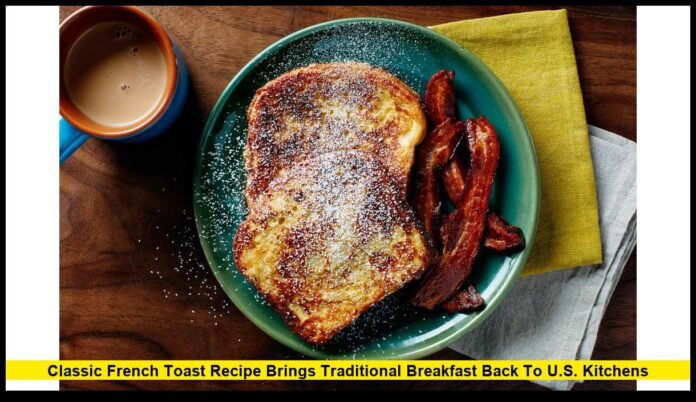

Classic french toast recipe searches continue to rise across the United States as more home cooks turn to familiar, reliable breakfast dishes made with simple ingredients. As of today, traditional French toast remains one of the most prepared breakfast items in American households, frequently featured in home cooking videos, weekend brunch menus, and family breakfast routines. Its lasting appeal comes from ease, affordability, and a flavor profile that feels both comforting and timeless.
In a food landscape filled with trends, the classic approach to French toast has held steady. It relies on technique rather than novelty and rewards careful preparation with consistently satisfying results.
What Makes a Classic French Toast Recipe Timeless
A classic french toast recipe has endured because it relies on a simple, reliable process that consistently delivers satisfying results. Bread slices are dipped into a lightly seasoned mixture of eggs and milk, allowing the liquid to soak in just enough to create a tender interior. When cooked over moderate heat, the outside develops a golden surface while the inside remains soft and custard-like.
The balance between texture and flavor is what sets this preparation apart. Eggs provide structure without heaviness, and milk adds moisture without diluting the richness. The bread acts as a neutral base, absorbing the mixture while maintaining its shape. This careful balance prevents the dish from becoming either dry or soggy.
Unlike modern adaptations that introduce heavy creams, syrups, or bold flavor additions, the traditional method keeps flavors clean and familiar. Each ingredient plays a specific role, and none compete for attention. That restraint allows the natural taste of the bread, eggs, and butter to shine, which is why this classic approach continues to resonate across generations.
The Role of Bread in Texture and Flavor
Bread choice is central to the success of French toast. The ideal bread absorbs liquid without falling apart and cooks evenly on the griddle or pan.
Popular options include:
- White sandwich bread
- Brioche
- Challah
- Thick-cut Texas toast
Slightly stale bread is preferred. It absorbs the egg mixture more evenly and prevents sogginess during cooking.
Essential Ingredients Used in a Classic French Toast Recipe
The ingredient list remains short and accessible, which explains why this dish appears so often in home kitchens.
Core ingredients include:
- Eggs
- Milk
- Bread
- Butter
Optional additions like vanilla extract or cinnamon appear in many households but do not change the fundamental structure of the recipe.
Why the Egg-to-Milk Ratio Matters
Eggs provide structure and richness, while milk adds moisture and softness. Too much milk dilutes the mixture and causes limp texture. Too many eggs lead to a heavy, dense center.
A balanced ratio allows the custard to coat the bread evenly and cook through without separating. Whole milk remains the most common choice for consistent results.
Mixing the Custard Properly
Thorough mixing prevents streaks of cooked egg on the surface of the bread. A smooth, uniform mixture ensures even flavor and texture.
Best practices include:
- Whisking eggs before adding milk
- Mixing until fully combined
- Incorporating any seasonings evenly
A shallow bowl helps coat bread slices efficiently.
Soaking Bread Without Overdoing It
Soaking time affects the final texture more than any other step. Thin bread requires only a brief dip, while thicker slices need slightly more time.
The bread should feel moistened but not dripping. Excess liquid leads to uneven cooking and weak structure once flipped.
Proper soaking creates a tender interior that holds its shape.
Cooking Temperature and Pan Choice
Controlling heat is one of the most important steps in making French toast successfully. Medium heat allows the egg mixture to cook through slowly while giving the bread enough time to develop an even, golden-brown surface. When the heat stays steady, the inside sets properly without drying out, and the outside gains a light crispness without scorching.
Pan selection also affects the final result. Nonstick pans make flipping easier and reduce the risk of tearing soaked bread. Seasoned griddles provide consistent heat across the surface, which is especially helpful when cooking multiple slices at once. Cast iron pans work well too, but they must be fully preheated to prevent uneven browning.
Using high heat may seem like a way to speed things up, but it often causes problems. The exterior can burn before the center finishes cooking, leaving the toast dark on the outside and soft or underdone inside. A slower approach produces better texture, flavor, and appearance.
Butter’s Impact on Flavor and Browning
Butter plays a central role in shaping the flavor and appearance of French toast. As it melts in the pan, butter coats the surface of the bread and promotes even browning. This process creates the lightly crisp exterior that contrasts with the soft, custard-like interior. The natural milk solids in butter also add a subtle richness that enhances the overall taste.
Using the right amount is essential. Too much butter can brown too quickly and scorch, while too little may lead to uneven color or dry spots. Many cooks add a small amount of fresh butter between batches to maintain a consistent cooking surface and prevent residue from burning.
During longer cooking sessions, combining butter with a neutral oil such as vegetable or canola oil can help control the heat. The oil raises the smoke point, reducing the chance of burning while still preserving butter’s flavor. This balance allows each slice to cook evenly and develop a uniform golden finish.
Visual Cues for Perfect Doneness
French toast is ready to flip when the underside turns golden brown and releases easily from the pan. The second side cooks slightly faster.
Gentle pressing with a spatula ensures even contact without compressing the bread. Proper doneness shows in color, not just time.
Serving a Classic French Toast Recipe Traditionally
Classic presentation keeps toppings simple and balanced. The toast remains the star of the plate.
Traditional toppings include:
- Maple syrup
- Powdered sugar
- Softened butter
- Fresh fruit
Serving immediately preserves warmth and texture.
Why Maple Syrup Is the Preferred Topping
Maple syrup remains the topping of choice for French toast because it enhances the dish without masking its flavor. The natural sweetness blends smoothly with the mild, egg-based foundation, allowing the taste of the toast itself to remain front and center. Unlike heavier or artificial sweeteners, maple syrup adds depth without overwhelming the balance of the dish.
Its pairing with butter is another reason for its popularity. As warm syrup melts into softened butter, it creates a rich, evenly distributed coating that highlights the golden surface of the toast. Light seasoning in the custard, such as vanilla or a touch of spice, works seamlessly with maple syrup’s subtle sweetness.
Across U.S. households, maple syrup has become a breakfast standard, especially for weekend meals and brunch gatherings. Warming the syrup before serving improves its flow, allowing it to spread evenly across each slice while releasing a richer aroma that completes the traditional French toast experience.
Common Mistakes That Affect Quality
Even experienced cooks can run into issues if details are overlooked.
Frequent mistakes include:
- Using fresh bread straight from the bag
- Cooking over high heat
- Skipping proper mixing
- Oversoaking slices
Avoiding these errors leads to consistent results.
Classic French Toast Recipe and Nutritional Basics
French toast provides carbohydrates, protein, and fats in balanced amounts. Eggs contribute protein, while milk supplies calcium.
Nutritional value depends on portion size and toppings. Keeping additions simple aligns with traditional preparation and avoids excess sweetness.
Many people pair French toast with fruit for balance.
Why This Breakfast Remains Popular Today
The continued popularity of the classic french toast recipe reflects a broader return to familiar foods. Home cooks value recipes that deliver comfort without complexity.
French toast fits easily into busy schedules while still feeling special. That combination keeps it relevant across generations.
How Restaurants Keep the Recipe Traditional
Many diners and breakfast restaurants still prepare French toast using time-tested methods. While plating styles vary, the core technique remains unchanged.
Consistency and familiarity make it a dependable menu item. Even as menus evolve, French toast often stays.
French Toast as a Weekend Tradition
In many homes, French toast appears most often on weekends. The slower pace allows for careful cooking and shared meals.
Its aroma and appearance signal relaxation and comfort, reinforcing its place as a weekend favorite.
Simple Adjustments Without Changing the Foundation
Personal touches can be added while keeping the recipe traditional.
Common adjustments include:
- Choosing different bread styles
- Adding a light spice note
- Adjusting sweetness slightly
The method remains the same.
Why Simplicity Produces the Best Results
French toast succeeds because it relies on technique, not complexity. Each step builds on the last.
Simplicity allows ingredient quality and careful cooking to define the outcome. That approach continues to set the classic version apart.
French Toast’s Place in American Breakfast Culture
Though its origins are older, French toast has become a staple of American breakfast culture. It appears in homes, diners, and holiday gatherings nationwide.
Regional differences exist, but the classic preparation anchors them all.
Why Home Cooks Keep Returning to This Recipe
Reliability, familiarity, and taste keep French toast in regular rotation. It works for quick mornings and relaxed brunches alike.
The classic french toast recipe remains a dependable choice that continues to satisfy.
How do you prepare French toast at home? Share your favorite approach and keep checking back for more kitchen inspiration.