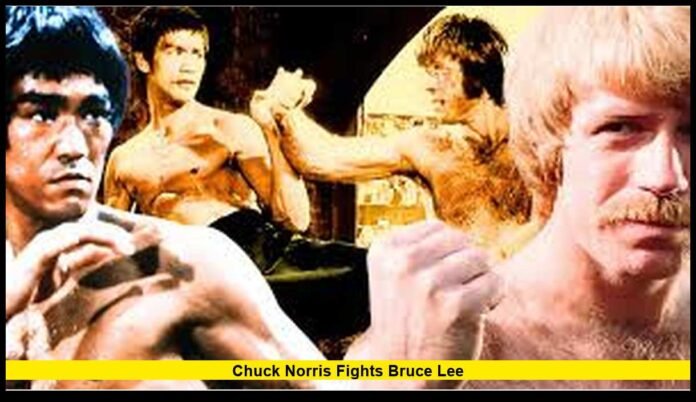

The idea that chuck norris fights bruce lee continues to capture attention in 2026, as viral clips and social media debates bring renewed focus to one of martial arts cinema’s most iconic on-screen rivalries—despite no real-life fight ever taking place.
Search interest has surged across the United States in recent months. Short-form videos, AI-generated matchups, and reposted film scenes have blurred the line between fact and fiction. Many viewers now question whether the two legends ever competed outside of Hollywood. The answer remains clear and grounded in documented history.
The Origin of the Legendary Showdown
Public fascination with these two icons began in 1972. That year, Bruce Lee wrote, directed, and starred in Way of the Dragon. Chuck Norris appeared as the film’s main opponent, setting the stage for one of cinema’s most memorable fight sequences.
The climactic scene unfolds in Rome’s Colosseum. It features a tense, carefully choreographed battle that highlights contrasting styles. Bruce Lee’s character ultimately wins after an intense exchange that emphasizes speed, timing, and adaptability.
This moment became a defining piece of martial arts film history. It also sparked decades of speculation about how a real encounter might have played out.
What Actually Happened in Real Life
Despite ongoing rumors, there is no verified record of a real fight between Bruce Lee and Chuck Norris. They never competed in a sanctioned match, private contest, or public exhibition.
Instead, their relationship reflected mutual respect. Both men trained together in California during the early 1970s. They shared knowledge, discussed techniques, and supported each other’s careers.
Their interaction included:
- Joint training sessions in Los Angeles
- Professional collaboration in film production
- Open admiration for each other’s skills
- Continued respect expressed in interviews over time
No credible evidence suggests any rivalry that escalated into a real confrontation.
Why the Confusion Persists Today
Digital platforms have reshaped how audiences consume historical content. Many viral clips combine scenes, add dramatic narration, or use artificial intelligence to simulate outcomes.
This has created a wave of misinformation. Some viewers believe they are watching authentic footage rather than edited entertainment.
Several factors explain the confusion:
- Film scenes presented without context
- AI-generated simulations labeled as real fights
- Influencers debating outcomes without historical grounding
- Increased exposure to classic films through streaming services
Younger audiences, in particular, often encounter these clips without background knowledge, which fuels ongoing debate.
Martial Arts Styles That Spark Debate
Interest in a hypothetical matchup stems largely from the distinct fighting philosophies each man represented. Their approaches differed in structure, strategy, and execution.
Bruce Lee’s Approach
Bruce Lee developed Jeet Kune Do, a system focused on efficiency and adaptability. He rejected rigid forms and encouraged fighters to respond fluidly to real situations.
His style emphasized:
- Speed and reaction time
- Minimal wasted movement
- Intercepting attacks rather than blocking
- Blending techniques from multiple disciplines
Lee’s philosophy helped shape modern mixed martial arts concepts. His influence remains visible in today’s training methods.
Chuck Norris’s Background
Chuck Norris built his reputation through competitive success. He earned multiple karate championships and later expanded into other disciplines, including Brazilian Jiu-Jitsu.
His strengths included:
- Powerful strikes and disciplined technique
- Structured training rooted in traditional martial arts
- Real-world competition experience
- Strong defensive fundamentals
Norris brought a practical, competition-tested approach that differed from Lee’s experimental philosophy.
Side-by-Side Comparison
| Category | Bruce Lee | Chuck Norris |
|---|---|---|
| Core Philosophy | Adaptability and flow | Structure and discipline |
| Primary Strength | Speed and precision | Power and control |
| Training Style | Hybrid and evolving | Traditional and tested |
| Film Impact | Global cultural icon | American action star |
| Competitive Record | Limited formal bouts | Multiple championship wins |
These differences continue to fuel discussions about who might have prevailed under various conditions.
The Role of Hollywood in Shaping the Narrative
The film industry played a major role in building the myth. The fight scene in Way of the Dragon was designed to entertain while showcasing both fighters’ strengths.
Every movement in that sequence was planned. Timing, camera angles, and choreography created a dramatic arc that kept audiences engaged.
Key elements of the scene include:
- Gradual pacing that builds tension
- Clear contrast between speed and strength
- Emotional storytelling through physical movement
- A decisive ending that reinforces Lee’s character
This cinematic storytelling blurred reality for many viewers, especially as clips spread online without explanation.
Chuck Norris on Bruce Lee
Chuck Norris has consistently spoken with respect when discussing Bruce Lee. Over the years, he has described Lee as one of the fastest and most skilled martial artists he ever encountered.
He has also clarified important points:
- Their on-screen fight required careful planning
- Bruce Lee’s speed made choreography challenging
- There was never a real competitive match
- Their relationship remained friendly and professional
These statements align with the historical record and help dispel persistent myths.
Bruce Lee’s Enduring Cultural Impact
Bruce Lee’s influence extends far beyond film. His ideas transformed how martial arts are taught and understood in the United States and worldwide.
His legacy includes:
- Introducing martial arts to mainstream American audiences
- Inspiring the development of modern MMA
- Promoting a philosophy of adaptability and self-expression
- Breaking barriers for Asian representation in Hollywood
Decades after his passing in 1973, Lee’s work continues to shape training methods and cultural discussions.
Chuck Norris’s Ongoing Legacy
Chuck Norris remains a prominent figure in American entertainment and martial arts culture. His career spans competitive success, film roles, and television stardom.
His continued relevance comes from:
- A well-documented championship history
- Popular roles in action films and TV series
- A lasting presence in internet culture
- Contributions to martial arts education
Norris’s influence reflects a blend of athletic achievement and media impact.
The Power of Hypothetical Matchups
The fascination with legendary fighters often goes beyond facts. Fans enjoy imagining outcomes based on different rules, environments, or eras.
The topic of chuck norris fights bruce lee fits into a broader trend of comparing icons across disciplines. These discussions thrive because they combine history, personality, and speculation.
Common reasons people engage in these debates include:
- Curiosity about contrasting styles
- Admiration for both figures
- Interest in martial arts evolution
- The appeal of unresolved questions
While entertaining, these conversations should remain grounded in verified information.
Modern Media’s Influence on Martial Arts History
Technology has made it easier than ever to revisit and reinterpret the past. At the same time, it has increased the risk of misinformation.
Today’s media environment includes:
- AI tools that create realistic fight simulations
- Video editing that alters original footage
- Algorithm-driven content that prioritizes engagement
- Rapid sharing across multiple platforms
These factors contribute to the ongoing confusion surrounding historical events.
Why Facts Still Matter
Accurate storytelling preserves the legacy of both Bruce Lee and Chuck Norris. It ensures that their contributions are understood in the proper context.
Separating fact from fiction helps:
- Educate new audiences
- Maintain historical integrity
- Prevent the spread of false narratives
- Highlight real achievements rather than imagined ones
Both men earned their reputations through discipline, innovation, and hard work—not through a rivalry that never existed.
Current Status in 2026
As of today, no new evidence has emerged to suggest a real fight ever occurred. The topic continues to trend due to digital content rather than new developments.
Confirmed facts remain unchanged:
- No real-life fight took place
- Their only confrontation occurred in a film
- They respected each other professionally
- Viral content continues to revive public interest
The discussion reflects cultural fascination rather than historical reality.
Closing Perspective
The story behind Chuck Norris and Bruce Lee reveals more about media influence than martial arts rivalry. Their shared moment on screen created a lasting legacy that still resonates decades later.
Do you think modern technology enhances these legends or distorts their stories? Join the conversation and keep following for more verified insights.