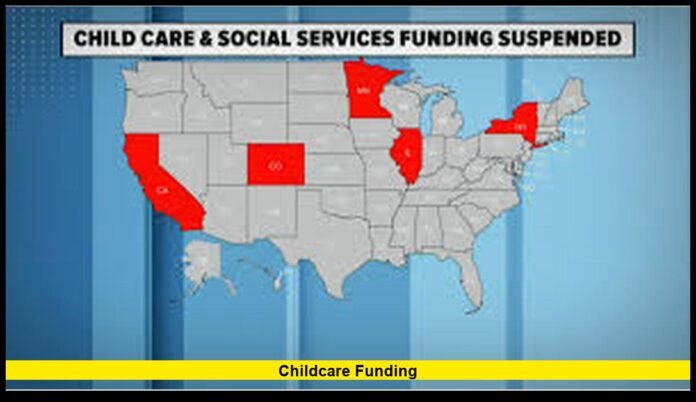

Childcare funding has become one of the most urgent policy issues in the United States after a federal decision halted the release of billions of dollars to several states, triggering widespread concern among parents, childcare providers, and state officials responsible for keeping early-childhood systems running.
The funding pause, implemented in early January 2026, affects money already allocated for programs that help families afford childcare, keep providers operating, and support parents who rely on consistent care to remain employed. While the action applies to a limited group of states, its consequences are being felt far beyond those borders.
As legal challenges begin and state governments search for stopgap solutions, families are left navigating uncertainty at a time when childcare costs are already straining household budgets.
Why Childcare Funding Is Under the Spotlight
Childcare funding sits at the intersection of family stability and economic participation. Millions of parents depend on subsidized care to work full-time, attend job training, or pursue education. When that funding is disrupted, the effects move quickly from state budgets into living rooms, workplaces, and classrooms.
The federal action paused access to funds that states use to reimburse childcare providers, lower costs for families, and maintain safety and staffing standards. Even a short delay can cause ripple effects, because childcare systems rely on steady cash flow rather than large financial reserves.
For many families, there is no backup plan when care becomes unavailable or unaffordable.
What the Federal Decision Changed
The funding pause does not eliminate childcare programs, but it temporarily blocks states from drawing down approved federal dollars until additional compliance requirements are met. States were asked to provide extensive documentation related to program administration and eligibility verification.
This move immediately raised alarms among state leaders who argue that the funds were already authorized and built into operating budgets. Without timely access, states face difficult choices about whether to dip into emergency reserves, delay payments, or reduce services.
The uncertainty alone has been enough to disrupt planning for childcare agencies and providers.
Programs That Rely on Childcare Funding
Federal childcare funding flows through multiple channels, all of which play a role in keeping care accessible and affordable.
Subsidized Care for Working Families
Many parents receive help paying for childcare through income-based assistance programs. These subsidies allow families to choose licensed providers while contributing a manageable portion of their income.
Without funding stability, families may lose assistance or face sudden increases in out-of-pocket costs.
Provider Reimbursement Systems
Childcare centers and home-based providers depend on timely reimbursements to cover daily operating expenses. Payments support staff wages, rent, utilities, food programs, and safety compliance.
A disruption can place providers in immediate financial distress.
Family Support Services
Some funds also support broader family services that help parents maintain employment, such as transportation assistance and transitional care during job changes.
Each layer is connected. When one falters, the others feel the strain.
State Governments Push Back
Officials in affected states have responded forcefully, arguing that the funding pause places families at risk and exceeds federal authority. Several states have announced legal action, while others are working to submit documentation as quickly as possible to restore access.
Governors and agency leaders warn that childcare funding is not optional spending. It supports essential services that allow parents to work and children to receive safe, consistent care.
States have also emphasized that frontline families bear the cost of delays, not government agencies.
Childcare Providers Face Immediate Pressure
Childcare providers operate on thin margins. Unlike large corporations, many centers cannot absorb weeks or months of delayed payments.
When reimbursements slow or stop, providers may be forced to:
- Limit enrollment
- Reduce staff hours
- Delay payroll
- Close classrooms
- Shut down permanently
Small providers and those serving low-income communities are especially vulnerable. Once a provider closes, reopening is difficult due to licensing requirements, staffing challenges, and startup costs.
Loss of providers reduces options for families long after funding issues are resolved.
Families Caught in an Unstable System
For parents, childcare funding disruptions translate into real-world stress. Many families plan work schedules around childcare availability. When care becomes uncertain, employment stability is threatened.
Parents may face:
- Last-minute schedule changes
- Increased childcare bills
- Forced leave from work
- Job loss
Single parents and households without flexible work arrangements are hit hardest. For them, reliable childcare is not a convenience—it is a requirement for survival.
The Cost of Childcare Was Already High
Even before the funding pause, childcare costs were rising across the country. Inflation, staffing shortages, and increased operating expenses pushed prices higher for families and providers alike.
In many regions, full-time childcare rivals rent or mortgage payments. Subsidies help bridge that gap, but only when funding flows consistently.
The current disruption adds pressure to an already strained system, increasing fears that affordability gains could slip away.
Workforce and Economic Effects
Childcare access directly affects the labor market. When parents cannot find or afford care, workforce participation declines. Employers lose trained workers, productivity suffers, and labor shortages grow.
Industries with high proportions of working parents—including healthcare, education, retail, and service sectors—are particularly sensitive to childcare instability.
Businesses have increasingly recognized childcare as a workforce issue, not a private family matter. Funding disruptions threaten progress made in aligning childcare access with economic needs.
Oversight vs. Access: A Policy Tension
Federal officials argue that strong oversight is necessary to protect public funds and ensure programs serve eligible families. States counter that existing oversight mechanisms already exist and that withholding funds creates harm that outweighs administrative concerns.
This tension is not new. Childcare funding has long balanced accountability with accessibility. The current dispute highlights how easily that balance can tip, leaving families exposed.
How this tension is resolved may shape future funding structures nationwide.
Legal Questions and Broader Implications
The funding pause has raised legal questions about federal authority and congressional spending decisions. Courts may ultimately decide whether the action aligns with existing laws governing federal funds.
Beyond the legal outcome, the situation sets a precedent. States are watching closely to see whether future funding could be delayed under similar circumstances.
Uncertainty alone can change how states plan programs, invest in childcare infrastructure, and expand access.
Why This Matters Beyond the Affected States
Although only certain states are directly impacted, the issue resonates nationwide. Childcare systems are interconnected through workforce mobility, provider networks, and federal funding models.
If states perceive funding as unreliable, they may tighten eligibility rules, delay expansions, or scale back support. These decisions affect families everywhere, even where funds remain accessible.
The ripple effects could reshape childcare access across the country.
What Families Should Watch Next
In the coming weeks, families and providers should pay attention to:
- State announcements about interim funding measures
- Court decisions related to the funding pause
- Federal guidance on compliance requirements
Clear communication will be critical. Families need time to plan, and providers need certainty to continue operating.
A Critical Moment for Childcare Policy
This moment has brought childcare funding into sharper focus than ever before. It underscores how essential these programs are to family stability, economic participation, and child development.
The outcome of this dispute will influence not only budgets and policies but everyday life for millions of Americans.
Looking Ahead
Whether the funding pause is resolved quickly or extends into prolonged legal battles, its impact is already clear. Stability matters in childcare systems. Families need predictability, providers need reliable payments, and states need confidence in funding commitments.
How leaders respond now will shape trust in childcare funding for years to come.
Join the conversation and stay informed as this childcare funding situation continues to unfold across the United States.