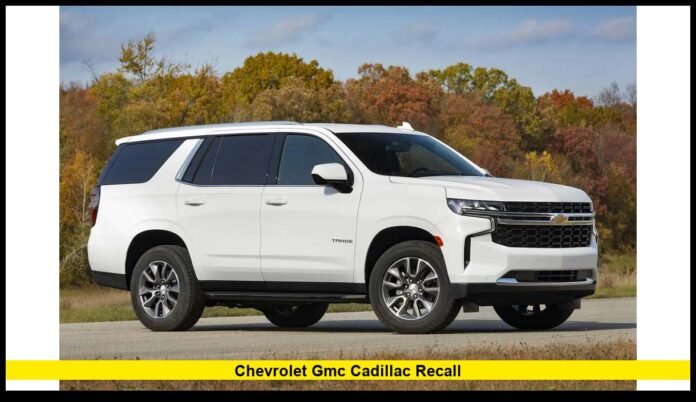

Chevrolet GMC Cadillac recall campaigns remain active in 2026, with General Motors continuing to address safety-related defects affecting certain vehicles across its three major brands. As of February 21, 2026, multiple recall notices remain open for specific model years and VIN ranges under federal safety oversight.
For American drivers, recall updates are not just routine paperwork. They directly impact vehicle safety, resale value, and compliance with federal standards. Here is a detailed, up-to-date look at what is happening and what owners need to know.
Understanding What a Recall Means
A vehicle recall occurs when an automaker identifies a safety defect or when federal regulators determine that a vehicle does not meet safety requirements.
When a recall is issued:
- The manufacturer must notify affected owners.
- Repairs must be provided at no cost.
- The recall must be reported to the National Highway Traffic Safety Administration (NHTSA).
General Motors oversees Chevrolet, GMC, and Cadillac. When a defect involves shared components, a single recall campaign can apply across all three brands.
Current Recall Categories in 2026
In early 2026, active Chevrolet GMC Cadillac recall notices involve several common safety categories.
These include:
- Brake system defects
- Powertrain and transmission concerns
- Electrical system malfunctions
- Airbag and restraint system issues
- Rearview camera and display problems
Not every vehicle is affected. Recalls apply to specific production periods and VIN ranges.
Owners must check their vehicle identification number to confirm eligibility.
Brake System Recalls
Brake-related defects remain one of the most serious recall categories.
Certain GM vehicles have been recalled in recent campaigns due to:
- Brake booster assembly issues
- Loss of brake assist
- Hydraulic brake component defects
- Software errors affecting brake performance
A malfunctioning brake system may increase stopping distance.
Dealerships correct these problems by replacing defective components or updating system software.
Brake recalls receive priority scheduling due to safety risks.
Transmission and Powertrain Issues
Modern GM vehicles rely on advanced automatic transmissions and electronic control modules.
Recent recall campaigns affecting Chevrolet, GMC, and Cadillac models have involved:
- Improperly manufactured transmission components
- Unexpected shifting behavior
- Software calibration defects
- Potential drivetrain damage
In many cases, dealerships resolve these issues through reprogramming or replacing faulty parts.
Drivers who experience harsh shifting, hesitation, or warning lights should verify recall status promptly.
Electrical System Concerns
Vehicle electronics have become more complex in recent years.
Electrical recalls may involve:
- Wiring harness defects
- Battery-related issues
- Instrument panel malfunctions
- Infotainment system failures
- Loss of rearview camera display
Rearview camera failures are particularly important. Federal law requires backup cameras in newer vehicles.
If the camera display fails, the vehicle may not meet federal safety standards.
Dealers address these issues through inspections, system recalibration, or hardware replacement.
Airbag and Safety Restraint Recalls
Airbag systems protect occupants during collisions.
Recent Chevrolet GMC Cadillac recall campaigns have addressed:
- Faulty airbag inflators
- Sensor malfunctions
- Warning light failures
- Incorrect deployment risks
Airbag defects can result in non-deployment or unintended deployment.
Dealerships replace defective airbag components at no cost.
Owners should never delay airbag-related recall repairs.
High-Volume Models Often Included
While recalls apply to specific VIN ranges, several high-volume models frequently appear in recent GM recall campaigns.
Chevrolet Models
- Silverado
- Equinox
- Traverse
- Tahoe
GMC Models
- Sierra
- Yukon
- Acadia
Cadillac Models
- Escalade
- XT5
- XT6
Not every vehicle within these model lines is recalled.
Production dates and VIN ranges determine eligibility.
How to Check for an Open Recall
Owners can confirm recall status quickly.
Follow these steps:
- Locate your VIN on the dashboard, door frame, or registration.
- Enter the VIN into the official NHTSA recall database.
- Contact an authorized GM dealership for verification.
Dealership service departments can confirm active recall campaigns and schedule repairs.
Recall repairs remain free regardless of vehicle age.
How Recall Repairs Are Handled
Once a recall applies to a vehicle:
- GM sends notification letters to registered owners.
- Owners schedule an appointment with a dealer.
- Technicians inspect and repair the affected component.
Some repairs require replacement parts.
Other issues, especially software defects, may be resolved through updates.
Parts availability can affect scheduling, but repairs do not expire.
Used Vehicle Owners and Recalls
Recalls follow the vehicle, not the owner.
If you purchased a used Chevrolet, GMC, or Cadillac vehicle:
- Open recalls still apply.
- Repairs remain free.
- VIN verification is essential.
Private sellers may not disclose open recalls.
Buyers should always check recall status before completing a transaction.
Federal Oversight and Manufacturer Responsibility
NHTSA monitors recall campaigns across the automotive industry.
Manufacturers must:
- Report identified safety defects.
- Develop a remedy plan.
- Notify affected owners.
- Track recall completion rates.
Failure to comply can result in penalties.
Federal oversight ensures automakers address safety risks promptly.
Why Recalls Have Increased in Recent Years
Vehicle technology has advanced rapidly.
Modern vehicles include:
- Advanced driver assistance systems
- Electronic braking systems
- Complex infotainment networks
- Electric and hybrid components
Software-related recalls have increased as vehicles rely more on digital systems.
Some recalls can now be corrected with software updates rather than mechanical repairs.
This shift reflects the growing role of electronics in vehicle design.
Safety Risks of Ignoring a Recall
Ignoring an open recall can:
- Increase crash risk
- Lead to component failure
- Reduce vehicle value
- Complicate insurance claims
Recall repairs cost nothing to the owner.
Delaying repairs increases potential safety hazards.
Chevrolet GMC Cadillac Recall Trends in 2026
In 2026, recall trends show a mix of:
- Mechanical component replacements
- Software reprogramming updates
- Electrical system inspections
Manufacturers continue to identify and correct defects as part of ongoing quality monitoring.
Drivers should remain proactive in checking recall status at least once per year.
Quick Safety Overview
| Recall Type | Common Resolution |
|---|---|
| Brake system defect | Part replacement or update |
| Transmission issue | Reprogramming or repair |
| Electrical malfunction | Wiring or module replacement |
| Airbag defect | Inflator or sensor replacement |
| Camera failure | System recalibration |
This overview reflects current recall categories affecting GM brands.
What Owners Should Do Next
If your vehicle appears in a Chevrolet GMC Cadillac recall:
- Confirm VIN eligibility.
- Schedule service promptly.
- Keep documentation of completed repairs.
Dealerships cannot charge for recall work.
Staying informed protects both drivers and passengers.
The Bottom Line in 2026
Chevrolet GMC Cadillac recall campaigns remain active for select vehicles in 2026. General Motors continues to repair safety defects involving brakes, transmissions, electrical systems, airbags, and rearview cameras at no cost to owners.
Drivers should verify their VIN through official channels and complete recall repairs as soon as possible to ensure safe operation on U.S. roads.
Have you checked your GM vehicle for open recalls recently? Share your experience and stay proactive about vehicle safety in 2026.