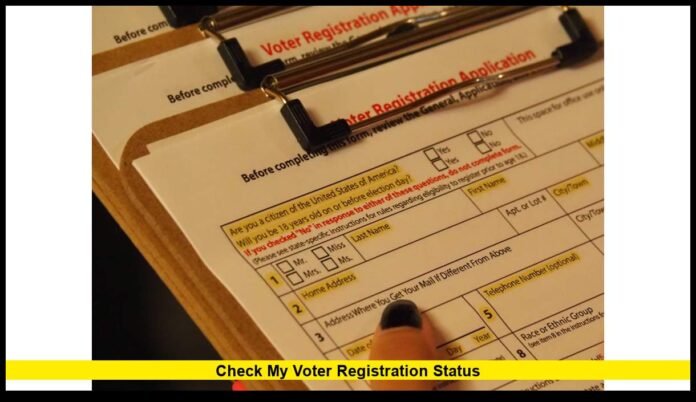

Check my voter registration status is an important step for eligible Americans preparing to participate in upcoming elections. With the November 3, 2026, general election approaching, voters should review their registration records, confirm their residential addresses, and check their assigned voting locations. Verifying these details early can help identify errors and provide time to address registration issues before state deadlines.
Voter registration rules vary across the United States. Each state establishes its own registration procedures, deadlines, and methods for checking individual records. Some states offer convenient online lookup tools, while others provide assistance through county election offices or local election administrators.
A registration record that worked for a previous election may no longer reflect a voter’s current circumstances. Moving, changing a legal name, or updating personal information can create a need to review the record. Checking your status helps you understand whether your information remains accurate and whether you need to take additional steps.
Why Checking Your Voter Registration Status Matters
Voter registration determines whether election officials have a record of your registration under the applicable state requirements. Checking that record before an election helps you identify problems while there may still be time to resolve them.
Even if you have voted before, you should not assume that every detail remains correct. Changes in your residence or personal information may affect your registration or voting location.
Here are the main reasons to check your registration:
- Confirm your registration status: Find out whether the state election system identifies your record as active or displays another status.
- Verify your residential address: Make sure your record reflects the address associated with your current residence.
- Check your legal name: Confirm that your registration includes your current name.
- Review party affiliation: If your state records political party affiliation, check that the information is accurate.
- Confirm your voting location: Find out where you are assigned to vote and review the available voting options.
- Identify registration problems: Contact election officials if your record appears incorrect, inactive, or missing.
Early verification is especially useful when an election is approaching. If your record contains an error, you may need to submit an update or provide additional information before the applicable deadline.
How to Check My Voter Registration Status Online
Online registration lookup services offer a convenient way to review voter information. Many states allow residents to access their records through official election websites.
Although the exact process differs by state, the following steps provide a practical starting point.
1. Find Your State’s Official Election Website
Begin by identifying the election authority responsible for your state. Government voter information services can help you locate the appropriate registration website.
Make sure you select the state where you currently reside. Registration records do not automatically transfer between states when someone moves.
2. Open the Voter Registration Lookup Service
Look for a section dedicated to voter registration verification, registration status, or voter information.
Some states provide a dedicated search tool. Others direct residents to their county election office or provide instructions for requesting information.
3. Enter the Required Information
The website may ask for your full name, date of birth, residential address, or other identifying details. Requirements vary by jurisdiction.
Enter the information carefully. Even a small spelling difference or an outdated address can prevent a search from finding the expected record.
Only provide personal information through an official election service that you have verified.
4. Review Your Registration Record
Once the system locates your record, examine the displayed information. Confirm your name, address, and registration status.
If the system provides party affiliation or registration dates, review those details as well. Not every state displays the same information.
5. Confirm Your Voting Location
Check whether your assigned polling place or voting arrangements match your current address. A residential move can affect your voting district, even when you remain in the same county.
Follow any additional instructions provided by your election authority.
6. Resolve Any Errors
If your information appears incorrect, contact the state or local election office. Officials can explain whether you need to update your record, submit an application, or complete another step.
Do not assume that submitting an application automatically means the state has approved or processed it.
What Information Should You Review in Your Registration Record?
A registration lookup should involve more than checking whether your name appears in a database. Reviewing the available details helps you identify discrepancies that could require attention.
| Registration detail | What voters should verify |
|---|---|
| Full legal name | Confirm the spelling and check whether a legal name change requires an update. |
| Residential address | Make sure the address reflects your current residence. |
| Registration status | Review the status displayed by the official election system. |
| Party affiliation | Check this information if your state records party registration. |
| Voting location | Confirm the assigned polling place or other voting arrangements. |
| Registration information | Review any available record dates and additional details. |
Some states do not require voters to register with a political party. In those states, a party affiliation field may not appear in the registration record.
Likewise, election systems may use different terms to describe registration status. If you do not understand a label, ask the election office to explain it rather than assuming that it means you cannot vote.
Understanding Active and Inactive Voter Registration
An active registration generally means that the election system recognizes the record as active. However, voters should still confirm that the information attached to the record remains accurate.
An active designation does not eliminate the need to update an address after moving or correct an error in a legal name. It also does not replace other eligibility requirements established by state law.
Some states classify certain records as inactive when officials cannot confirm a voter’s current address or when other conditions under state law apply.
An inactive designation does not necessarily mean that a voter has permanently lost the right to vote. The consequences depend on the state’s procedures and the circumstances of the record.
If your registration appears inactive, take the following steps:
- Contact your state or local election office.
- Ask why the record has that status.
- Confirm whether your address and other details are correct.
- Follow the instructions for updating your information or restoring active status.
- Ask whether any additional steps apply before the next election.
Do not ignore an inactive designation, particularly when an election deadline is approaching. Election officials can explain the steps available to you and whether you need to take action before voting.
What to Do if Your Name Does Not Appear in the Registration Database
Finding no record can be worrying, especially if you previously registered or participated in an election. However, a failed search does not always establish that your registration is missing.
Start by checking the information you entered. Make sure your name is spelled correctly and that you supplied the requested details in the correct format.
Next, confirm that you selected the appropriate state and county. If you moved recently, your previous registration may still be associated with your old residence.
If you submitted a registration application recently, the election office may need time to process it. Contact the office to determine whether officials received your application and whether they need anything else from you.
If the record remains unavailable, ask the election authority to investigate.
Avoid submitting multiple applications without understanding the status of your existing one. Follow the official instructions and ask which steps apply to your circumstances.
When a registration deadline is close, explain the timing issue to election officials. They can tell you which options remain available under state law.
Updating Voter Registration After Moving
A change of residence is one of the most common reasons to review voter registration. Your current address may affect the election jurisdiction, voting district, and polling location associated with your record.
If you move within the same state, you may need to update your existing registration. Depending on the jurisdiction, you may be able to complete the process online, submit a paper application, or contact your local election office.
Moving to another state generally requires registering in the new state. Do not assume that your previous registration automatically transfers to your new residence.
Before making an update, check these details:
- Whether you need to update an existing record or submit a new application.
- Which personal information the state requires.
- Whether an online update is available.
- The deadline for registration changes before the election.
- Whether your voting location will change.
A move can affect registration even when the new address is only a short distance from the old one. Different streets or neighborhoods may fall within different voting districts.
Check the official election information for your current residence rather than relying on the polling location you used previously.
Updating Your Registration After a Legal Name Change
A legal name change can create a discrepancy between your registration record and your current identification documents.
If your name changed because of marriage, divorce, a court order, or another legal process, review your registration through the official election service for your state.
The required procedure depends on the jurisdiction. Some states allow online updates, while others may require a form or additional documentation.
Enter your information exactly as requested. If your registration and identification records do not match, contact election officials before the election to determine what you need to do.
Do not assume that updating your driver’s license automatically updates your voter registration. Some states provide connected services, but the procedures differ.
Voter Registration Deadlines for the November 2026 Election
The general election is scheduled for Tuesday, November 3, 2026. However, voters across the country do not share one universal registration deadline.
Some states require registration applications to arrive well before Election Day. Others allow later registration or provide same-day registration under specific conditions.
The deadline may also depend on the registration method. Online applications, mailed forms, and in-person registration can follow different rules within the same state.
Voters should therefore check their records as early as possible and confirm the applicable deadlines with their election authority.
The following timeline provides a useful approach:
| Stage | Recommended action |
|---|---|
| Before the registration deadline | Review your record and identify any necessary changes. |
| When an update is needed | Submit the required information through an accepted method. |
| After submitting an application | Check whether the election office has processed it. |
| Before voting | Confirm your voting location and applicable identification requirements. |
| If a problem remains | Contact the responsible election office promptly. |
Some states offer registration opportunities during early voting or on Election Day. Others do not provide the same options.
Do not rely on another state’s rules when determining your own deadline. Confirm the dates and procedures that apply to your residence.
Can You Vote if Your Registration Information Is Incorrect?
An error in your registration does not automatically mean that you are ineligible to vote. The appropriate response depends on the type of error, your eligibility, and the procedures established by your state.
For example, an outdated address may require an update or a different voting location. A legal name discrepancy may require additional steps to correct your record.
Contact election officials as soon as you discover a problem. Explain the discrepancy and ask what you must do before the election.
Some states offer procedures for addressing registration issues close to Election Day. The availability and requirements of these procedures vary, so voters should not assume that the same option exists everywhere.
If the registration website displays an active status but contains an incorrect address, do not disregard the error. Confirm that your information is accurate and that you understand the applicable voting arrangements.
Does an Active Registration Guarantee That You Can Vote?
An active registration record is useful confirmation, but it does not independently establish that every voting requirement has been satisfied.
Voters must still meet applicable eligibility requirements and follow their state’s election procedures.
Some states require identification at the polls. Others use different methods to verify voters. The documents accepted and the steps required depend on the jurisdiction.
Your assigned voting location may also change after a move or an update to your registration information.
Review your state’s official election instructions before voting. If you are unsure about your eligibility, registration status, or required documents, contact the election office for clarification.
How to Protect Your Personal Information When Checking Registration
Voter registration records contain personal information, so use care when accessing them online.
Start with an official government election website. Verify that the service belongs to the appropriate state or local authority before entering personal details.
Keep these precautions in mind:
- Avoid entering sensitive information on unfamiliar websites.
- Do not share identifying details in public comments or social media posts.
- Be cautious about unsolicited messages claiming that your registration has been canceled.
- Verify unexpected registration warnings with election officials.
- Keep any application confirmation or reference information you receive.
- Use official election services when checking your record or submitting an update.
Some organizations provide legitimate voter information services, but your state or local election authority remains the appropriate source for confirming an individual registration record.
If a website requests information that seems unnecessary, stop and verify that you are using the correct service.
Frequently Asked Questions About Voter Registration Status
How can I check my voter registration status online?
Visit your state’s official election website and open its voter registration lookup service. Enter the requested information, then review your status, residential address, and voting location.
Is checking voter registration free?
Yes. Official state election websites provide registration lookup services without charging a fee. You do not need to pay an unfamiliar website simply to check your registration.
What should I do if my registration is inactive?
Contact your state or local election office to learn why your record is inactive. Ask whether you need to update your address, submit an application, or complete another step before voting.
Do I need to register again if I voted in a previous election?
Not necessarily. If your registration remains active and your information is correct, another application may not be necessary. However, a move or legal name change may require an update.
Can I check my voter registration by phone?
Yes. Contact your state or local election office for assistance. Officials can explain how to verify your record and what to do if your information appears incorrect or missing.
What happens if my name does not appear in the database?
Check your spelling, personal details, and selected jurisdiction. If you still cannot locate your record, contact your election office to investigate and determine whether you need to register or correct an application.
Do I need a voter registration card to vote?
A registration card is not universally required at the polling place. Identification requirements vary by state, so check the rules that apply to your jurisdiction before voting.
When should I check my registration for the November 2026 election?
Check as early as possible. The general election is scheduled for November 3, 2026, but registration and update deadlines differ by state. Early verification gives you more time to resolve problems.
Does my voter registration automatically transfer when I move?
You should not assume that your registration transfers automatically. If you move to another state, you generally need to register in your new state. Follow the applicable procedures for your previous registration as well.
Where can I get help with a voter registration problem?
Your state or local election office is the appropriate authority for questions about your individual record. Officials can explain your registration status, applicable deadlines, and the steps available to correct errors.
Final Thoughts
Checking your voter registration before an election helps you confirm your information, identify errors, and understand whether you need to take additional steps. Reviewing your address, registration status, and voting location can reduce uncertainty as Election Day approaches.
Check your voter registration today, make sure your information is accurate, and share your questions or experiences in the comments to help other voters stay informed.