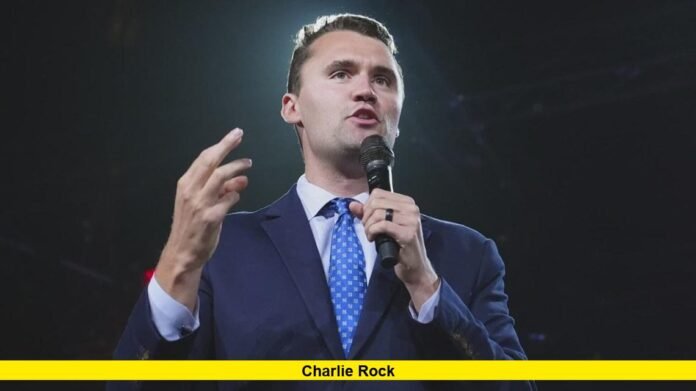

The firing of Charlie Rock has drawn nationwide attention after the Carolina Panthers removed him from their communications staff over social media posts about Charlie Kirk’s death. Rock, who had been recently promoted within the Panthers’ Football Communications Department, was terminated after sharing comments that many deemed insensitive in the aftermath of Kirk’s killing.
The controversy comes amid heightened scrutiny of public remarks made in the wake of tragic or violent events. The swift action taken by the NFL franchise shows how seriously organizations are treating issues of employee speech, reputation, and accountability.
What Led to Charlie Rock’s Termination
The termination of Charlie Rock, a staff member associated with the Carolina Panthers, stemmed from a series of controversial social media posts he made in the wake of Charlie Kirk’s assassination.
According to reports, Rock took to Instagram just hours after news of the killing broke. He shared multiple stories that quickly drew national attention. One post featured a photo of Kirk accompanied by a caption suggesting that the conservative commentator’s death was a direct consequence of his own rhetoric. Another post referenced lyrics from a Wu-Tang Clan track, which many interpreted as mocking Kirk’s violent death rather than offering condolences.
The reaction was swift and intense. Social media platforms lit up with criticism, with many fans and political commentators demanding accountability. Critics argued that while individuals are free to hold personal opinions, mocking the assassination of a public figure crossed a clear ethical and professional line—particularly for someone affiliated with a high-profile sports organization.
The Panthers’ leadership moved quickly to address the controversy. Within hours of the posts going viral, the team released a statement condemning violence in all forms and stressing that Rock’s views did not represent the values of the organization. The franchise made it clear that the remarks were inconsistent with the standards expected of staff members and affiliates, especially given the heightened emotions surrounding the tragedy.
By Thursday, the Panthers finalized Rock’s termination. Insiders indicated that the decision was not only about the offensive nature of the posts but also about the reputational risk they posed to the team. Professional sports organizations rely heavily on public image, community trust, and sponsorship relationships—all of which can be undermined by controversies tied to staff behavior.
Rock’s firing highlights how personal actions on social media can have significant professional consequences, particularly for those connected to institutions that value public trust and community engagement. In today’s media landscape, even personal accounts are viewed as extensions of an organization’s brand. For Rock, the posts were seen as crossing a line that could not be overlooked.
The fallout has also reignited debates over free speech versus accountability. Supporters of Rock argue that his posts, while provocative, fell within his rights to personal expression. Opponents counter that working for a professional sports team comes with higher standards of conduct, especially when public trust is at stake.
In the end, the Panthers’ decision underscored the organization’s commitment to distancing itself from remarks that appeared to celebrate or trivialize violence. For Rock, the incident marked a rapid and dramatic end to his tenure, serving as a cautionary tale of how quickly online words can translate into real-world consequences.
The Panthers’ Official Statement
The Carolina Panthers emphasized that the views expressed by Rock did not reflect those of the team or its ownership. The statement stressed the organization’s commitment to professionalism and its zero-tolerance approach toward remarks that could be seen as celebrating violence.
The swift response highlights how quickly organizations act to protect their brand and credibility. In today’s digital landscape, one employee’s online comments can spark significant reputational fallout.
A Parallel Case at Middle Tennessee State University
On the same day that Rock was dismissed, Middle Tennessee State University announced it had fired Assistant Dean Laura Sosh-Lightsy. Her termination followed similar social media posts made in reaction to Kirk’s assassination.
Sosh-Lightsy, who worked in the Office of Student Care and Conduct, had written on Facebook that she had “zero sympathy” for Kirk, suggesting that his rhetoric had brought violence back upon him. When criticized, she doubled down with another post stating that “hate begets hate” and that she still felt no sympathy.
The university explained that such comments were incompatible with her position overseeing student conduct and support services. Administrators stressed that maintaining public trust and student confidence was impossible after her remarks went viral.
Why These Firings Matter
Both incidents underscore the growing consequences of what employees say online. While the First Amendment protects free speech from government interference, private employers and universities often enforce their own codes of conduct and ethics policies.
In these cases, leaders at both the Panthers and MTSU concluded that allowing Rock or Sosh-Lightsy to remain in their roles would damage institutional credibility. The decisions also reflect public expectations for accountability, especially in moments when emotions are high.
Wider Implications for Organizations
The firings raise important questions about how institutions handle controversial speech from their employees:
- Reputation management: Employers are under pressure to act quickly to maintain credibility.
- Social media conduct: Posts that might have been ignored in another era now spread instantly, often creating viral controversy.
- Ethical standards: Positions involving public trust, such as university administrators or representatives of major sports franchises, are held to especially high standards.
Ongoing Investigations Into Charlie Kirk’s Killing
Law enforcement agencies continue to pursue every available lead in the investigation of Charlie Kirk’s assassination. Federal and local authorities are working in close coordination, pooling resources, and sharing intelligence in an effort to identify and apprehend the individual or individuals responsible. The manhunt remains active, with investigators combing through forensic evidence, analyzing digital records, and reviewing hours of surveillance footage from the area.
Officials have reiterated that this is a high-priority case, stressing that no detail is too small to be dismissed. The distinctive clothing linked to the suspect, including the long-sleeve black shirt with an American flag, remains a focal point of the investigation. Detectives are also examining whether the shooting was the act of a lone individual or part of a broader plan, leaving open the possibility of multiple suspects.
Although no further official updates have been released to the public, the case has quickly become one of the most closely watched investigations in the country. The killing has sparked nationwide debate, dominating headlines and fueling discussions across political, media, and social platforms. Law enforcement leaders have assured the public that every resource is being deployed to bring clarity and accountability, but they have also cautioned that complex cases of this magnitude often take time to resolve.
As the investigation progresses, authorities are expected to release additional evidence, issue appeals for new witnesses, and possibly announce breakthroughs in the coming weeks. For now, the search remains urgent, and the killing of Charlie Kirk continues to weigh heavily on both the political landscape and the national conversation.
Timeline of Investigation Milestones in Charlie Kirk’s Killing
September 11, 2025 – The Shooting
- Charlie Kirk is shot and killed while speaking at Utah Valley University.
- Witnesses report chaos as law enforcement secures the scene and evacuates attendees.
- Initial descriptions of the suspect circulate, highlighting a black long-sleeve shirt with an American flag, a dark hat, and sunglasses.
September 11, 2025 – Immediate Response
- Federal and local agencies launch a joint investigation, treating the case as an assassination.
- Surveillance footage from campus cameras is quickly reviewed and still images of the suspect are released to the public.
- Authorities issue the first public appeals, urging witnesses and community members to come forward.
September 12, 2025 – Key Evidence Recovered
- A high-powered bolt-action rifle believed to be the murder weapon is discovered in a wooded area near the university.
- Forensic teams collect ballistic evidence, fingerprints, and possible DNA from the weapon and nearby objects.
- Impressions from footwear, a palm print, and forearm markings are documented for analysis.
September 12, 2025 – Reward Announced
- Authorities announce a $100,000 reward for information leading to the suspect’s identification and capture.
- Officials emphasize the importance of the “charlie kirk shooter shirt” as a defining clue in the manhunt.
Ongoing – Forensic & Public Appeals
- Forensic labs continue processing recovered evidence, including unique inscriptions found on some ammunition.
- Authorities expand appeals for the public to check home and business surveillance footage from the area.
- Analysts begin building a timeline of the suspect’s movements before and after the shooting.
Looking Ahead
- Investigators are expected to release further images, forensic findings, or potential suspect profiles as the case advances.
- Breakthroughs may come through DNA matches, digital tracking, or new witness reports.
- The investigation remains one of the most closely monitored in the country, with national media and political leaders demanding answers.
Public Reaction
Public responses to both Rock’s and Sosh-Lightsy’s firings have been divided. Some argue that employers acted appropriately, ensuring accountability and sensitivity in the wake of tragedy. Others raise concerns about freedom of expression and the growing overlap between personal social media use and professional employment.
What is clear is that these events have reignited debate about the limits of speech in professional contexts and how institutions balance employee rights with public image.
Closing Thought
The story of Charlie Rock’s firing and the parallel case in Tennessee reveal how quickly words can lead to consequences in today’s interconnected world. As investigations into Kirk’s assassination continue, the conversation around speech, responsibility, and accountability will likely remain in the spotlight.