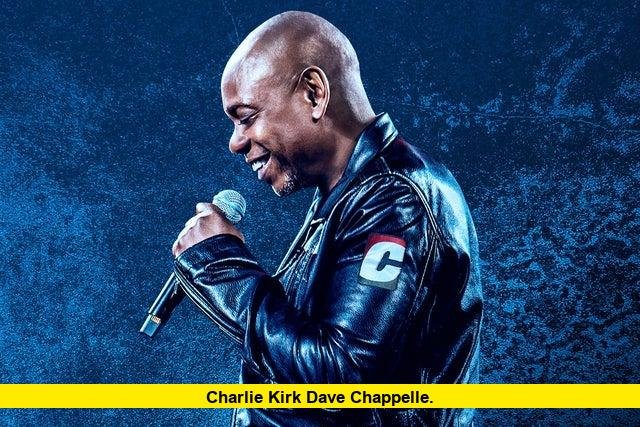

Charlie Kirk Dave Chappelle has become a major U.S. entertainment and political discussion after comedian Dave Chappelle joked about Kirk’s assassination during a November 7, 2026, performance at Madison Square Garden in New York City. The remarks circulated online and prompted criticism from Kirk’s supporters, while his widow, Erika Kirk, condemned jokes that treat political assassination as entertainment. Chappelle’s latest comments have also renewed attention to his earlier public discussion of Kirk’s death.
What Happened Between Charlie Kirk and Dave Chappelle?
The latest controversy centers on a stand-up routine in which Chappelle addressed the September 2025 killing of Charlie Kirk, the conservative activist who co-founded Turning Point USA.
During his performance, Chappelle said he felt uncomfortable admitting his reaction publicly. He then remarked that he had felt better since Kirk was murdered and described wondering why he was in such a good mood before remembering the killing.
The comments drew a mixture of laughter and audible reactions from the audience. After footage began circulating on social media, critics questioned the comedian’s decision to make the death the subject of a joke.
The incident quickly attracted national attention because Kirk was a prominent figure in conservative politics and because Chappelle had previously spoken about the killing in a different context.
The controversy also raised a broader question about the limits of political comedy. Supporters of free expression may defend a comedian’s ability to address controversial subjects, but others argue that joking about a real person’s assassination crosses an important moral boundary.
As of November 9, 2026, the main confirmed development is the backlash to Chappelle’s remarks and Erika Kirk’s public condemnation of jokes about her husband’s death. No public response from Chappelle addressing the latest controversy had been reported in the coverage available at publication time.
Dave Chappelle’s Charlie Kirk Joke at Madison Square Garden
Chappelle made the remarks during a Madison Square Garden appearance connected to his Karmageddon tour and the New York Comedy Festival. The performance took place on November 7, and a short recording subsequently spread across social media platforms.
The comedian’s words were especially controversial because he directly connected his claimed improvement in mood to Kirk’s death.
Chappelle acknowledged that the sentiment was uncomfortable to express publicly. He then continued the joke by describing an everyday moment in which he wondered why he was feeling unusually happy before recalling what had happened to Kirk.
The clip prompted strong reactions from viewers who believed the remarks celebrated political violence. Others discussed the comments within the broader tradition of provocative stand-up comedy, in which performers often explore subjects that audiences consider taboo.
However, the available footage does not establish the complete context of the routine. Reports noted that the performance was advertised as phone-free, with attendees required to secure their devices in Yondr pouches. The circulation of a short recording therefore provided only a limited view of the show.
That distinction matters when evaluating a comedy performance. A brief clip can establish the words spoken in the recorded segment, but it cannot necessarily explain the full routine, its setup, or everything that followed.
The controversy nevertheless developed quickly because the recorded remarks were direct enough to generate immediate criticism without requiring a lengthy explanation.
Erika Kirk Condemns Jokes About Her Husband’s Assassination
Erika Kirk, Charlie Kirk’s widow, responded publicly on November 8, criticizing people who make light of political assassination.
Her statement described the use of a human life as a punchline as deeply offensive. She emphasized that her husband had been killed in an act of political violence and that she and their two children would continue living with the consequences of his death.
She also argued that political disagreements should not prevent Americans from recognizing the value of another person’s life.
Her message concluded with a broader warning about the consequences of treating assassination as entertainment. She said political violence should never be tolerated, excused, or celebrated.
Although the statement appeared amid criticism of Chappelle and other public figures, Erika did not explicitly name the comedian in the quoted statement. It is therefore important to distinguish the context surrounding her response from a direct accusation naming a particular person.
Her remarks resonated with Kirk’s supporters, who viewed the jokes as disrespectful to his memory and painful for his surviving family.
The response also moved the discussion beyond comedy. For many critics, the issue was not simply whether a joke was offensive, but whether public figures should treat a politically motivated killing as a source of amusement.
Others focused on the distinction between discussing a controversial political figure and celebrating that person’s death. That distinction has become central to the debate surrounding the Charlie Kirk Dave Chappelle controversy.
Why Charlie Kirk’s Death Remains Central to the Controversy
Charlie Kirk was 31 when he was fatally shot on September 10, 2025, while speaking at Utah Valley University in Orem, Utah. He was a prominent conservative activist and a co-founder of Turning Point USA, an organization known for mobilizing young conservatives.
Kirk built a national profile through campus appearances, political debates, online commentary, and support for conservative causes. His confrontational debating style and outspoken positions made him influential among supporters while drawing sustained criticism from political opponents.
His death became a major national event because the shooting took place during a public appearance. It also intensified concerns about political violence and the safety of people who speak publicly about contentious issues.
The killing subsequently became part of wider arguments about political polarization, free speech, and the treatment of ideological opponents.
That background explains why Chappelle’s remarks attracted attention beyond his regular audience. The joke referenced a real killing that had already become a sensitive subject for millions of Americans.
For Kirk’s supporters, the issue carries particular weight because they see his death as an attack on political participation and public debate. They argue that making light of the killing risks normalizing hostility toward people with opposing views.
Critics of Kirk’s political positions, meanwhile, may distinguish between evaluating his public statements and responding to his death. Disagreement with a person’s beliefs does not require celebrating an act of violence against that person.
The latest controversy has brought these competing perspectives into direct conflict, with Chappelle’s joke serving as the immediate trigger for a much wider argument.
What Dave Chappelle Previously Said About Charlie Kirk
The November 2026 controversy is not the first time Chappelle has addressed Kirk’s death.
In December 2025, Chappelle discussed the killing in his Netflix stand-up special The Unstoppable. His earlier remarks included an expression of shock at the news and reflections on the dangers faced by people who make a living speaking publicly.
He also challenged comparisons between Kirk and civil rights leader Martin Luther King Jr.
Chappelle argued that the two men should not be treated as equivalent simply because both were murdered. He contrasted King’s civil rights leadership with Kirk’s work as a political commentator and internet personality.
Those comments generated their own discussion because they combined acknowledgment of the killing’s brutality with criticism of how some people portrayed Kirk’s historical significance.
In the special, Chappelle also described his own concerns about the risks of speaking publicly. His remarks reflected the complicated relationship between political expression, public criticism, and personal safety.
The contrast between that earlier discussion and his November 2026 joke has become an important part of the latest debate.
In the earlier special, Chappelle described being shaken by Kirk’s death. In the more recent performance, he joked that he had felt better since the killing.
The two moments have prompted viewers to question the difference between discussing a controversial public figure, criticizing that person’s legacy, and making a joke that appears to connect personal happiness with the person’s death.
Chappelle’s comedy often relies on provocative statements and uncomfortable subjects. However, the latest reaction demonstrates that audiences may judge a joke differently when it concerns a recent act of political violence and a family still dealing with the loss.
Why the Controversy Has Spread Across Social Media
Social media has played a central role in turning a single comedy routine into a national discussion.
The recording from Madison Square Garden gave viewers a short, shareable segment that could circulate independently of the full performance. As the clip spread, commentators and users debated the meaning of Chappelle’s words and whether the joke was acceptable.
Some critics described the remarks as cruel and disrespectful. Others focused on the comedian’s right to make provocative material, even when it angers audiences or challenges widely held moral expectations.
The discussion also drew reactions from prominent public figures. Technology entrepreneur Elon Musk criticized Chappelle, while other commentators highlighted the comedian’s previous experience with an onstage attack.
These reactions helped broaden the debate beyond entertainment audiences.
The controversy also reflects a recurring problem with viral comedy clips. A recording can accurately capture a controversial statement while leaving out the surrounding material that might help viewers understand how the performer developed the joke.
That limitation does not erase the recorded words or prevent people from criticizing them. It does mean that claims about the complete performance should be separated from what the available footage actually shows.
For now, the central facts remain straightforward: Chappelle made the remarks during his November 7 performance, the clip circulated online, and the comments prompted widespread criticism.
The Connection to Dave Chappelle’s Own Experience With Political Violence
Some critics have also pointed to Chappelle’s experience with an onstage attack in 2022.
On May 3 of that year, a man rushed onto the stage during Chappelle’s performance at the Hollywood Bowl in Los Angeles and tackled him. The incident occurred during the Netflix Is a Joke festival and drew national attention.
The attack became relevant to the current controversy because critics argue that someone who has experienced violence while performing should understand the seriousness of threats against public speakers.
The comparison does not establish what Chappelle intended when he made his latest joke. It does, however, help explain why some responses have emphasized the relationship between the comedian’s personal experience and his comments about Kirk’s killing.
The two incidents were different. Chappelle survived the 2022 stage attack, while Kirk was fatally shot during a public event in 2025.
Nevertheless, the connection has become part of the public debate over whether humor about political violence can coexist with concerns about performers’ and public figures’ safety.
Chappelle has built a career around testing boundaries, challenging conventional opinions, and confronting controversial subjects. The latest incident shows how that approach can create sharply divided reactions when the subject is a person’s assassination.
Legal Status of the Charlie Kirk Murder Case
The criminal case surrounding Kirk’s killing remains an important part of the story, separate from the debate over Chappelle’s comedy.
Tyler Robinson, the man accused of killing Kirk, pleaded not guilty to the charges against him in September 2026. A Utah judge ruled that sufficient evidence existed for the case to proceed to trial on the aggravated murder charge and other counts.
Prosecutors are seeking the death penalty, meaning Robinson could face capital punishment if convicted. The charges and allegations remain subject to the judicial process.
Robinson’s not-guilty plea is significant because it means the allegations have not been resolved through a guilty plea. The legal case must be distinguished from public commentary about the killing.
The latest controversy involving Chappelle does not change the status of that criminal proceeding. It concerns a comedian’s remarks about the death, rather than a new development in the prosecution.
Maintaining that distinction is important for factual reporting. The shooting, the criminal charges, and the reaction to Chappelle’s joke are related topics, but they represent different developments.
Free Speech, Comedy, and the Limits of Public Reaction
The Charlie Kirk Dave Chappelle controversy has revived longstanding questions about the role of comedy in American public life.
Stand-up comedians regularly discuss politics, religion, race, violence, and other subjects that can provoke strong reactions. Some audiences view comedy as a space where performers should be able to challenge social expectations without facing demands for approval.
Others argue that freedom of expression does not eliminate the responsibility to consider how jokes affect people, especially when they involve a real person’s death.
These positions are not necessarily mutually exclusive. A comedian can have the freedom to make a joke, while audiences retain the freedom to criticize it, refuse to support the performer, or explain why they find it offensive.
The debate becomes particularly sensitive when a joke concerns political assassination. Unlike fictional violence, an actual killing leaves behind grieving relatives, friends, and communities.
Erika Kirk’s response reflects that concern. Her statement urged Americans to separate political disagreement from the basic recognition of another person’s humanity.
The controversy also illustrates how public reactions can shape the reception of comedy long after a performance ends. A routine that was delivered to a live audience can become a national talking point once short clips circulate online.
As of November 9, 2026, the most important confirmed development remains the criticism directed at Chappelle following his remarks and Erika Kirk’s condemnation of jokes about political assassination. A public response from Chappelle addressing the incident had not been reported in the latest available coverage.
The episode is likely to remain a subject of discussion as viewers debate the relationship between comedy, political disagreement, and respect for victims of violence.
The Bottom Line on Charlie Kirk and Dave Chappelle
The latest Charlie Kirk Dave Chappelle controversy began with a joke at Madison Square Garden and quickly developed into a broader debate about political violence, public responsibility, and the limits of comedy.
Chappelle’s remarks differed sharply from his earlier discussion of Kirk’s death in The Unstoppable, where he said the killing had shaken him while challenging comparisons between Kirk and Martin Luther King Jr.
Erika Kirk’s response placed the focus on the family left behind and the importance of refusing to celebrate political assassination. Meanwhile, the criminal case against the man accused of killing Kirk continues separately through the courts.
The available evidence establishes what Chappelle said in the circulating clip and how critics responded. It does not establish the full context of the routine or reveal any subsequent explanation from the comedian.
Ultimately, the controversy reflects a difficult question in American public discourse: how far should comedy go when its subject is a real person who died through political violence?
What do you think about the Charlie Kirk Dave Chappelle controversy? Share your perspective in the comments and stay tuned for verified updates as the story develops.