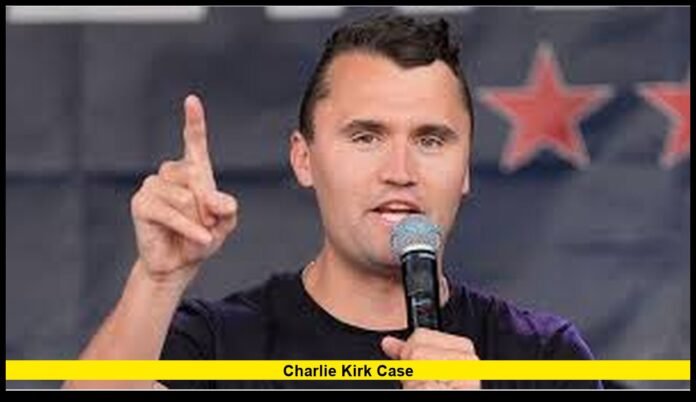

A Tennessee legal battle connected to Charlie Kirk has turned into one of the most widely discussed free speech cases in America after a local man received an $835,000 settlement tied to his arrest over a social media post. The case has sparked national debate over constitutional rights, online speech, public safety concerns, and the limits of government power in politically charged situations.
The controversy centers on Larry Bushart, a retired law enforcement officer from Tennessee who spent more than a month behind bars after posting a meme online following the 2025 killing of conservative activist Charlie Kirk. Authorities accused Bushart of making a threat involving a school, but prosecutors later dropped the criminal charge entirely. Bushart then filed a federal lawsuit claiming his constitutional rights had been violated during the investigation and arrest process.
The settlement agreement reached this week has renewed conversations across the country about political expression, social media policing, and whether Americans are increasingly vulnerable to criminal investigations over online commentary.
How the Case Began
The dispute started in September 2025 after the death of conservative commentator and Turning Point USA founder Charlie Kirk. His killing triggered intense reactions nationwide, especially online where supporters and critics exchanged emotional posts, political arguments, and controversial commentary.
During that period, Larry Bushart shared a meme on Facebook that referenced remarks previously made by President Donald Trump following the 2024 Perry High School shooting in Iowa. The meme included the words, “We have to get over it,” alongside Bushart’s own caption suggesting the statement remained relevant.
Authorities in Perry County, Tennessee, later claimed some residents interpreted the post as a possible threat connected to Perry County High School in Tennessee due to the shared county name.
Investigators moved quickly. Bushart was arrested and charged with threatening mass violence at a school, a serious felony offense that immediately attracted public attention far beyond Tennessee.
The case rapidly spread across political media and constitutional law circles because critics argued the social media post contained no direct threat, no plan for violence, and no evidence of criminal intent.
Questions Raised Over the Arrest
From the moment the arrest became public, legal observers began questioning whether authorities had overstepped constitutional boundaries.
Bushart’s supporters argued the post was political commentary protected by the First Amendment, even if some readers found it offensive or insensitive.
Civil liberties advocates pointed to a growing national trend in which online speech increasingly becomes the focus of criminal investigations. They warned that punishing controversial political commentary could create a chilling effect on free expression.
At the center of the debate was whether authorities reasonably interpreted Bushart’s meme as a genuine threat or reacted too aggressively during a highly emotional political moment.
The controversy intensified when details about Bushart’s jail conditions and bond amount became public.
The $2 Million Bond Shocked Many Observers
After his arrest, Bushart was held on a staggering $2 million bond.
That figure stunned legal analysts and quickly became one of the most controversial elements of the case.
Critics argued the bond amount was extraordinarily excessive for a social media-related charge involving no weapons, no alleged attack preparations, and no evidence of violent action.
Unable to pay the bond, Bushart remained jailed for 37 days.
According to court filings, the time in custody caused major personal and financial damage. Bushart reportedly lost his transportation job, missed important family milestones, and experienced emotional stress while incarcerated.
His attorneys later argued that officials knowingly exaggerated the severity of the situation despite understanding the meme referenced the Iowa school shooting and not a Tennessee school.
The lengthy detention became a central issue in the federal lawsuit filed after prosecutors abandoned the criminal case.
Why Prosecutors Dropped the Charge
The criminal charge against Bushart eventually collapsed in court.
Prosecutors dismissed the felony case in October 2025 after mounting criticism and increased public scrutiny surrounding the investigation.
Legal filings later suggested authorities lacked sufficient evidence to support claims that Bushart intended to threaten anyone.
The dismissal dramatically shifted public perception of the case.
What initially began as a local criminal investigation soon evolved into a national debate about free speech rights in the digital era.
Bushart responded by filing a federal civil rights lawsuit against Perry County officials and investigators, alleging violations of both the First and Fourth Amendments.
The lawsuit claimed his arrest lacked probable cause and argued officials unlawfully punished constitutionally protected political expression.
The Federal Lawsuit Changed Everything
Once the federal lawsuit moved forward, the controversy gained even more national attention.
Constitutional law experts began closely monitoring the case because it raised major questions about how governments should handle controversial online speech.
Bushart’s legal team argued that public officials ignored the context of the meme and instead pursued criminal charges based on political pressure and emotional reactions following Charlie Kirk’s death.
The lawsuit also focused heavily on the enormous bond amount and the decision to keep Bushart jailed for more than a month despite growing doubts about the case.
Attorneys for Bushart argued that authorities used criminal law to punish speech rather than address a legitimate public safety threat.
As the lawsuit advanced, Perry County faced the possibility of prolonged legal proceedings, public testimony, and national scrutiny over internal communications tied to the investigation.
Settlement Reached for $835,000
On May 20, 2026, officials agreed to settle the case for $835,000.
The financial agreement officially ends the lawsuit and avoids a potentially lengthy federal court trial.
The settlement immediately became one of the most discussed recent payouts involving a social media arrest and constitutional rights claims.
Bushart publicly described the outcome as a victory for free speech protections and individual liberties.
For many legal observers, the settlement signals how seriously courts and local governments must treat constitutional concerns involving online political expression.
The agreement also sends a broader message to law enforcement agencies nationwide about the risks tied to aggressive prosecutions involving speech-related cases.
While settlements do not necessarily represent admissions of wrongdoing, the size of the payout intensified public attention surrounding the controversy.
Political Speech and Social Media Collide
The Bushart case unfolded during a period of growing national tension surrounding political speech online.
Social media platforms increasingly serve as major arenas for political debate, activism, satire, and emotional reactions to breaking news events.
As online discussions become more heated, authorities across the country continue facing pressure to respond quickly whenever posts appear threatening.
That environment creates difficult legal questions.
The First Amendment protects a wide range of speech in the United States, including speech many people consider offensive, disturbing, or politically inflammatory.
However, true threats of violence fall outside constitutional protection.
Determining where speech crosses that legal line remains one of the most difficult challenges facing courts and investigators.
The Bushart case became a powerful example of how quickly online speech disputes can escalate into criminal prosecutions and national legal battles.
Who Was Charlie Kirk?
Charlie Kirk became one of the most recognizable conservative activists in America through his leadership of Turning Point USA.
He built a massive following through campus events, media appearances, podcasts, political rallies, and online activism.
Supporters praised Kirk for energizing younger conservative voters and challenging liberal viewpoints on college campuses and social media.
Critics often accused him of contributing to political polarization and divisive public discourse.
Regardless of political opinion, Kirk’s influence in conservative politics was undeniable.
His death in 2025 triggered emotional reactions nationwide and intensified already heated political divisions online.
That atmosphere shaped the environment in which Bushart’s Facebook post received national attention.
Growing National Concerns About Free Speech
The Tennessee case has become part of a larger national conversation about freedom of expression in modern America.
Civil liberties advocates argue that aggressive investigations involving political speech risk discouraging Americans from openly expressing opinions online.
They warn that vague standards surrounding “threatening” speech could lead to inconsistent enforcement influenced by political pressure or public outrage.
Meanwhile, law enforcement officials often defend rapid responses to any situation involving schools or potential violence.
Authorities across the country remain under intense pressure to act quickly whenever public safety concerns arise, particularly after years of mass shootings and violent incidents.
That tension between constitutional protections and security concerns continues shaping legal battles nationwide.
The Bushart settlement now stands as one of the clearest recent examples of how those conflicts can lead to expensive and politically explosive outcomes.
Public Reaction Remains Deeply Divided
Reaction to the settlement has varied sharply across the political spectrum.
Free speech advocates celebrated the agreement as accountability for what they view as government overreach.
Many critics of the arrest argue Bushart never should have been jailed in the first place and believe the case demonstrated dangerous misuse of criminal law.
Others defend authorities for taking potential threats seriously, especially when schools are mentioned in any context.
Some Americans argue investigators had a responsibility to examine the post regardless of political implications.
The disagreement reflects broader divisions across the country about political rhetoric, online speech, and law enforcement responses.
The case also highlights how social media continues blurring the line between public commentary and perceived threats.
Legal Experts Say Similar Cases Could Increase
Constitutional law experts believe disputes involving online political speech will likely become even more common in coming years.
Social media allows statements, jokes, memes, and political commentary to spread instantly across large audiences.
That speed often creates intense public reactions before investigators fully examine context or intent.
Legal scholars say courts may continue refining standards involving online speech, particularly in cases tied to schools, politics, or emotionally charged national events.
The Bushart case could now influence future legal arguments involving social media arrests and First Amendment protections.
Law enforcement agencies may also review internal policies regarding online threat investigations after seeing the financial and political consequences surrounding this dispute.
A Case That Could Shape Future Free Speech Debates
The Tennessee settlement reaches far beyond one county or one Facebook post.
It touches larger national questions about political expression, public pressure, government authority, and digital communication in modern America.
For supporters of stronger constitutional protections, the outcome represents an important reminder that controversial speech still carries legal safeguards.
For others, the case reflects the enormous challenge authorities face when responding to potentially alarming online content in an age shaped by political violence and rapid information sharing.
Either way, the legal battle has become one of the most talked-about constitutional controversies linked to social media speech in recent years.
The settlement may have closed the courtroom fight, but the national debate surrounding online expression and government power is far from over.
What’s your take on the Tennessee settlement and the growing clash between free speech and online policing? Join the conversation and stay tuned for more major legal developments.