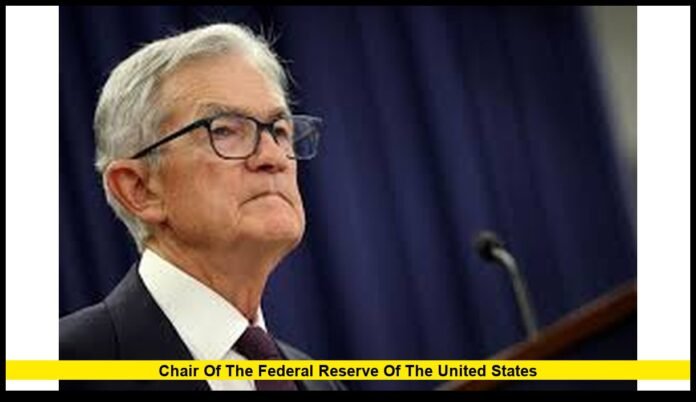

The chair of the federal reserve of the united states is Jerome Powell as of April 2026, and his decisions continue to shape interest rates, inflation trends, and overall economic stability across the country.
At a time when inflation has cooled but not fully stabilized, Powell’s leadership of the Federal Reserve System remains central to how quickly borrowing costs fall and how strong the U.S. economy stays. With his current term ending in May 2026, markets and policymakers are closely watching both his next moves and the future of the role itself.
Understanding the Role of the Fed Chair
The chair of the Federal Reserve serves as the top decision-maker in U.S. monetary policy. This role includes leading the Board of Governors and guiding the Federal Open Market Committee (FOMC), which sets the nation’s benchmark interest rate.
Jerome Powell has held the position since 2018. His tenure has covered some of the most volatile economic periods in modern history, including the pandemic recovery and the fight against rising inflation.
The role involves several key responsibilities:
- Setting interest rate policy
- Managing inflation expectations
- Supporting maximum employment
- Maintaining financial system stability
These decisions influence everything from mortgage rates to job growth.
Where Policy Stands in 2026
In 2026, the Federal Reserve continues to operate with caution. Inflation has dropped significantly from earlier highs, yet it remains above the long-term 2% target.
Powell has made it clear that policy decisions will depend heavily on incoming data rather than fixed timelines. This flexible approach reflects uncertainty in both domestic and global conditions.
Current policy signals include:
- Interest rates remain relatively high compared to pre-2020 levels
- The Fed is not rushing into rate cuts
- Inflation progress is steady but incomplete
- Economic growth is slowing but still positive
This balance reflects a strategy aimed at avoiding both runaway inflation and a sharp downturn.
How Interest Rates Are Affecting Americans
The chair of the Federal Reserve of the United States directly impacts everyday financial life. Interest rate decisions influence how expensive it is to borrow money and how much consumers can afford.
Key effects in 2026:
- Housing: Elevated mortgage rates continue to pressure homebuyers
- Credit Cards: Borrowing costs remain high for revolving debt
- Auto Loans: Financing a vehicle is more expensive than in prior years
- Small Businesses: Higher rates make expansion more difficult
Despite these challenges, the broader economy has remained resilient. Employment levels are still relatively strong, which has helped offset tighter financial conditions.
Powell’s Communication Strategy
Jerome Powell has built a reputation for clear and measured communication. His press conferences and public remarks often set expectations for financial markets.
Investors, banks, and global institutions closely track his statements. Even subtle changes in tone can influence:
- Stock market performance
- Bond yields
- Currency values
This level of attention shows how powerful the Fed chair’s voice has become in shaping economic outlook.
Major Challenges in 2026
The chair of the Federal Reserve of the United States faces several ongoing challenges this year.
Balancing Inflation and Growth
Lowering inflation without triggering a recession remains the top priority. This balance is difficult and requires precise timing.
Global Economic Uncertainty
International developments continue to affect U.S. markets. Trade shifts, geopolitical tensions, and foreign interest rate decisions all play a role.
Political Pressure
While the Federal Reserve operates independently, public and political scrutiny tends to increase during election cycles.
Financial System Risks
Banks and financial institutions remain under close watch following recent stress in the sector. Stability remains a key concern.
A Look Back at Powell’s Tenure
Jerome Powell’s leadership has been defined by rapid changes and decisive action.
| Year | Milestone |
|---|---|
| 2018 | Took office as Fed Chair |
| 2020 | Led emergency economic response during the pandemic |
| 2022 | Initiated aggressive rate hikes to combat inflation |
| 2023–2024 | Continued tightening policy |
| 2025–2026 | Shift toward stabilization and cautious decision-making |
His tenure reflects a shift from crisis management to long-term economic balancing.
What Comes Next for the Fed Chair Position
With Powell’s term set to end in May 2026, attention is turning to what happens next.
Possible outcomes include:
- A second reappointment
- A new nominee selected by the President
- Continued policy continuity regardless of leadership change
Leadership transitions at the Federal Reserve often influence market expectations, even if policy direction remains steady.
Why This Role Matters More Than Ever
The chair of the Federal Reserve of the United States plays a direct role in shaping the financial reality of millions of Americans.
Everyday impacts include:
- Mortgage affordability
- Job availability
- Cost of living
- Investment returns
In a high-rate environment, these effects become even more noticeable. That is why Fed decisions receive such intense public attention.
Public Reaction and Ongoing Debate
Jerome Powell’s approach has sparked mixed reactions.
Supporters argue:
- He acted decisively to control inflation
- His communication has been consistent and transparent
- The economy has avoided a severe downturn
Critics say:
- The Fed reacted too slowly to early inflation signals
- Interest rates remained high for too long
These differing views highlight the complexity of managing economic policy in uncertain times.
Long-Term Outlook for U.S. Monetary Policy
Looking ahead, the Federal Reserve remains focused on its dual mandate:
- Stable prices
- Maximum employment
Powell has emphasized that long-term success depends on disciplined, data-driven decisions rather than short-term reactions.
The coming months will be critical. Inflation trends, labor data, and global developments will all shape the Fed’s next moves.
Conclusion
The chair of the Federal Reserve of the United States continues to hold one of the most influential positions in the global economy, and Jerome Powell’s leadership in 2026 is guiding the U.S. through a delicate phase of economic adjustment.
Do you think the Federal Reserve should begin cutting rates soon, or stay cautious longer? Join the conversation and share your perspective.