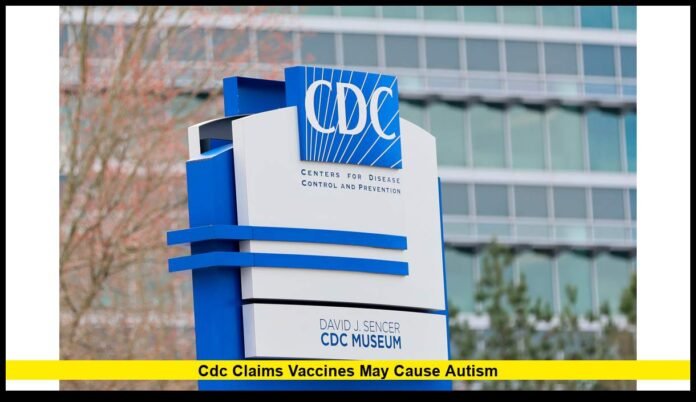

The key topic “CDC claims vaccines may cause autism” gained national attention after the agency updated its public vaccine-safety webpage on November 19, 2025. The update included new language stating that the long-standing message “vaccines do not cause autism” is not an evidence-based claim, prompting widespread discussion across the country. The shift has created a major moment in U.S. public-health communication and continues to drive conversation among medical groups, policymakers, and families.
A Sudden Change in Federal Messaging
The revised CDC page stated that studies have not ruled out the possibility that infant vaccines may contribute to the development of autism. This represented a major departure from decades of consistent federal messaging. For years, federal health agencies emphasized that extensive research supported a lack of connection between routine childhood vaccines and autism.
The November update appeared abruptly and drew immediate reaction. Many within the agency and the broader scientific community were surprised, as no new large-scale research has recently emerged showing a proven link. The page retained a headline saying vaccines do not cause autism, but with an added note explaining that this wording remained due to a prior agreement with lawmakers.
How This Shift Differs From Previous CDC Guidance
For decades, major medical organizations leaned on extensive epidemiological data involving millions of children. These studies found no causal relationship between childhood vaccines—such as the measles, mumps, and rubella (MMR) vaccine, or vaccines containing thimerosal—and autism diagnoses. Reviews conducted over many years repeatedly concluded that available evidence did not support a causal link.
The CDC’s new language does not present newly published research overturning that long-held understanding. Instead, it highlights that evidence ruling out all possibilities is limited and that more investigation may be needed. This messaging shift breaks with a long tradition of firm, direct vaccine-safety statements from the federal government.
Reactions From Public-Health Leaders
Public-health organizations responded quickly. Many groups expressed concern that the new language may fuel confusion among parents who rely on clear guidance to make vaccination decisions for their children. Some advocacy organizations criticized the update as misleading, warning that it may open the door to renewed debate over long-settled scientific conclusions.
Former agency officials also raised questions about whether the update reflected political pressure rather than a science-driven process. Several public-health leaders urged the CDC to clarify the basis of the change and reaffirm that any future guidance must be grounded in comprehensive, peer-reviewed research.
Concerns About Misinformation and Vaccine Hesitancy
Messaging on vaccine safety has always carried broad public-health implications. Shifts like this can influence vaccination rates, especially among families with young children. Public-health experts warn that uncertainty may lead some parents to delay or skip childhood immunizations, potentially opening the door to outbreaks of diseases such as measles and whooping cough.
States across the country have spent years reinforcing immunization campaigns, especially as hesitancy grew during recent national debates. Any unexpected change in language from the CDC can bring real-time effects on community health behavior, making clarity essential.
What the Scientific Community Still Emphasizes
Despite the CDC’s updated wording, leading scientists continue to point to several established facts:
- Multiple long-term population studies spanning different countries found no causal connection between standard childhood vaccines and autism.
- Reviews by respected medical bodies over the years concluded that existing research did not support an autism link.
- The original claim of a connection between the MMR vaccine and autism was tied to a 1998 paper that was eventually discredited and retracted.
- Decades of developmental research show autism spectrum disorder has strong genetic components, with additional environmental factors under study.
These scientific positions remain unchanged and continue to guide the broader medical community.
Why the CDC Made the Change
The CDC stated that the updated webpage was part of a broader effort to revisit autism research and better explain the limits of existing studies. The agency also announced a more comprehensive evaluation of autism risk factors, which may include deeper reviews of biological, environmental, and developmental pathways.
Officials also indicated that they plan to examine gaps in long-term research and consider whether additional large-scale studies are needed to strengthen public understanding. This broader assessment is still in its early stages.
Potential Impact on U.S. Families
Families navigating childhood immunizations may feel uncertain about how to interpret the CDC’s revised language. Many pediatricians are now spending more time addressing concerns during appointments, emphasizing established scientific findings while acknowledging the agency’s updated statements.
Health experts stress that ongoing conversations between families and trusted healthcare providers are key, especially as new federal assessments unfold.
What Happens Next
Several developments are expected in the coming months:
- The Department of Health and Human Services is conducting a deeper review of autism research and underlying risk factors.
- Medical organizations are preparing updated guidance to help families interpret the CDC’s revised messaging.
- Congress is expected to seek more information about how the update was made and what scientific review informed it.
- Public-health researchers are monitoring whether immunization rates shift following the update.
- The CDC may issue additional clarifications or revisions depending on ongoing review and public response.
The evolution of this issue will remain one of the most closely watched public-health topics in the United States.
A Moment of Significant Public-Health Debate
The CDC claims vaccines may cause autism only in the sense that it now argues existing studies cannot definitively rule out every possibility. The agency has not announced any new evidence proving a causal link. Still, the change marks a major communications shift with extensive national implications.
As the discussion continues, clarity, responsible reporting, and steady scientific review will be essential to maintaining public confidence and protecting community health.
Share your perspective in the comments below, and check back for the latest developments as this story evolves.