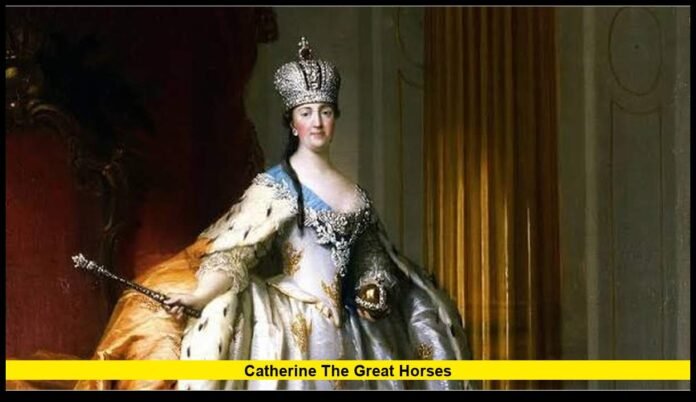

The topic of catherine the great horses continues to generate interest in 2026 as people search for the truth behind one of history’s most widely repeated rumors. While the story has circulated for generations, historians remain clear on the facts: Catherine the Great, one of Russia’s most influential rulers, did not die in any incident involving a horse. Historical records consistently show that she suffered a stroke in November 1796 and died shortly afterward.
The persistence of this myth demonstrates how sensational stories can overshadow genuine historical achievements. More than two centuries after her death, Catherine remains a fascinating figure whose accomplishments shaped the future of Russia and influenced Europe as a whole.
Who Was Catherine the Great?
Catherine II, better known as Catherine the Great, ruled the Russian Empire from 1762 until her death in 1796. She became one of the longest-serving and most successful monarchs in Russian history.
Born in what is now Germany, Catherine arrived in Russia as a young woman after being selected to marry the future Emperor Peter III. After Peter’s brief reign ended, Catherine assumed power and began a rule that transformed the nation.
During her reign, Russia expanded its territory, strengthened its military position, modernized parts of its government, and increased its influence throughout Europe. Many historians consider her era a golden age for the Russian Empire.
Her achievements included:
- Expansion of Russian territory
- Development of education and learning
- Promotion of arts and literature
- Growth of trade and economic activity
- Increased influence in European affairs
- Support for scientific advancement
These accomplishments secured her place among the most important leaders of the eighteenth century.
Why the Catherine the Great Horses Story Became Famous
Many historical figures become associated with myths, but few rumors have lasted as long as the one connected to Catherine.
The story claims that the Russian empress died during an intimate encounter with a horse. Variations of the rumor appeared over time, adding dramatic details that changed from one version to another.
Despite its popularity, no evidence supports the claim.
Researchers who have examined court documents, eyewitness accounts, medical reports, and official records have found nothing linking Catherine’s death to a horse.
Yet the story continued to spread because shocking rumors often attract attention. Before newspapers reached large audiences and long before social media existed, gossip moved through conversations, pamphlets, political circles, and public speculation.
Over time, the tale became one of the most repeated myths connected to a royal figure.
The Actual Cause of Catherine the Great’s Death
The facts surrounding Catherine’s death are well documented.
On November 16, 1796, Catherine suffered a severe stroke. Members of her household later discovered her collapsed on the floor. Physicians attended to her, but her condition did not improve.
She remained unconscious and died the following day at age 67.
The event was recorded by people who were present at court, leaving historians with reliable information about her final hours.
No contemporary report mentioned horses, accidents involving animals, or any of the details that later appeared in popular rumors.
The evidence surrounding her death remains straightforward and consistent.
Timeline of Catherine’s Final Days
| Date | Event |
|---|---|
| November 16, 1796 | Catherine suffers a stroke |
| Later that day | Court attendants discover her collapsed |
| Medical treatment begins | Physicians attempt to help |
| November 17, 1796 | Catherine dies at age 67 |
| After death | Official reports confirm natural causes |
The historical record leaves little uncertainty regarding what happened.
How Political Enemies Helped Spread the Rumor
To understand why the myth developed, it is important to examine the political environment of eighteenth-century Europe.
Catherine ruled one of the most powerful empires in the world. As with many rulers, she had supporters and critics.
Her personal life attracted attention during her reign. She had several romantic relationships, which became a frequent topic of discussion among opponents who wished to damage her reputation.
Political attacks often focused on personal matters rather than government policy. Critics understood that scandal could influence public opinion more effectively than debates about leadership.
As stories circulated and grew more sensational, exaggerated claims eventually became accepted by some people as fact.
This pattern appears throughout history. Public figures often become targets of rumors that survive long after the truth is known.
Women in Power and Historical Rumors
The story connected to Catherine also reflects a broader historical trend.
Powerful women frequently faced personal attacks that male rulers rarely experienced to the same degree. Their appearance, relationships, and private lives often received greater scrutiny than their political accomplishments.
Throughout history, women who held positions of authority were sometimes portrayed through gossip rather than governance.
Catherine’s case became one of the most famous examples.
Instead of focusing on her military successes, territorial expansion, or reforms, critics often attempted to define her legacy through stories about her personal life.
Modern historians increasingly examine how these narratives developed and why they endured.
Their research shows that many famous claims about female rulers originated from political opponents rather than factual evidence.
The Role of Horses in Eighteenth-Century Royal Life
The irony of the Catherine the Great horses myth is that horses were a normal part of royal life during her era.
In the eighteenth century, horses served practical and symbolic purposes.
Royal families used horses for:
- Transportation
- Ceremonial events
- Military inspections
- Hunting expeditions
- State celebrations
- Official portraits
Catherine often appeared in artwork featuring horses because they represented authority and leadership.
European monarchs commonly commissioned equestrian portraits. Kings, queens, emperors, and military leaders used these images to project power and confidence.
The presence of horses in her life was completely ordinary for a ruler of her time.
Catherine’s Legacy Beyond the Myth
Although the rumor remains widely known, Catherine’s actual achievements had a far greater impact on world history.
During her reign, Russia emerged as a dominant European power. The country expanded significantly and increased its influence in international affairs.
Several developments stand out:
Territorial Growth
Russia acquired substantial new territory under Catherine’s leadership. These expansions increased the empire’s resources, population, and strategic influence.
Educational Progress
Catherine supported efforts to improve education. She encouraged learning and sought to expand opportunities for intellectual development.
Cultural Advancement
The arts flourished during her reign. Literature, architecture, painting, and theater received support from the imperial court.
Government Reforms
Although not all reforms achieved their intended goals, Catherine pursued changes aimed at improving administration across the empire.
European Influence
Russia became an increasingly important player in European diplomacy. Foreign governments closely monitored developments during her reign.
These accomplishments continue to attract scholarly attention centuries later.
Why the Myth Survived for So Long
Several factors explain the survival of the story.
Shock Value
Extraordinary claims often spread faster than ordinary facts. A dramatic rumor naturally attracts more attention than a medical explanation.
Memorability
People tend to remember unusual stories. The bizarre nature of the claim helped it survive across generations.
Popular Culture
Books, television programs, movies, and comedy routines occasionally referenced the rumor, keeping it alive in public memory.
Limited Historical Knowledge
Many people encounter the myth before learning about Catherine’s actual life and accomplishments.
As a result, the rumor often becomes their first introduction to the empress.
How Historians View the Story Today
Modern historical scholarship has reached a clear conclusion.
Researchers consistently reject the horse story.
The available evidence supports only one explanation for Catherine’s death: a stroke followed by a period of unconsciousness before her death the next day.
Historical experts continue to classify the horse narrative as a fabricated rumor.
This consensus has remained unchanged for years because no credible evidence has emerged to support the claim.
When historians evaluate stories from the past, they rely on documents, eyewitness accounts, official records, correspondence, and contemporary reports.
In Catherine’s case, these sources tell a consistent story that contradicts the myth entirely.
The Internet Age and Renewed Interest
Search engines and social media have introduced Catherine’s story to new generations.
Every year, thousands of people encounter references to the rumor online and begin searching for answers.
This renewed attention has led many educational websites, historians, and documentary producers to address the topic directly.
As a result, more people now understand that the famous story lacks factual support.
The internet has played two roles in this process.
It has helped spread the rumor to wider audiences, but it has also made historical evidence easier to access.
Readers can now learn about Catherine’s actual life, leadership, and accomplishments within minutes.
Separating Historical Facts From Fiction
The continued fascination with Catherine demonstrates why critical thinking remains important.
History contains many stories that sound convincing because they have been repeated for decades or even centuries.
However, repetition does not make a claim true.
When historians study the past, they examine evidence rather than rumors.
In Catherine’s case, the evidence clearly shows that she died from natural causes after suffering a stroke.
The horse story emerged later through gossip, exaggeration, and political hostility.
Understanding this distinction helps people evaluate other historical claims more carefully.
What Catherine the Great Is Remembered For Today
Today, Catherine remains one of the most influential rulers in Russian history.
Her reign lasted more than three decades and reshaped the Russian Empire. She expanded territory, encouraged cultural development, supported education, and strengthened Russia’s role in Europe.
While the Catherine the Great horses myth continues to attract attention, historians place far greater importance on her leadership and achievements.
Her legacy rests on political power, national growth, and historical influence rather than on a rumor that lacks evidence.
More than 200 years after her death, Catherine continues to be studied not because of scandal, but because of the lasting impact she had on one of the world’s largest empires.
What are your thoughts on the historical myths that continue to shape public perception centuries later? Share your perspective and stay updated on more fascinating history stories.