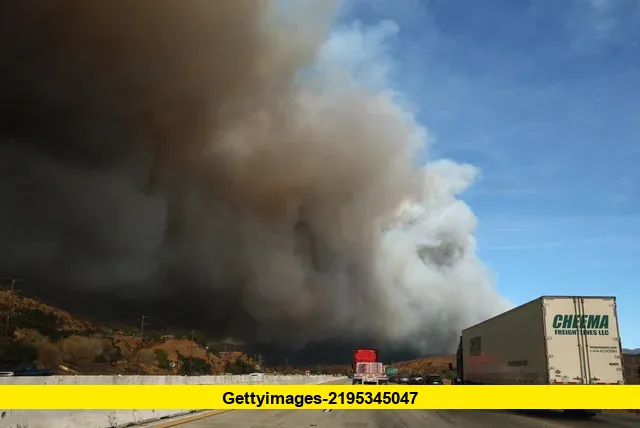

A major castaic gas leak triggered a sweeping emergency response in northern Los Angeles County, disrupting daily life, halting traffic on a vital interstate, and forcing residents to take immediate safety precautions. The incident unfolded near the Interstate 5 corridor in the Castaic area and quickly escalated into a high-impact public safety event that affected thousands of people across Southern California.
The situation began in the late afternoon when authorities received multiple emergency calls reporting a loud boom followed by an overwhelming smell of natural gas. First responders arriving at the scene confirmed that a high-pressure underground gas transmission line had ruptured near the freeway. Given the potential danger of ignition and the proximity to homes and heavy traffic, officials acted swiftly to contain the risk.
Rapid Emergency Response Near a Critical Corridor
Fire crews, hazardous materials teams, and law enforcement units were dispatched immediately after the rupture was identified. The location of the damaged pipeline, close to one of the busiest transportation routes in the state, significantly increased the urgency of the response.
Interstate 5 was closed in both northbound and southbound directions near Castaic as a safety precaution. Officers established roadblocks, redirected traffic, and created safety perimeters to keep motorists and bystanders away from the affected zone. The closure caused traffic congestion that spread far beyond the immediate area, impacting commuters and travelers throughout the region.
Emergency managers emphasized that shutting down the freeway was necessary to reduce the risk of a spark or vehicle-related ignition while gas continued to escape from the pipeline.
Shelter-In-Place Orders for Nearby Communities
As the gas leak continued, authorities issued shelter-in-place orders for neighborhoods closest to the rupture site. Residents were instructed to remain indoors, seal windows and doors, and turn off ventilation systems to prevent gas from entering buildings.
Officials also advised residents to avoid using appliances, light switches, or anything that could generate a spark. These measures were intended to limit exposure and reduce the likelihood of an accidental ignition while crews worked to isolate the damaged line.
The shelter-in-place approach allowed emergency teams to maintain control of the area without forcing large-scale evacuations that could have increased risk or caused panic.
Gas Odor Spreads Across a Wide Area
One of the most striking aspects of the incident was how far the smell of gas traveled. Residents in communities several miles from the rupture reported strong odors, raising concerns about air safety. Emergency officials explained that natural gas odors can spread widely due to wind patterns and atmospheric conditions, even when concentrations are not immediately dangerous outside the core impact zone.
Air monitoring teams were deployed to track gas levels and assess conditions in surrounding neighborhoods. Authorities reassured the public that the most significant risk remained localized near the rupture site, but they urged vigilance and compliance with safety instructions.
Coordinated Effort to Secure the Pipeline
Utility crews worked alongside firefighters to shut off gas flow to the damaged section of the pipeline. High-pressure transmission lines can continue releasing gas even after valves are closed, which required careful monitoring and extended on-scene operations.
Crews established exclusion zones and maintained constant communication to ensure that repair efforts proceeded safely. Firefighters remained on standby in case ignition occurred, while law enforcement managed traffic control and public access restrictions.
Officials confirmed that no deaths or serious injuries were reported, crediting the fast response and adherence to safety protocols for preventing a more severe outcome.
Investigating What Led to the Rupture
Once immediate hazards were addressed, attention shifted to understanding what caused the pipeline failure. While no official determination has been made, investigators noted that underground infrastructure can be vulnerable to stress from soil movement, environmental conditions, or long-term wear.
The area around Castaic includes hilly terrain, which can experience shifts that place strain on buried pipelines. A thorough investigation is expected to take place after the site is stabilized and repairs are completed. Authorities have stressed that conclusions will be based on technical analysis rather than assumptions.
Impact on Travel and Daily Life
The freeway closure had a ripple effect across Southern California. Interstate 5 serves as a primary route for commuters, freight transport, and long-distance travelers. With lanes shut down, drivers were forced onto alternate highways and surface streets, resulting in extended delays and congestion in nearby cities.
Local businesses experienced interruptions as deliveries were delayed and customers struggled to reach destinations. Residents near the affected area altered daily routines, and emergency alerts became a constant presence on phones and public messaging systems.
For many, the incident highlighted the interconnected nature of infrastructure and how quickly a single failure can affect an entire region.
Ongoing Safety Measures and Monitoring
Emergency teams continued monitoring air quality, pipeline integrity, and surrounding conditions well after the initial response. Authorities indicated that restrictions would remain in place until experts confirmed that the area was fully safe and that no residual gas posed a threat.
Reopening the freeway depended on completing inspections, securing the pipeline, and ensuring there was no risk to motorists. Officials urged patience, emphasizing that safety decisions would not be rushed.
Residents were encouraged to remain attentive to official updates and to report any persistent gas odors or unusual conditions.
Public Guidance During Gas Emergencies
Officials reinforced essential safety guidance for gas-related incidents. Residents were reminded to follow shelter-in-place instructions promptly, avoid open flames, and stay indoors if advised. Reporting strong gas smells and following emergency alerts were emphasized as critical steps in protecting both individuals and responders.
Authorities also highlighted the importance of preparedness and awareness, noting that quick cooperation from the public played a key role in managing the situation effectively.
Broader Implications for Infrastructure Safety
The castaic gas leak has renewed attention on the importance of maintaining and monitoring critical infrastructure. Gas pipelines form a vast network beneath communities, and ensuring their integrity is essential for public safety.
Incidents like this underscore the need for ongoing inspections, emergency planning, and coordination between utility providers and public agencies. While rare, such events can have widespread consequences when they occur near populated or high-traffic areas.
What Residents Can Expect Moving Forward
As cleanup and repair efforts continue, authorities plan to gradually lift restrictions once conditions allow. Residents may see ongoing utility work in the area as crews conduct inspections and reinforce safety measures.
Officials have pledged transparency as more information becomes available and have committed to keeping the public informed throughout the recovery process.
The incident serves as a reminder that preparedness, rapid response, and community cooperation are vital in managing unexpected emergencies and minimizing harm.
Have you experienced traffic delays, safety alerts, or disruptions related to this event? Share your thoughts and stay connected for continuing updates.