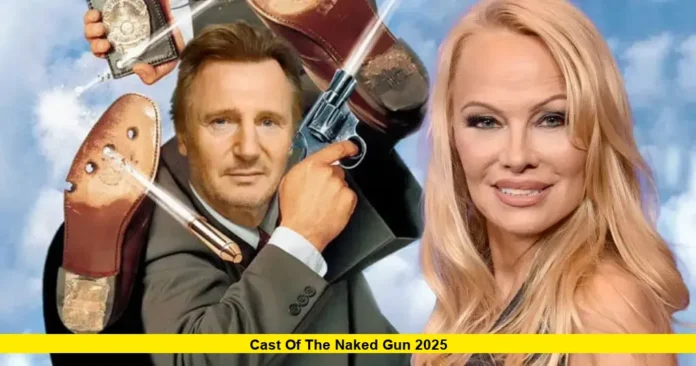

The cast of the naked gun 2025 has become one of the most discussed elements of the year’s comedy landscape, proving that slapstick humor and parody-driven storytelling still resonate with American audiences when paired with the right performers. Released in theaters in 2025, the film reintroduces the iconic franchise with a modern cast that blends dramatic heavyweights, comedic standouts, and carefully chosen surprise appearances. Rather than relying solely on nostalgia, the ensemble reshapes the franchise for today while preserving the chaotic spirit that made the original films unforgettable.
A Reboot Designed Around Its Performers
This latest chapter in The Naked Gun universe is built around casting choices that feel intentionally unconventional. Instead of casting a traditional comedy lead, the filmmakers leaned into contrast. The humor flows from seriousness colliding with absurdity, a formula that defined the original films and now returns with updated energy.
The story centers on a new generation within Police Squad, allowing the film to honor its legacy without repeating it beat for beat. The cast plays a crucial role in striking that balance. Every major character contributes to a rhythm of escalating mishaps, misunderstandings, and visual gags that rely on performance rather than punchlines alone.
Liam Neeson Redefines the Lead Role
Liam Neeson anchors the film as Lt. Frank Drebin Jr., the son of the legendary detective made famous decades earlier. Neeson approaches the role with a straight-faced intensity that never winks at the audience. This deliberate seriousness fuels the comedy, as the character reacts to chaos with unwavering confidence and authority.
Rather than mimicking past performances, Neeson creates a distinct version of Drebin. His Drebin Jr. is disciplined, committed, and completely unaware of how his actions derail every situation. The performance leans heavily on physical timing, awkward pauses, and visual irony. For many viewers, this casting choice became the defining feature of the film, sparking conversation long before its release and sustaining interest well after opening weekend.
Pamela Anderson Adds Style and Sharp Timing
Pamela Anderson appears as Beth Davenport, a character woven deeply into the film’s mystery. Beth is confident, composed, and always one step ahead of the chaos unfolding around her. Anderson’s performance blends elegance with well-controlled comedic reactions, allowing her character to operate as both a narrative driver and a grounding presence.
Her dynamic with Neeson adds texture to the story. Where Drebin Jr. is rigid and literal, Beth navigates situations with awareness and wit. Their interactions create a steady rhythm that balances exaggerated comedy with character-driven moments. Anderson’s return to a prominent theatrical role also reflects a broader trend of reintroducing familiar faces in refreshed contexts, appealing to longtime fans while attracting new audiences.
Paul Walter Hauser Strengthens the Comedy Core
Paul Walter Hauser delivers one of the most energetic performances in the film as Capt. Ed Hocken Jr. His character embodies institutional chaos, often reacting louder and faster than the situations require. Hauser’s strength lies in his ability to heighten scenes without overpowering them.
Through exaggerated expressions, abrupt shifts in tone, and carefully timed physical humor, he becomes a reliable source of laughs. His scenes frequently escalate tension only to collapse into absurd outcomes, reinforcing the franchise’s comedic identity. Hauser’s performance also helps establish continuity within Police Squad, anchoring the new generation of officers in familiar dysfunction.
Danny Huston Introduces Serious Contrast
Danny Huston plays Richard Cane, a character connected to the central conflict driving the plot forward. His presence brings gravity and focus to a world otherwise spinning out of control. Huston plays the role straight, avoiding caricature and leaning into dramatic intensity.
This contrast serves a clear purpose. By placing a serious antagonist within an absurd environment, the film sharpens its humor. Scenes involving Cane often feel tense on the surface, only to unravel due to Drebin Jr.’s misunderstandings or the squad’s incompetence. Huston’s commitment to realism strengthens the parody rather than weakening it.
A Supporting Cast That Keeps the Momentum Moving
Beyond the main leads, the supporting cast plays a vital role in sustaining the film’s pace and variety.
Kevin Durand brings a commanding presence that amplifies action-based humor and visual gags. His scenes often rely on scale, movement, and exaggerated reactions that enhance the film’s physical comedy.
Liza Koshy appears as Detective Barnes, delivering a performance rooted in fast dialogue and expressive timing. Her role reflects the film’s effort to connect with younger audiences while maintaining the franchise’s established tone.
Cody Rhodes makes an unexpected transition into the ensemble, providing moments that play against audience expectations. His appearances contribute to the film’s unpredictability and add texture to scenes that might otherwise pass quickly.
Each supporting performance adds a layer to the ensemble, ensuring the humor remains varied and consistent throughout the runtime.
Cameos That Reward Attentive Viewers
One of the most enjoyable aspects of the cast of the naked gun 2025 lies in its strategic use of cameos. These appearances are brief, purposeful, and integrated naturally into the story’s flow. Rather than distracting from the plot, they enhance it through surprise and recognition.
A nostalgic appearance by Priscilla Presley reconnects the film to its roots, offering a subtle acknowledgment of the franchise’s history. Busta Rhymes appears in a scene built around exaggerated movement and timing, delivering a moment that stands out without overstaying its welcome. Additional short appearances from familiar faces are scattered throughout the film, giving audiences extra incentive to pay attention.
These moments add rewatch value and reinforce the film’s playful spirit.
Why This Ensemble Works in Today’s Market
Comedy films face unique challenges in modern theaters, where audiences often favor spectacle or serialized storytelling. This film succeeds by leaning into performance-based humor and ensemble chemistry. The cast does not chase trends or rely on topical references that age quickly.
Instead, the humor is built around human behavior amplified to absurd extremes. Miscommunication, overconfidence, and physical mishaps drive the laughs. The cast’s commitment to these principles allows the film to feel timeless despite its contemporary setting.
Cultural Reception and Ongoing Conversation
Throughout 2025, discussion around the film has centered heavily on its casting. Viewers continue to debate which performances stood out most and whether the reboot captures the essence of the originals. These conversations have kept the film visible beyond its theatrical window.
The ensemble’s success also reignited interest in parody-driven cinema. By proving that carefully constructed comedy still draws audiences, the film has reopened dialogue about the genre’s place in mainstream entertainment.
A Franchise Renewed Through Casting
The strength of this reboot lies not in replicating the past, but in trusting its performers to reinterpret it. Each cast member brings a clear understanding of tone, timing, and restraint. Together, they form an ensemble that respects the franchise’s identity while confidently moving it forward.
As discussions continue and the film finds new audiences, the cast’s work remains central to its lasting impact.
Which performance stood out to you the most, and do you think this cast has set the stage for future installments? Stay connected and join the conversation.