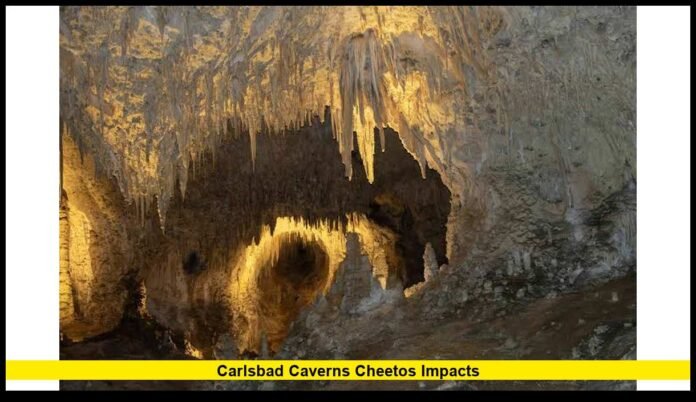

The carlsbad caverns cheetos impact story highlights an unusual but important conservation lesson: even a small piece of discarded food can disrupt a fragile natural environment. In September 2024, officials at Carlsbad Caverns National Park in New Mexico described how a bag of Cheetos left inside the Big Room created conditions that encouraged microbial growth, attracted small cave-dwelling animals, and introduced unexpected nutrients into an underground ecosystem. What seemed like an insignificant act of littering became a practical example of why protecting natural habitats requires attention to even the smallest human actions.
The incident attracted widespread attention because it connected an everyday snack with a complex environmental problem. Outside a cave, a dropped chip might appear to be nothing more than an untidy piece of litter. Inside a sensitive underground environment, however, moisture, darkness, microorganisms, and wildlife can interact with that food in ways that produce consequences beyond the original item.
Carlsbad Caverns is internationally recognized for its remarkable limestone formations, extensive underground passages, and distinctive natural environment. Protecting these features requires more than preventing major damage. It also means controlling the introduction of food, waste, chemicals, and other materials that do not naturally belong in the cave.
Key Points Summary
╔════════════════════════════════════════════════════════════════════╗
║ – A discarded bag of Cheetos disrupted a sensitive area inside Carlsbad Caverns National Park in New Mexico. ║
║ – Moisture softened the snack, making its organic material available to microorganisms and contributing to fungal growth. ║
║ – Small animals, including cave crickets, mites, spiders, and flies, were attracted to the unexpected food source. ║
║ – Park rangers reportedly spent about 20 minutes removing the snack and affected material from cave surfaces. ║
║ – The incident demonstrated why food restrictions, responsible tourism, and proper waste management are important for cave conservation. ║
╚════════════════════════════════════════════════════════════════════╝
What Happened Inside Carlsbad Caverns?
The incident occurred inside the Big Room, one of the most recognizable features of Carlsbad Caverns National Park. This enormous underground chamber contains impressive mineral formations and passages that allow visitors to experience a landscape shaped by geological processes over millions of years.
During a visit or inspection, park personnel discovered a discarded bag of Cheetos away from the designated trail. The snack had been left in an environment characterized by naturally high humidity, where moisture began softening the processed food.
As the material changed, it became an unexpected source of organic nutrients. Microorganisms and fungi began growing around the discarded snack, while small animals were attracted to the new food supply. The resulting activity extended beyond the bag itself, creating a localized ecological disturbance that required attention from park staff.
The National Park Service used the incident to explain how easily human activity can interfere with the relationships that sustain underground habitats. A piece of food does not need to be large to introduce nutrients into an environment where food sources are naturally limited.
The cleanup reportedly took approximately 20 minutes. Rangers removed the foreign material and affected growth, addressing the immediate problem while reinforcing the importance of keeping food and litter out of the cavern.
The episode did not establish that the entire cave ecosystem was permanently damaged. Instead, it illustrated how a small and preventable mistake can create additional work for conservation personnel and introduce unnecessary biological changes into a sensitive location.
Why Did the Cheetos Cause an Environmental Problem?
The main issue was not simply that a snack bag had been abandoned. The concern was what happened after the food came into contact with the cave environment.
Caves differ from many outdoor habitats because their food supplies, light conditions, moisture levels, and biological communities can be highly specialized. Introducing a concentrated source of processed food may change the availability of nutrients and attract organisms to a location they might not otherwise use.
Humidity Changed the Food’s Condition
Moisture played an important role in the incident. The humid conditions inside the cavern softened the Cheetos, changing the physical state of the snack and making its organic material more accessible.
In an environment with limited naturally available food, even a small amount of additional organic matter can become an attractive resource for microorganisms.
The effect depends on the composition of the material and the conditions surrounding it. Processed snacks are not necessarily dangerous to every organism, but they can introduce concentrated nutrients into places where their presence is unusual.
Microbial and Fungal Growth Followed
Microorganisms are a normal part of natural ecosystems. They help break down organic matter and contribute to nutrient cycling. Fungi also play important roles in decomposition.
The problem arises when an outside food source changes the conditions in a sensitive habitat. The discarded Cheetos supplied material that could support microbial activity, and park officials reported fungal growth associated with the waste.
This type of disturbance demonstrates why food litter cannot be evaluated only by its size or appearance. A small object may provide resources for biological activity that spreads beyond the original location.
Small Animals Discovered an Unexpected Food Source
The food also attracted cave crickets, mites, spiders, and flies, according to the park’s account of the incident.
These animals occupy different positions in natural food webs. Some organisms consume organic material directly, while others feed on smaller animals. When an unfamiliar food source appears, it can influence where creatures gather and how nutrients move through the surrounding environment.
This does not mean every animal attracted to the snack suffered harm. Rather, the concern is that human-provided food can temporarily alter natural feeding patterns and create ecological interactions that would not normally occur in the same place.
Nutrients Could Move Beyond the Original Spot
Once microorganisms and small animals begin interacting with discarded food, nutrients may spread through biological activity. Movement, feeding, and waste can carry material away from the initial source.
That possibility makes cleanup important. Removing the original snack helps eliminate the source of the disturbance, but affected surfaces may also require careful attention.
Park personnel must consider how to remove unwanted material without causing additional damage to the cave environment.
Why Carlsbad Caverns Is Especially Vulnerable to Human Disturbance
Carlsbad Caverns National Park protects a remarkable underground environment in southeastern New Mexico. Its caves contain extensive limestone chambers, mineral formations, and habitats that support organisms adapted to conditions very different from those found on the surface.
Although caves may appear empty or lifeless to casual visitors, they contain complex ecological relationships. Even locations with relatively few visible animals can support microorganisms and other organisms that depend on stable environmental conditions.
Limited Food Supplies
Many underground habitats receive less organic material than surface ecosystems. Without sunlight reaching most of the cave interior, plants cannot grow throughout the underground passages, and food supplies for cave organisms may depend on nutrients entering from outside.
These nutrients can arrive naturally through water, organic debris, animal activity, and other processes. When people introduce processed food, they add an artificial source of organic material that can change where organisms gather.
The concern is particularly important in environments where food is scarce and biological communities have developed around naturally available resources.
Darkness and Specialized Living Conditions
The absence of sunlight across much of a cave interior influences which organisms can survive there and how they obtain energy. Some cave species have specialized adaptations, while other animals enter caves temporarily or depend on resources found near entrances.
Changes to food availability can affect these relationships. A discarded snack might attract organisms to an unusual location, potentially influencing their behavior and interactions with other species.
The impact of any individual incident varies according to the organisms present, the duration of the disturbance, and the environmental conditions.
Moisture and Biological Activity
Humidity is another important factor. Moist environments can support the growth of fungi and microorganisms when suitable organic material is available.
That combination helps explain why food waste can become a problem in underground spaces. The material may soften, decompose, and provide nutrients for organisms that would otherwise have limited access to that particular food source.
Fragile Geological Formations
Carlsbad Caverns is famous for its stalactites, stalagmites, columns, and other mineral structures. These formations develop through geological processes that take place over long periods.
Human contact can leave oils and contaminants on surfaces, while careless movement can damage delicate formations. Organic waste introduces a different concern because it can encourage biological growth or leave residue in areas that should remain undisturbed.
There is no verified basis for concluding that the Cheetos incident permanently damaged the cavern’s major formations. Nevertheless, it reinforces the need to keep foreign materials away from cave surfaces.
Was the Damage Permanent?
The incident raised questions about whether a single discarded snack could permanently harm Carlsbad Caverns. The available information supports a more measured conclusion.
Park staff identified a localized disturbance involving food waste, microbial and fungal growth, and the attraction of small animals. Rangers then removed the foreign material and affected growth.
However, the reported cleanup does not establish that every ecological effect was eliminated immediately, nor does it prove that permanent damage occurred. Assessing long-term effects would require additional evidence about the affected location and its subsequent condition.
The distinction matters because environmental reporting should not exaggerate a localized incident into a claim that an entire ecosystem was destroyed.
At the same time, the absence of documented widespread damage does not make littering acceptable. Preventing unnecessary disturbances is a central part of protecting natural environments, particularly when the consequences of introducing unfamiliar materials are difficult to predict.
The most defensible lesson is straightforward: the incident created an avoidable ecological problem, and removing the source was an important step toward addressing it.
How the Incident Became a Conservation Lesson
The story attracted attention partly because of its unexpected subject. Cheetos are an ordinary snack found in homes, schools, workplaces, and recreational settings across the United States. Most people do not associate a single chip with an underground ecological disturbance.
That contrast made the incident memorable and helped explain a broader environmental principle.
A Familiar Object, an Unfamiliar Consequence
People often judge litter by how much space it occupies or how unpleasant it looks. A small food item may appear less concerning than a plastic bottle or a large piece of discarded packaging.
Yet the environmental significance of litter depends on more than its size. Its ingredients, location, exposure to moisture, and interaction with living organisms can all influence its effects.
The incident showed that food waste can function as a biological resource, not merely as an unsightly object.
An Example of Why Visitor Rules Matter
National park restrictions are designed to protect natural resources while allowing people to enjoy them. Food rules inside caves may seem strict to visitors who are accustomed to carrying snacks during outdoor activities.
However, underground environments have different ecological characteristics from picnic areas, parking lots, and ordinary hiking trails.
The restrictions help prevent food residue, wrappers, crumbs, and other foreign materials from entering sensitive habitats.
Conservation Starts With Individual Decisions
Park authorities can maintain trails, educate visitors, conduct inspections, and clean up incidents. Nevertheless, effective conservation also depends on visitors following the rules.
Simple actions can prevent unnecessary problems, including storing prohibited food before entering the cave, staying on designated trails, and taking personal belongings and waste back out of the environment.
These habits reduce the likelihood that rangers will need to intervene after preventable incidents.
What Are the Rules for Food Inside Carlsbad Caverns?
Visitors should review current park guidance before entering the cavern. Food, candy, gum, and beverages other than plain, unflavored water are generally prohibited on the cave trails, with limited exceptions under park rules.
The restrictions help protect underground resources from food waste, spills, residue, and the wildlife activity these materials can encourage.
Visitors should not assume that a snack is acceptable simply because it is sealed in a bag. Packaging does not eliminate the risk of accidental spills or discarded materials.
The rules also help preserve the experience for other visitors by keeping the cave environment clean and reducing the need for staff to remove litter.
Before entering the underground passages, visitors should:
- Leave prohibited food outside the cave. Store snacks securely before beginning the underground portion of the visit.
- Carry permitted water appropriately. Follow current park guidance on drinks and containers.
- Remain on designated trails. Avoid walking into restricted areas or approaching sensitive formations.
- Keep all personal waste with them. Do not leave wrappers, tissues, or other items underground.
- Avoid touching cave surfaces. Oils and other material from human hands can affect delicate formations.
- Notify park personnel about litter. Rangers can determine the safest way to handle waste without creating additional disturbance.
These measures are practical, easy to follow, and valuable for protecting a fragile environment.
What the Cheetos Incident Means for National Parks Across America
The lessons from Carlsbad Caverns extend to other protected natural areas. Caves, forests, deserts, wetlands, and coastal habitats all respond differently to human activity, but each can be affected by waste and careless visitor behavior.
In some locations, discarded food attracts wildlife and encourages animals to associate people with feeding opportunities. In others, organic material may change local nutrient supplies or support unwanted biological growth.
The precise consequences differ by habitat, which is why visitors should follow the rules established for each location rather than assuming that practices acceptable elsewhere are suitable everywhere.
Small Disturbances Can Require Specialized Attention
A piece of litter may take seconds to drop but require additional work to remove safely. In sensitive locations, cleanup must be carried out in a way that minimizes damage to the surrounding environment.
Rangers also have responsibilities beyond litter removal, including visitor safety, resource protection, education, and monitoring natural conditions.
Preventing avoidable incidents helps preserve staff time and resources for these broader responsibilities.
Responsible Tourism Protects Natural Heritage
National parks preserve important landscapes and ecosystems for public enjoyment, education, research, and future generations.
Responsible tourism allows people to experience these environments without treating them as disposable recreational spaces. Following rules about food, waste, wildlife, and designated trails is part of that responsibility.
The incident demonstrates that environmental protection does not depend exclusively on major conservation projects. Everyday choices made by visitors can also make a meaningful difference.
Latest Update on the Carlsbad Caverns Cheetos Impact
The September 2024 incident remains a widely discussed example of how litter can affect a sensitive underground environment. Park officials described the consequences of leaving a bag of Cheetos in the Big Room, including microbial and fungal growth and the attraction of small cave animals.
Rangers reportedly spent approximately 20 minutes removing the discarded material and affected growth.
The incident should not be interpreted as evidence that the entire cavern was destroyed or that permanent, widespread damage was confirmed. Its significance lies in the documented localized disturbance and the conservation lesson it provides.
For visitors planning a trip, the practical takeaway remains relevant: check current park guidance, respect food restrictions, and avoid introducing foreign materials into the cave.
Carlsbad Caverns offers a remarkable opportunity to experience an underground landscape, but protecting that experience requires visitors to recognize that the environment is more than a tourist attraction. It is a natural system that deserves careful treatment.
Frequently Asked Questions
What was the Carlsbad Caverns Cheetos incident?
A discarded bag of Cheetos was discovered inside the Big Room at Carlsbad Caverns National Park. Moisture softened the snack, and the material encouraged microbial and fungal growth while attracting small cave-dwelling animals.
When did the incident happen?
The incident became widely known in September 2024, when park officials described the environmental consequences of the discarded snack.
How long did cleanup take?
Rangers reportedly spent approximately 20 minutes removing the snack and affected material from cave surfaces.
Did the Cheetos permanently damage Carlsbad Caverns?
The available information does not establish permanent, widespread damage to the cavern. The incident involved a localized disturbance that required cleanup.
Why can food waste harm caves?
Food introduces organic nutrients that may support microbial growth and attract animals. Because many underground habitats have limited food supplies, these additions can alter local biological activity.
Are snacks permitted inside Carlsbad Caverns?
Food, candy, gum, and beverages other than plain, unflavored water are generally prohibited on cave trails, subject to limited exceptions. Visitors should check current park rules before their visit.
What animals were attracted to the discarded snack?
The park’s account described cave crickets, mites, spiders, and flies among the small animals attracted to the unexpected food source.
How can visitors help protect the cavern?
Visitors can leave prohibited food outside, remain on designated trails, avoid touching formations, carry out all waste, and report litter to park personnel.
Conclusion
The incident at Carlsbad Caverns offers an important reminder that environmental damage does not always begin with a major accident or a large amount of pollution. Sometimes, it starts with a single discarded item in a place where natural conditions make even small changes significant.
The snack’s interaction with moisture, microorganisms, and small animals demonstrated how human waste can introduce nutrients into a fragile underground habitat. Although park staff addressed the immediate disturbance, the episode reinforced the importance of preventing litter and respecting conservation rules.
For visitors, the lesson is simple: leave the cave as you found it, follow the park’s guidance, and remember that protecting natural wonders depends on the choices people make every day.
Have you ever seen an unexpected example of how litter affects nature? Share your thoughts in the comments and stay tuned for more updates on national parks, wildlife, and environmental conservation.