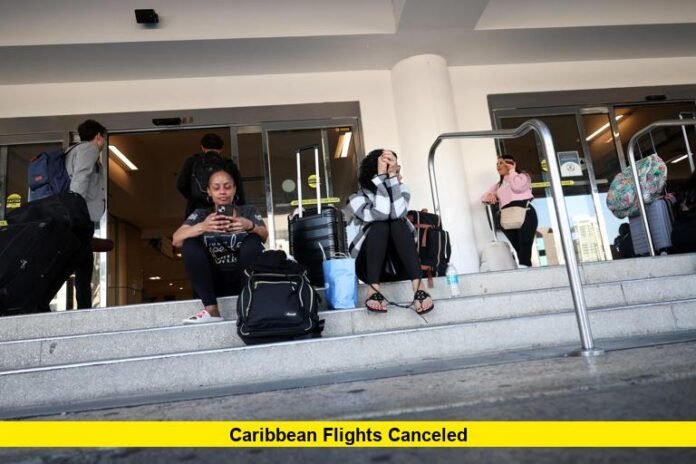

caribbean flights canceled became a dominant concern for travelers across the United States and the Caribbean after sudden airspace restrictions caused extensive flight disruptions, stranding passengers and forcing airlines into emergency recovery mode. The situation unfolded rapidly, affecting major airports, popular island destinations, and thousands of travelers during one of the busiest winter travel periods of the year.
This report provides a detailed, up-to-date account of what led to the cancellations, how airlines and airports responded, and what travelers should realistically expect as normal operations gradually return.
How the Disruptions Began
The disruption began after a major geopolitical event in northern South America prompted aviation authorities to take immediate safety precautions. Military activity connected to the capture of Venezuelan President Nicolás Maduro raised concerns about the safety of civilian aircraft operating near Venezuelan airspace and surrounding flight corridors.
To prevent potential risks to commercial aviation, emergency restrictions were imposed on key airspace routes used by flights traveling between the United States, Central America, and the Caribbean. Airlines were instructed to suspend operations that crossed or approached the affected zones.
The decision was implemented with little warning, leaving airlines no choice but to cancel or delay scheduled flights already preparing for departure.
Why Caribbean Routes Were Hit Hardest
Caribbean air travel depends heavily on specific flight corridors that pass near northern South America. When those routes were restricted, airlines had limited alternatives that could be used safely and efficiently.
As a result, flights to and from:
- Puerto Rico
- U.S. Virgin Islands
- Aruba
- Curaçao
- Eastern Caribbean islands
were among the first to be canceled. Short-haul routes that normally rely on tight scheduling and quick aircraft turnaround were particularly vulnerable.
Major U.S. hubs in Florida, New York, Texas, and the Southeast experienced cascading delays as aircraft and crews were unable to operate their planned rotations.
Airports Overwhelmed as Passengers Stranded
Airports across the Caribbean quickly became overcrowded. Passengers arriving for departures discovered flights canceled after check-in. Others landed at connecting airports only to find onward flights suspended indefinitely.
San Juan’s main airport saw an especially high volume of cancellations, with terminals filling rapidly as travelers searched for rebooking options. Similar scenes unfolded in Aruba, St. Thomas, and several island capitals where airport infrastructure is not designed for large-scale overnight disruptions.
Customer service counters were overwhelmed, hotel availability tightened, and some travelers reported being unable to secure immediate accommodations.
Airline Response and Passenger Protections
Airlines activated large-scale disruption protocols within hours of the shutdown. Most carriers:
- Waived change and cancellation fees
- Allowed flexible rebooking without penalties
- Offered travel credits or refunds for canceled flights
- Expanded customer service staffing
Several airlines also planned extra flights once restrictions eased, aimed at clearing passenger backlogs and restoring key routes.
Despite these efforts, airline representatives emphasized that recovery would take time due to aircraft being out of position and crews exceeding allowable duty limits.
Lifting of Restrictions and the Start of Recovery
After aviation authorities determined that immediate safety risks had subsided, the emergency airspace restrictions were lifted. This allowed airlines to begin resuming Caribbean operations.
Flights restarted gradually rather than all at once. Airlines prioritized routes with the highest number of stranded passengers and focused first on restoring service to major hubs before expanding to smaller island airports.
Even with restrictions lifted, operational challenges remained. Aircraft needed repositioning, crews required rest periods, and airport congestion slowed departures.
Economic Impact on the Caribbean
Tourism is the economic backbone of many Caribbean nations, and the sudden interruption of air travel caused immediate ripple effects.
Hotels faced unexpected extensions from stranded guests while new arrivals dropped sharply. Local transportation providers, tour operators, and restaurants experienced sudden shifts in demand.
Cruise travel was also affected. Some passengers missed sailings due to canceled inbound flights, forcing cruise operators to offer alternate arrangements or credits.
Tourism officials worked closely with airlines and airport authorities to manage the situation and minimize long-term damage to traveler confidence.
Maduro’s Capture and Its Broader Consequences
The capture of Nicolás Maduro marked one of the most consequential political events in the region in recent years. U.S. authorities confirmed that Maduro and his wife were removed from Venezuela following the operation, creating immediate political uncertainty inside the country.
From an aviation perspective, the operation introduced heightened security concerns that made continued civilian flights near Venezuelan airspace untenable in the short term. Authorities acted quickly to prevent any risk to commercial aircraft.
While diplomatic and political developments continue to unfold, the immediate effect on air travel demonstrated how quickly international events can disrupt civilian transportation networks.
Challenges Airlines Still Face
Even as flights resume, airlines continue to manage:
- Aircraft scheduling imbalances
- Crew availability constraints
- Airport congestion from delayed rotations
- High passenger demand during recovery
Travelers should expect occasional delays and last-minute schedule adjustments as airlines stabilize operations.
Guidance for Travelers Moving Forward
If your travel plans were affected, experts recommend:
- Checking flight status frequently before departure
- Arriving early at airports during the recovery period
- Keeping records of additional expenses
- Remaining flexible with travel dates when possible
Travel insurance policies vary, and coverage related to government or military actions may be limited.
Longer-Term Outlook for Caribbean Air Travel
Industry analysts expect Caribbean air travel to normalize gradually over several days. Airlines are confident that full schedules will be restored, but caution that short-term disruptions may continue as systems rebalance.
Air travel authorities remain on alert, ready to adjust guidance if conditions change. For now, no new restrictions are in place.
Despite the disruption, tourism officials across the Caribbean emphasize that destinations remain open, welcoming, and prepared to support travelers.
A Reminder of Aviation’s Global Sensitivity
The episode serves as a reminder that modern air travel is deeply interconnected with global events. Decisions made for security reasons can have immediate and far-reaching consequences for travelers thousands of miles away.
For passengers, the best protection remains staying informed, planning flexibility, and maintaining realistic expectations during recovery periods.
Have you experienced delays or cancellations during this Caribbean travel disruption? Share your story or stay connected for continuing updates as air travel stabilizes.