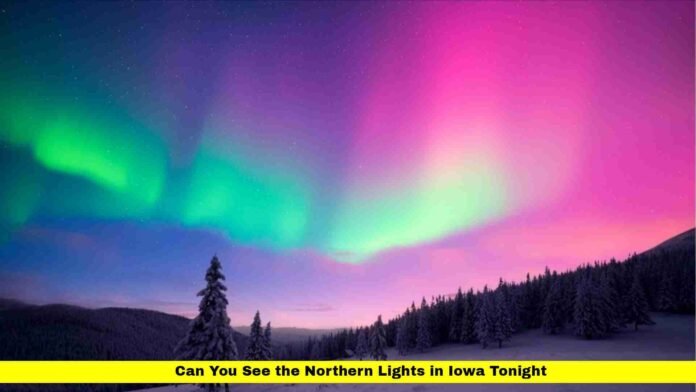

If you’re wondering “can you see the northern lights in Iowa tonight”, the answer is yes, it might be possible! A strong geomagnetic storm is currently active, and sky conditions across parts of Iowa suggest that the aurora borealis could make a rare and dazzling appearance over the Hawkeye State.
Unusual Aurora Activity Over Iowa
The northern lights are normally seen in regions like Alaska or Canada, but tonight, a powerful solar storm has pushed the aurora oval far enough south to include Iowa. Experts say this geomagnetic disturbance is strong enough to make the lights visible as far south as the Midwest.
This phenomenon happens when charged particles from the sun interact with Earth’s magnetic field, creating vibrant colors of green, pink, and red in the night sky. For Iowans, this is a rare chance to witness the breathtaking natural show without traveling to northern regions.
Best Time to Watch the Northern Lights in Iowa
The most promising viewing hours tonight are between 10 p.m. and 2 a.m. local time. During this window, the sky will be at its darkest, and the aurora will likely be at peak brightness. Those in northern and eastern Iowa have the highest odds of spotting activity, provided the sky remains clear.
If you plan to watch, start checking the sky as soon as darkness sets in. Auroras often appear suddenly and can shift in brightness or shape within minutes. Being prepared and patient increases your chance of catching the best moments.
Ideal Locations to View the Aurora in Iowa
Visibility improves dramatically in dark, rural areas away from artificial light. Some of the top locations in Iowa for aurora viewing include:
- Pikes Peak State Park in McGregor – Offers a wide view of the northern horizon.
- Pilot Knob State Park near Forest City – Elevated terrain enhances visibility.
- Yellow River State Forest in Harpers Ferry – Low light pollution and clear vantage points.
- Clear Lake area – Wide open sky with reflections that enhance the glow.
- Ledges State Park in Boone – Minimal city glow and good open northern views.
Wherever you choose, make sure to face north, as that’s where the lights are most likely to appear.
Weather Conditions Across Iowa Tonight
For many regions of Iowa, clear skies will make a big difference. Northern and eastern parts of the state are expected to have the clearest conditions, while central and southern Iowa may see partial cloud cover. Even thin clouds can obscure the view, so finding an open, unobstructed location is essential.
The moon’s brightness will also influence how clearly you can see the aurora. If the moon is bright, the northern lights may appear fainter. However, the intensity of tonight’s storm could still produce visible colors even under partial moonlight.
Understanding Why the Northern Lights Are Visible So Far South
Auroras are caused by solar activity—specifically, bursts of energy from the sun known as coronal mass ejections (CMEs). When these high-energy particles reach Earth, they interact with the planet’s magnetic field, exciting atmospheric gases and creating visible light displays.
The reason Iowa has a chance to see the northern lights tonight is due to the strength of the current geomagnetic storm. With high Kp index readings—a measure of auroral strength—the aurora zone expands far beyond the Arctic Circle. Occasionally, these events push far enough south to include states like Iowa, Nebraska, and Illinois.
What the Northern Lights Might Look Like Tonight
Depending on where you are in Iowa and the storm’s strength, the aurora could appear in several forms:
- A faint green glow along the northern horizon.
- Rays or vertical bands of light rising into the sky.
- Soft waves or curtains that slowly move and change shape.
- Red and purple hues during particularly strong bursts of energy.
Even if you don’t see bright dancing colors immediately, keep watching. Many times, cameras pick up color before the naked eye does.
Tips for Watching and Photographing the Aurora
To make the most of this opportunity, here are some essential tips:
- Head out early – Give yourself time to find the best spot before the show starts.
- Avoid city lights – Drive 15–30 miles away from urban areas for better darkness.
- Bring warm clothes – Iowa nights can get chilly in November.
- Use night mode or long exposure – On cameras or phones, this helps capture the colors clearly.
- Stay patient – Auroras can fade and reappear suddenly, so don’t give up too soon.
If you capture a photo, look for faint green streaks or arches on your screen—they often appear before your eyes can perceive them.
How Long the Northern Lights Might Be Visible
The aurora display may last anywhere from a few minutes to several hours. Typically, the activity peaks around midnight, but late-night observers often get the best views. If you’re in northern Iowa and conditions remain favorable, the display could continue intermittently through early morning hours.
Why This Event Is So Special for Iowans
For many residents, seeing the aurora without traveling north is a once-in-a-lifetime experience. Iowa sits far from the usual auroral zone, meaning such events only occur when the sun releases an exceptionally strong burst of energy. The combination of clear skies and strong solar wind tonight makes this a rare and memorable opportunity.
Skywatchers across the state are preparing with cameras, telescopes, and blankets to witness the natural wonder. Whether you’re in a small town or a rural area, tonight’s conditions might give you a front-row seat to one of nature’s most beautiful displays.
What to Expect If Clouds Move In
If clouds develop later tonight, don’t be discouraged. Sometimes, the aurora’s brightness penetrates thin cloud layers, producing a faint colored glow in the sky. If it’s completely overcast, keep checking real-time aurora trackers or apps that update visibility predictions. These tools can alert you when the next burst might appear or if the skies clear up again.
Final Thoughts
So, can you see the northern lights in Iowa tonight? The answer is a hopeful yes. With a strong geomagnetic storm and favorable conditions across much of the state, Iowans have a genuine chance to witness this stunning celestial event. Find a dark, open area, look north, and keep your camera ready—you might catch one of the most spectacular natural sights ever visible from Iowa.
If you manage to spot the northern lights tonight, share your experience in the comments below. Every glimpse of the aurora is unique, and tonight’s show could be one Iowa won’t soon forget.