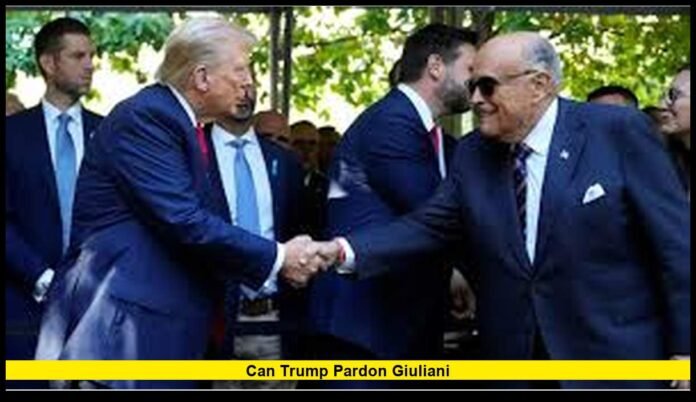

In a major political development, can Trump pardon Giuliani has become a trending question following Donald Trump’s sweeping clemency proclamation issued in early November 2025. The former president officially pardoned Rudy Giuliani and dozens of his close allies connected to efforts to overturn the 2020 election results. The decision has sent shockwaves across Washington, intensifying debates about presidential power, accountability, and justice.
What Happened: Overview
The presidential pardon signed in early November 2025 covers at least 77 individuals, including former Trump attorney Rudy Giuliani, ex-White House Chief of Staff Mark Meadows, lawyer Sidney Powell, and legal adviser John Eastman.
The pardon document described the prosecutions against these individuals as part of a “grave national injustice” and framed the move as an effort to promote “national reconciliation.” Trump’s decision followed mounting pressure from political allies and public speculation about whether he would use the pardon power to shield key figures from federal prosecution.
Importantly, the pardon applies only to federal offenses. It does not protect against state-level charges, such as those still pending in Georgia and Arizona related to alleged attempts to subvert the 2020 presidential election.
Key Figures Pardoned
| Name | Position/Role | Connection to 2020 Election Controversies |
|---|---|---|
| Rudy Giuliani | Trump’s former personal lawyer & former New York City mayor | Led multiple legal challenges to the 2020 election results and promoted alternate elector plans. |
| Mark Meadows | Former White House Chief of Staff | Participated in discussions around alternate electors and post-election strategy. |
| Sidney Powell | Trump campaign attorney | Filed lawsuits alleging widespread voter fraud and promoted debunked claims of election tampering. |
| John Eastman | Constitutional lawyer | Authored memos outlining how the vice president could reject electoral votes. |
| Boris Epshteyn | Political strategist | Assisted in coordination of alternate electors in key battleground states. |
Trump’s pardon list also reportedly includes lower-level campaign staff, attorneys, and political activists involved in the post-2020 election challenges.
Why the Pardon Matters
This pardon marks one of the most consequential uses of presidential clemency in modern U.S. history. It directly touches the heart of ongoing political and legal battles over the legitimacy of the 2020 election.
Supporters argue the pardon restores fairness, claiming the prosecutions were politically motivated and aimed at silencing Trump’s allies. They view the move as a correction of what they call “selective justice” and an important step toward unity among Trump supporters.
Critics, however, warn that the decision undermines accountability and sets a dangerous precedent by normalizing the use of presidential pardons to absolve allies implicated in efforts to subvert democratic processes. They contend it signals that loyalty to a political figure can outweigh the rule of law.
Timeline of Events Leading to the Pardon
- November 2020: The presidential election concludes, with Joe Biden declared the winner. Giuliani spearheads multiple lawsuits contesting results in key battleground states.
- December 2020 – January 2021: Giuliani, Eastman, and others promote “alternate electors” strategies. Several federal and state inquiries begin shortly after.
- 2023: Federal indictments and state-level racketeering cases are filed against individuals connected to the post-election strategy.
- November 7, 2025: Trump signs the clemency proclamation pardoning 77 individuals, including Giuliani.
- November 10, 2025: The pardon list becomes public, confirming Giuliani’s inclusion and triggering widespread reactions in political and legal circles.
What Remains Unresolved
Despite the sweeping scope of the federal pardon, many legal challenges remain unresolved:
- State-Level Prosecutions: State investigations, particularly in Georgia, continue against several figures accused of participating in election interference. State crimes cannot be pardoned by the president.
- Civil and Professional Consequences: Giuliani and others still face defamation lawsuits and potential disbarment proceedings stemming from their post-2020 conduct.
- Public Trust Concerns: Legal scholars and political leaders have raised alarms over the broad use of the pardon power, questioning whether it erodes public faith in the justice system.
The pardon does not extend to Trump himself, who continues to face multiple ongoing investigations.
Constitutional and Political Implications
The U.S. Constitution grants presidents nearly unlimited power to pardon individuals for federal offenses, except in cases of impeachment. Trump’s decision to pardon Giuliani underscores both the strength and controversy of that authority.
While legally permissible, the move raises serious ethical and institutional questions:
- Separation of Powers: The pardon reignites debate over whether Congress should consider limits or oversight on presidential clemency powers.
- Precedent for Future Presidents: This action could embolden future presidents to issue politically motivated pardons without fear of legal consequence.
- Impact on Accountability: Critics argue the pardon signals to future political operatives that attempts to manipulate elections may go unpunished if politically aligned with the president.
For Trump’s supporters, however, the pardon demonstrates loyalty to his longtime allies, portraying him as a defender of those they believe were unfairly targeted by federal prosecutors.
Public and Legal Reactions
Reactions across the country have been sharply divided.
- Trump’s Base: Supporters cheered the decision, calling it a “correction of injustice” and a necessary step to “restore truth” about the 2020 election narrative.
- Legal Experts: Constitutional lawyers and former Justice Department officials argue that such a mass pardon risks blurring the lines between justice and political favoritism.
- Opposition Leaders: Critics within both parties expressed concern that this sets a precedent for pardoning political allies in future administrations, undermining institutional integrity.
In Giuliani’s case, the pardon represents a personal and professional reprieve from years of legal scrutiny and financial strain caused by his defense efforts.
Looking Ahead
The “Trump pardon Giuliani” announcement is likely to influence the legal and political landscape for months ahead. Ongoing state prosecutions could further test the limits of Trump’s federal clemency, especially in Georgia and Arizona, where state attorneys have indicated that investigations will continue regardless of federal pardons.
Analysts predict that the move will shape political discourse leading into the 2026 midterm elections, potentially becoming a defining moment in Trump’s bid to maintain political dominance and reframe the legacy of his presidency.
The Trump pardon of Giuliani has officially redefined the boundaries of presidential power, setting off a national debate that is far from over. What do you think about this sweeping act of clemency? Share your thoughts below.