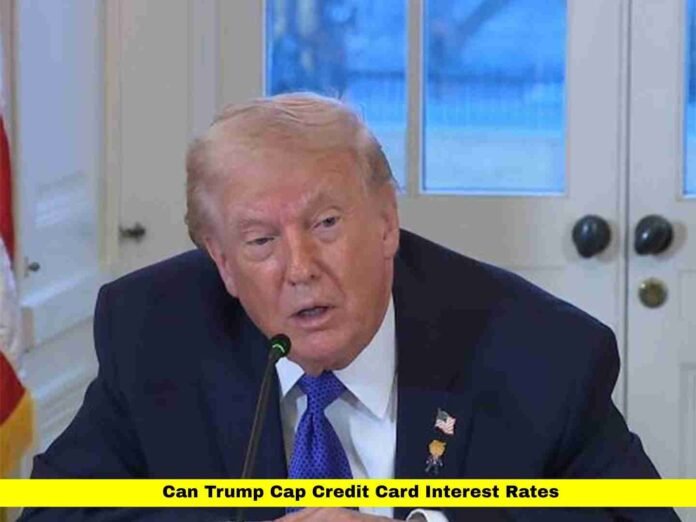

Trump’s proposal to cap credit card interest rates has sparked a nationwide debate, but it cannot take effect without new legislation passed by Congress. While a cap could lower borrowing costs for many Americans, it may also reduce access to credit and reshape how banks lend.
In early 2026, a renewed national debate erupted over household debt after President Donald Trump publicly raised the question of can trump cap credit card interest rates, proposing a dramatic ceiling on what lenders can charge American consumers. The idea immediately captured public attention because it touches nearly every U.S. household that relies on credit cards for everyday spending, emergencies, or long-term balance carrying.
Credit card interest rates in the United States have climbed to historic highs over the past few years, increasing financial pressure on families already strained by inflation, housing costs, and rising prices for basic necessities. Against this backdrop, Trump’s proposal has become one of the most talked-about economic policy ideas of the year, drawing strong reactions from consumers, lawmakers, banks, and financial markets.
This article explains what the proposal involves, how it would work, the legal and political realities surrounding it, and what it could mean for Americans if it moves forward.
What Trump Is Proposing
President Trump has called for a nationwide cap on credit card interest rates, setting the maximum annual rate at 10 percent. The proposal is framed as a consumer protection measure designed to rein in what Trump has described as excessive and unfair borrowing costs charged by major credit card issuers.
Under the concept he has outlined, credit card companies would be expected to comply with the cap beginning in early 2026. Trump has argued that the federal government should step in to protect consumers from interest rates that, in many cases, exceed 20 percent and sometimes approach or surpass 30 percent for certain borrowers.
The proposal does not target mortgages, auto loans, or student loans. It focuses specifically on revolving credit card debt, which affects tens of millions of Americans and represents one of the most expensive forms of consumer borrowing in the financial system.
Why Credit Card Rates Are So High
Credit card interest rates have risen steadily over the past several years. As the Federal Reserve increased benchmark rates to fight inflation, borrowing costs across the economy climbed. Credit card rates, which are typically variable and tied loosely to broader interest trends, rose faster and higher than many other consumer loans.
Unlike mortgages or auto loans, credit cards are unsecured. Lenders take on more risk because there is no collateral backing the debt. To compensate, issuers charge higher interest rates, especially to borrowers with weaker credit histories.
Banks also point to fraud losses, defaults, operational costs, and rewards programs as reasons credit card rates remain elevated. Cash-back incentives, airline miles, and points programs are often funded indirectly through interest revenue.
The Legal Reality Behind the Proposal
One of the most important questions surrounding the plan is whether a U.S. president can actually impose such a cap.
Under current law, the president does not have the authority to unilaterally set interest rate limits for private credit card companies. Any binding nationwide cap would require legislation passed by Congress and signed into law.
While the executive branch can influence regulatory agencies and shape policy priorities, it cannot independently rewrite consumer lending laws. Existing federal statutes do not give the president the power to dictate credit card pricing across the industry.
This means that, at present, Trump’s proposal is a policy position rather than enforceable law. For it to take effect, Congress would need to pass a bill explicitly establishing a national credit card interest rate ceiling.
Congress and the Political Landscape
Interest rate caps on credit cards are not a new idea in Washington. Lawmakers from both parties have introduced proposals in recent years aimed at limiting how much lenders can charge consumers.
Some progressive lawmakers argue that high interest rates trap families in cycles of debt and widen economic inequality. Some conservative lawmakers have also expressed concern about predatory lending practices, particularly when rates rise sharply during periods of economic stress.
Despite this overlap, previous efforts to cap credit card rates have struggled to gain enough support to pass. Opposition from the financial industry has been strong, and lawmakers remain divided over the potential economic consequences.
Trump’s renewed push places fresh political pressure on Congress, but it does not guarantee legislative success. Any bill would need to survive committee review, floor votes in both chambers, and potential legal challenges.
How Financial Markets Reacted
The proposal triggered an immediate reaction across financial markets. Shares of major banks and credit card issuers experienced declines as investors assessed the possibility of lower future revenue.
Credit card lending is a significant profit center for many large financial institutions. A strict interest rate cap would reduce margins and could force banks to adjust their business models.
Airlines and retailers with co-branded credit card partnerships also felt the impact. These programs generate billions of dollars annually through card usage and loyalty rewards. Investors worry that lower interest income could lead to changes in these partnerships.
Market volatility following the announcement reflects uncertainty, not just about whether the cap will become law, but also about how banks would respond if it did.
Potential Benefits for Consumers
Supporters of the proposal argue that a 10 percent cap could provide immediate and meaningful relief for millions of Americans who carry credit card balances.
Lower interest rates would reduce monthly payments, allowing borrowers to pay down principal faster. Over time, households could save thousands of dollars in interest costs, freeing up income for essentials such as housing, healthcare, and education.
Advocates also say a cap could discourage aggressive pricing practices and push lenders to compete more on service quality rather than high rates. They argue that credit cards should function as a convenient payment tool, not a long-term debt trap.
For consumers living paycheck to paycheck, even a modest reduction in interest rates could significantly improve financial stability.
Concerns Raised by Banks and Economists
Banks and many economists warn that the proposal could have unintended consequences.
Credit card lending relies on pricing risk. Higher-risk borrowers typically pay higher rates because they are more likely to default. A uniform cap could make it unprofitable to lend to these customers at all.
If banks respond by tightening approval standards, millions of Americans could lose access to credit cards entirely. Others might see their credit limits reduced or their accounts closed.
Lenders might also scale back rewards programs, annual fee waivers, and promotional offers. These benefits are often subsidized by interest revenue, and a sharp reduction in that income could lead to fewer perks for consumers.
Impact on Lower-Income and Subprime Borrowers
One of the most debated aspects of the proposal is how it would affect lower-income households and borrowers with weaker credit histories.
Supporters argue that these consumers are the most harmed by high interest rates and would benefit the most from a cap. Critics counter that these same borrowers are at the greatest risk of losing access to credit altogether.
If traditional credit cards become harder to obtain, some consumers may turn to alternative forms of borrowing. These can include payday loans, high-cost installment loans, or unregulated financing options that often carry fewer consumer protections.
The shift could leave vulnerable households worse off, even if credit card rates themselves are lower.
How Credit Card Companies Might Adapt
If a cap were enacted, credit card issuers would likely adapt quickly.
Banks could raise annual fees, introduce new account maintenance charges, or reduce grace periods. Some issuers might focus more heavily on affluent customers with strong credit profiles, reshaping the market around lower risk.
Others could invest more in data analytics to better predict defaults and manage risk within the confines of a capped rate environment.
The credit card industry has evolved in response to regulatory changes before, and it would almost certainly do so again.
Historical Context of Interest Rate Caps
Interest rate caps have existed at various points in U.S. history, particularly at the state level. Many states once enforced usury laws that limited how much interest lenders could charge.
Over time, federal laws and court decisions weakened these caps, allowing banks to operate under the rules of states with more permissive lending laws. This shift contributed to the modern national credit card market.
Trump’s proposal would represent one of the most significant reversals of this trend in decades, reintroducing a nationwide limit on consumer credit pricing.
What Happens Next
For now, the proposal remains a political and policy statement rather than enacted law.
The next steps depend largely on Congress. Lawmakers could introduce new legislation reflecting Trump’s proposed cap, modify existing proposals, or reject the idea altogether.
Regulatory agencies may also come under pressure to examine credit card practices more closely, even without a formal cap in place.
Consumers, banks, and investors will continue to watch developments closely as the debate unfolds in Washington.
What Consumers Should Do Now
At present, credit card interest rates remain unchanged. Consumers should not expect immediate reductions based on the proposal alone.
Financial experts generally advise borrowers to focus on paying down high-interest balances, exploring balance transfer options, and avoiding carrying debt when possible.
Staying informed about policy changes is important, but personal financial decisions should be based on current realities rather than proposed legislation.
The Bigger Economic Conversation
The question of can trump cap credit card interest rates has become part of a broader conversation about fairness, consumer protection, and the role of government in financial markets.
Supporters see the proposal as a long-overdue correction to an industry that profits heavily from consumer debt. Critics view it as an intervention that could disrupt credit access and create new risks.
How this debate resolves will say a great deal about the future direction of U.S. economic policy.
What’s your take on a nationwide cap on credit card interest rates? Share your thoughts and stay connected as this story continues to unfold.