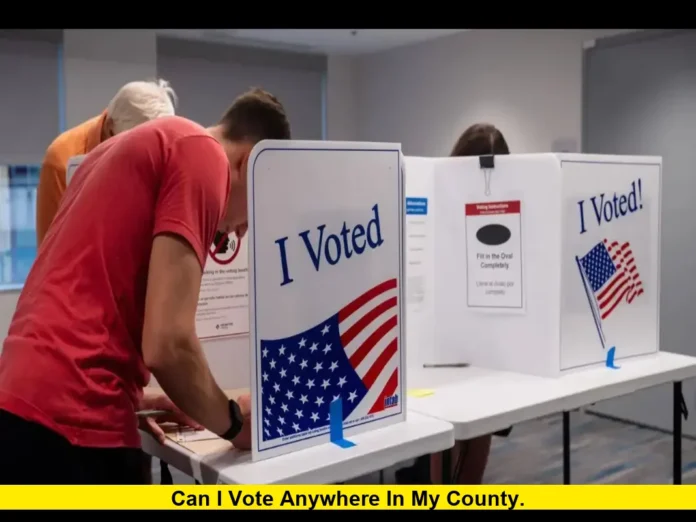

Can I Vote Anywhere in My County? In many cases, yes during early voting, but Election Day rules depend on your state and county. Some states let registered voters cast ballots at any approved early-voting location within their county. Others require voters to visit their assigned polling place on Election Day, unless the county uses a vote center system.
For the November 3, 2026, general election, checking your official polling information before heading out can help you avoid a wasted trip. Your options depend on your residential address, voter registration, election type, and the voting system your jurisdiction uses.
The most important distinction is that an approved voting location is not necessarily available to every voter. A location might serve the entire county during early voting but operate under different rules on Election Day. Understanding these differences will help you choose the right place to cast your ballot.
Can You Vote at Any Location During Early Voting?
Early voting often provides more flexibility than voting on Election Day. Many states allow registered voters to visit any designated early-voting location within their county of residence.
This system helps people vote near work, school, or other daily activities. You do not always need to visit the polling place assigned to your residential address.
However, the rules vary by state. Some jurisdictions limit early voting to specific locations or require voters to follow particular procedures.
For example, Texas allows eligible registered voters to vote at any authorized early-voting location within their county of registration. Georgia also permits voters to use any designated early-voting site in their county.
These rules apply to authorized early-voting locations, not every building that happens to offer election services. A location must be approved for the relevant election and voting period.
Before leaving home, check the early-voting schedule for your county. Confirm that the site accepts voters from your residential area and that it will be open on your preferred day.
Can You Vote Anywhere in Your County on Election Day?
Election Day voting generally follows stricter location rules than early voting. In many jurisdictions, election officials assign voters to polling places based on their home addresses.
Under this traditional system, your name appears on the voter list for your assigned precinct. Another polling place in the same county might not have the correct registration records or ballot for you.
However, some counties use a system known as vote centers. These locations allow eligible voters to cast ballots at any participating center within the jurisdiction, including on Election Day.
The National Conference of State Legislatures identifies 21 states and Washington, D.C., that explicitly authorize jurisdictions to use Election Day vote centers. The availability and implementation of these centers vary.
Texas illustrates the difference. Registered voters can use any authorized early-voting site in their county. On Election Day, they can visit any county location only if their county participates in the Countywide Polling Place Program.
Therefore, living in a county that offers multiple polling locations does not automatically mean you can choose any one of them on Election Day.
Check whether your county uses countywide vote centers or requires voters to report to their assigned precinct. That distinction determines where you can legally cast your ballot.
Why Voting Rules Differ Between Counties
Election administration in the United States involves state and local governments. States establish election laws, while local election officials manage many practical details, including polling locations, staffing, and voting equipment.
As a result, voting procedures can differ significantly across state lines. Even neighboring counties may use different systems when state law permits local choices.
Several factors influence where you can vote:
- State election laws: These establish the rules for early voting, Election Day voting, and eligible voting locations.
- County election procedures: Local officials determine which approved locations operate during a particular election.
- Voting system: Traditional precinct polling places operate differently from countywide vote centers.
- Registration address: Your residential address determines your voting jurisdiction and may determine your assigned polling place.
- Election type: A primary, special election, municipal election, and general election may have different arrangements.
These differences explain why advice from a friend in another state might not apply to your situation.
The safest approach is to use the official election information for your own state and county rather than relying on general rules from another jurisdiction.
How to Find the Correct Voting Location
You can confirm where you are eligible to vote before Election Day. A few simple checks can help you avoid traveling to a location that cannot issue your ballot.
1. Check your voter registration.
Use your state’s official election website to verify your registration status. Confirm that your name and residential address are correct.
If you recently moved, do not assume your old polling place remains valid. Your registration may need updating, and your assigned location may have changed.
2. Look up your polling place.
Many state election websites provide online polling-place lookup tools. These tools typically use your registered address to identify the appropriate location.
If the website lists one assigned polling place, follow that information unless election officials confirm that you can use another location.
3. Review the early-voting options.
If you plan to vote before Election Day, look for a separate list of approved early-voting locations. Check whether all registered voters in your county can use those sites.
4. Confirm Election Day rules.
Look for information about vote centers, countywide voting, or precinct-based polling places. These terms can help you determine whether you have a choice of locations.
5. Contact your local election office if anything remains unclear.
Election officials can confirm your assigned location, available voting options, operating hours, and identification requirements.
Do this before traveling, especially if you intend to vote somewhere other than the polling place shown in your registration information.
What Happens If You Go to the Wrong Polling Place?
Arriving at an unauthorized voting location can delay your voting process. Election workers might not find your name on the local voter list, or the location might not have the ballot you need.
Depending on state law, officials might direct you to your assigned polling place or explain whether you qualify for another voting option.
Some jurisdictions offer provisional ballots when a voter’s eligibility cannot be confirmed or a registration issue arises. However, casting a provisional ballot does not guarantee that election officials will count it.
Officials must determine whether the ballot meets the applicable legal requirements. A ballot cast in the wrong jurisdiction or without the necessary eligibility may not count.
For that reason, do not assume that you can resolve every polling-place mistake by requesting a provisional ballot.
If you arrive at the wrong location, ask an election worker for guidance. Confirm the correct location and the available options before making another decision about how to vote.
Checking your polling information beforehand is usually the easiest way to avoid this problem.
Can You Vote in Another County if You Live Nearby?
Generally, you cannot vote in person in a different county simply because it is closer to your home or workplace.
Your voter registration connects you to a specific election jurisdiction. The candidates and local ballot measures available to you depend on where you live.
A nearby county may have different congressional districts, state legislative districts, school board races, or local ballot measures. Its polling places may not have the correct ballot for your residence.
Some states have procedures for voters who recently moved, including specific registration updates or limited-ballot options. These procedures have eligibility requirements and do not create a general right to vote anywhere in the state.
If you moved recently, contact your election office to determine whether you must update your registration and which voting options remain available.
Do not rely solely on a county boundary shown on a map. Verify your official registration address and the rules that apply to your circumstances.
What Should You Bring When Voting at a Different Location?
The documents you need depend on your state’s election laws. Most states require some form of identification for in-person voting, although the accepted documents and procedures differ.
Before voting, check whether your state requires a driver’s license, state-issued identification, another approved document, or a different verification procedure.
Bring your voter registration information if you have it. A voter registration card or sample ballot can help you confirm your details, although these documents do not necessarily replace legally required identification.
If you vote at an authorized countywide vote center, election workers may use electronic registration systems to verify your eligibility and provide the correct ballot. The precise process depends on the local system.
Do not assume that identification requirements change simply because you choose a different approved location. The same state and local rules generally continue to apply.
You should also check the location’s operating hours. Early-voting sites may have different schedules, and not every site operates on every day of the early-voting period.
Voting Options for the November 3, 2026, General Election
The November 3, 2026, general election is approaching, and voters should confirm their local procedures before making plans.
Early voting dates, locations, and availability vary across the country. Some jurisdictions offer multiple in-person locations, while others provide different voting arrangements.
For example, Texas lists October 19 through October 30, 2026, as the early-voting period for the November 3 general election. Eligible registered voters can use any authorized early-voting location within their county of registration.
Other states follow their own schedules and rules. Do not apply Texas’s dates or procedures to an election in another state.
Depending on where you live, your available options may include:
- Early in-person voting: Vote at an approved location during the designated early-voting period.
- Election Day voting: Visit your assigned polling place or an authorized countywide vote center, as applicable.
- Voting by mail: Follow your state’s rules for requesting, completing, and returning a ballot.
- Absentee voting: Use the applicable absentee-ballot process if you qualify under your state’s rules.
Some states also provide same-day registration or registration updates under specific conditions. These options vary, so verify eligibility and deadlines with your election office.
If you plan to vote early, confirm both the opening date and the location’s eligibility rules. If you intend to vote on November 3, verify your assigned polling place or countywide vote-center options before Election Day.
Important Mistakes to Avoid When Choosing a Polling Place
A little preparation can prevent common voting problems. Keep these points in mind when selecting a location.
- Do not assume every location in your county accepts every voter. Some sites serve specific precincts or operate only during certain voting periods.
- Do not confuse ballot drop boxes with polling places. A drop box is for returning an eligible ballot, not necessarily for casting an in-person vote.
- Do not rely on an old polling-place address. Locations can change between elections.
- Do not assume another county’s rules apply to you. Your own state’s laws and county procedures control your options.
- Do not wait until Election Day to resolve registration problems. Check your status early enough to address any issues before applicable deadlines.
- Do not assume that a provisional ballot will count. Follow the instructions provided by election officials and verify your eligibility.
These precautions matter because polling-place flexibility depends on the actual system in use, not simply the number of voting locations nearby.
Final Thoughts on Whether You Can Vote Anywhere in Your County
So, can you vote anywhere in your county? Often, yes during early voting, but Election Day voting depends on whether your jurisdiction uses countywide vote centers or assigned precinct polling places. You generally cannot cross into another county and expect to vote there simply because the location is more convenient.
For the November 3, 2026, general election, verify your registration, review the official list of voting locations, and confirm the rules for your county before heading out. These steps can help you choose an authorized location and avoid unnecessary delays.
Have you experienced different polling-place rules in your county? Share your experience in the comments and stay updated on important U.S. voting information.