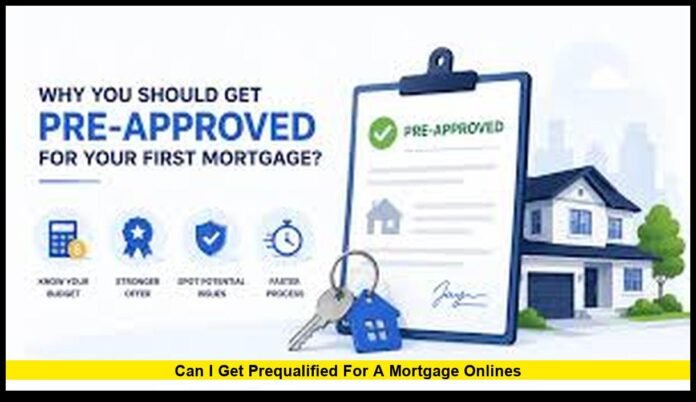

For Americans preparing to purchase a home, understanding borrowing power before entering the housing market can make the process less stressful. The question can i get prequalified for a mortgage online has become increasingly relevant as lenders offer digital tools that allow prospective buyers to explore financing options without visiting a bank. Online prequalification can provide an initial estimate of how much a buyer might borrow, what financial factors influence eligibility, and which steps may be necessary before applying for a home loan.
The process is generally convenient, but the results depend on the lender, the applicant’s financial information, and the level of review involved. Buyers should understand what an online estimate means before relying on it to plan a home purchase.
Digital Mortgage Prequalification Makes Early Planning Easier
Many mortgage lenders allow consumers to begin the home financing process through their websites. Applicants may be asked to enter information about their income, employment, monthly debts, savings, and expected home price.
Some platforms generate an automated estimate within minutes. Others may require a mortgage specialist to review the information before providing a result.
For buyers who are still comparing neighborhoods or determining their price range, this initial assessment can help establish a realistic starting point. It may also reveal whether existing debt or limited savings could make borrowing more difficult.
However, the estimate is not a promise that the lender will approve a mortgage. The final borrowing amount may change after the lender verifies financial records and evaluates the property.
What Lenders Consider Before Providing an Estimate
Mortgage eligibility depends on several financial factors. Income matters, but lenders also consider how much of that income is already committed to debt payments.
Income and employment: Lenders generally evaluate whether an applicant has sufficient income to manage the proposed mortgage payment. Salaried workers, independent contractors, and self-employed borrowers may face different documentation requirements.
Existing debt: Credit cards, student loans, vehicle financing, and personal loans can affect borrowing capacity. Higher monthly obligations may reduce the amount a lender considers affordable.
Credit history: Credit scores and payment records can influence mortgage eligibility, interest rates, and available loan programs. Requirements vary by lender and mortgage type.
Down payment: The amount available for an upfront contribution affects the size of the requested loan. Buyers should also account for closing costs and emergency savings.
Financial reserves: Savings and other eligible assets can help demonstrate that a borrower has resources to manage expenses associated with purchasing a home.
Providing realistic figures is important. An estimate based on incomplete or inaccurate information may not reflect the amount a lender is ultimately willing to offer.
Does Prequalification Require a Credit Check?
Not always. Some lenders use a soft credit inquiry during the initial assessment, which does not affect a consumer’s credit score. Other providers may conduct a hard inquiry, depending on their process and the information needed.
Before submitting personal details, applicants should ask which type of credit check will be performed. They should also review the lender’s privacy policies and confirm that they are using its legitimate website.
Consumers preparing to apply for a mortgage can benefit from reviewing their credit reports, correcting inaccurate information, and paying bills on time. Reducing revolving debt may also improve their overall financial profile.
It is worth remembering that credit requirements are not identical across mortgage programs. A borrower who does not qualify for one lender’s preferred product may have other options, depending on income, credit history, down payment, and other eligibility factors.
Prequalification and Preapproval Serve Different Purposes
The terminology used by mortgage companies can be confusing because some lenders use the terms prequalification and preapproval differently.
In general, prequalification is an initial assessment that may rely heavily on information supplied by the applicant. Preapproval usually involves a more detailed examination of the borrower’s finances and often requires a credit review and supporting documentation.
A preapproval letter can be more useful when making an offer on a home because it indicates that the lender has completed an initial assessment of the buyer’s financial position.
Neither step guarantees final mortgage approval. The lender must still complete the required underwriting process, evaluate the property, and confirm that the applicant meets the applicable conditions.
For buyers who are only beginning to research the market, an initial estimate may be sufficient. Those preparing to make an offer should ask lenders about their preapproval requirements and timelines.
How to Prepare for an Online Mortgage Application
Preparation can make the digital process easier and help applicants receive more meaningful estimates.
Before starting, gather approximate figures for annual income, recurring monthly debts, available savings, and the amount you expect to contribute toward a down payment.
It can also help to determine a comfortable monthly housing budget. The largest loan available is not necessarily the most suitable option for every household.
Homeownership expenses extend beyond principal and interest. Property taxes, homeowners insurance, potential mortgage insurance, homeowners association charges, maintenance, and repairs can substantially increase the monthly cost.
A mortgage calculator can help buyers compare different loan amounts and interest rates. The figures should be treated as estimates until a lender provides terms based on the applicant’s actual circumstances.
Applicants with variable income or self-employment earnings may want to organize tax returns, bank statements, and business financial records before moving toward formal preapproval.
Can First-Time Buyers Qualify for Online Mortgage Assistance?
First-time buyers can use online prequalification to explore their potential financing options. They may also investigate programs intended to make homeownership more accessible.
Depending on eligibility, options may include conventional mortgages with low down payment requirements, FHA-insured loans, VA-backed loans for eligible borrowers, and USDA-backed financing for qualifying properties and applicants.
Some state and local programs also offer down payment assistance or other homebuying support. These programs can have specific income limits, location requirements, credit standards, or homebuyer education conditions.
An initial mortgage estimate does not automatically establish eligibility for any assistance program. Buyers should ask participating lenders which programs are available and what additional requirements apply.
Those who are uncertain about their finances may also benefit from housing counseling before making a major financial commitment.
Choosing a Lender Requires More Than a Quick Estimate
An attractive online estimate should not be the only factor in selecting a mortgage provider.
Applicants should compare the interest rates, loan terms, estimated fees, and customer support offered by different lenders. They should also determine whether a quoted interest rate is an estimate or a locked rate.
When buyers are ready to proceed with a mortgage application, official Loan Estimates can help them compare offers using standardized information about projected payments, closing costs, and other loan terms.
The lender’s responsiveness also matters. Buyers may need assistance when explaining irregular income, documenting additional assets, or understanding the conditions attached to a particular mortgage.
Consumers should be cautious of advertisements promising guaranteed approval without financial review. Legitimate mortgage providers must evaluate applicants according to applicable lending requirements.
What Happens After Online Prequalification?
Once the initial estimate is available, buyers can decide whether to continue preparing financially or begin searching seriously for a property.
Those who need more time can focus on building savings, managing debt, and reviewing their budget. Buyers who are ready to make an offer can pursue preapproval and provide the documents required by their lender.
After a purchase agreement is reached, the mortgage process generally moves into formal underwriting, property valuation, and other required checks. The lender may request updated documents before making a final decision.
For prospective buyers wondering can i get prequalified for a mortgage online, the answer is yes, and the process can provide a useful first look at potential financing. The most effective approach is to treat the estimate as a planning tool, verify the lender’s requirements, and compare mortgage options before committing to a loan.