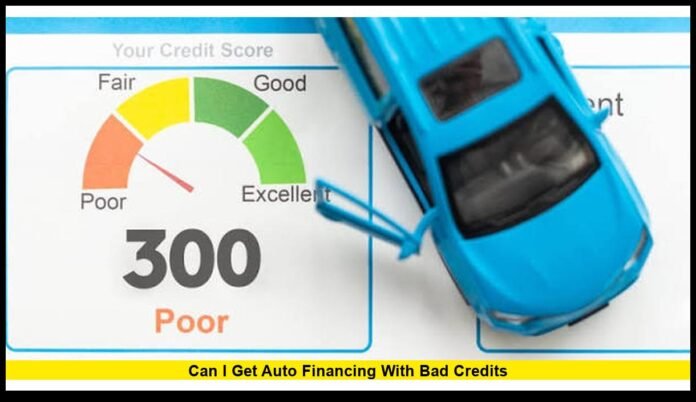

For Americans planning to purchase a vehicle, the question can i get auto financing with bad credit has become an important part of the car-buying process. A low credit score can make borrowing more expensive, but it does not automatically prevent someone from qualifying for an auto loan. Lenders consider several factors, including income, existing debt, payment history, and the amount a buyer can contribute upfront.
With careful planning, consumers with damaged credit may still find financing that fits their circumstances. Understanding lender requirements, recognizing costly loan terms, and comparing available offers can make a significant difference when shopping for a vehicle.
Bad Credit Does Not Automatically Mean Loan Rejection
Auto lenders use credit information to estimate the risk of lending money. Applicants with missed payments, collection accounts, high credit card balances, or a history of financial difficulties may face stricter requirements.
However, lenders do not all evaluate applications identically. Some specialize in serving borrowers with lower credit scores, while others place greater emphasis on income stability, outstanding obligations, and the vehicle being purchased.
Someone with a limited credit history may also qualify through certain financing programs. Approval depends on the lender’s policies and the applicant’s complete financial profile.
Borrowers should remember that getting approved and receiving an affordable loan are two different outcomes. A lender may offer financing at an interest rate that makes the vehicle substantially more expensive over time.
What Lenders Consider When Reviewing Applications
Credit scores remain important, but they are not the only information used to evaluate an auto loan application.
Lenders may examine employment history, documented income, monthly debt payments, residential stability, and previous borrowing behavior. They may also consider the vehicle’s age, mileage, purchase price, and expected value.
A borrower who earns a consistent income and has manageable monthly obligations may present a stronger application than someone whose finances are stretched, even if both applicants have similar credit scores.
Documentation can also influence the process. Applicants may need identification, proof of residence, pay stubs, bank statements, or tax documents. Self-employed buyers should ask which records are acceptable before applying.
Where Buyers Can Look for Financing
Several types of lenders may offer options to consumers who have difficulty qualifying for standard auto loans.
Banks are a reasonable starting point, particularly for existing customers with established financial relationships. Their lending requirements vary, and some may not accept applicants with very low scores.
Credit unions are another option. Depending on membership eligibility and underwriting policies, they may provide competitive rates or consider borrowers with less-than-perfect credit.
Online auto lenders and lending marketplaces can help shoppers compare potential offers. Applicants should review privacy policies and determine whether checking eligibility requires a soft inquiry or a hard credit inquiry.
Dealership financing offers convenience because buyers can arrange a vehicle purchase and loan through one location. Nevertheless, the first offer is not necessarily the best one.
Buy-here-pay-here dealerships provide financing directly and may consider applicants who have limited alternatives. Buyers should pay close attention to interest charges, payment schedules, vehicle condition, and contract terms before accepting this type of loan.
How a Down Payment Can Strengthen an Application
Saving money before purchasing a car can improve the financial structure of a loan.
A down payment reduces the amount borrowed, which can lower monthly payments and total interest costs. It may also demonstrate that the buyer can contribute personal funds toward the purchase.
Consider a vehicle priced at $16,000. A buyer who contributes $4,000 would need to finance $12,000 before taxes, registration, fees, and other applicable charges. Borrowing less generally costs less in interest when other loan terms remain equal.
However, consumers should avoid using every dollar of their savings to secure approval. Maintaining emergency funds is important because repairs, insurance expenses, and unexpected bills can arise after the purchase.
Compare Interest Rates Before Choosing a Loan
The annual percentage rate, or APR, helps borrowers understand the yearly cost of credit, including certain loan fees. A higher APR can significantly increase the total amount paid for a vehicle.
For example, financing $15,000 over five years at an illustrative 10% APR produces a monthly payment of approximately $319. At 20% APR, the payment rises to approximately $397.
The difference is about $78 per month, or roughly $4,680 across 60 payments. These figures are estimates and exclude additional charges that may apply.
This comparison shows why buyers should evaluate the total repayment cost rather than focusing exclusively on a monthly payment advertised by a dealership.
A longer loan term may reduce the monthly bill, but it can increase total interest and extend the period during which the borrower owes money on the vehicle.
Practical Ways to Improve Approval Chances
Consumers can take several steps before submitting applications.
First, review credit reports for incorrect balances, unfamiliar accounts, and inaccurate payment information. Disputing genuine errors may help ensure that lenders receive accurate records.
Next, calculate an affordable vehicle budget. Include insurance, fuel, maintenance, registration, and repairs alongside the expected loan payment.
Paying existing bills on time and reducing high credit card balances may also improve the overall credit profile. Results vary, and accurate negative information cannot simply be removed on demand.
Prequalification can help shoppers understand potential financing options before making a final decision. Buyers should verify whether the process involves a soft inquiry and remember that preliminary offers do not guarantee final approval.
When comparing auto loan offers, complete rate shopping within a relatively short period. Qualifying auto-loan inquiries made during a designated shopping window are generally grouped for scoring purposes, although the applicable window depends on the credit scoring model.
Avoid Financing Terms That Create Financial Pressure
A loan should fit the buyer’s budget without making essential expenses difficult to cover.
Be cautious of contracts with unclear fees, expensive optional products, unusually restrictive payment conditions, or pressure to sign immediately. Review the amount financed, APR, repayment schedule, total payments, and any optional warranty or insurance products.
Buyers should also understand the consequences of missed payments. Because auto loans are generally secured by the vehicle, failure to repay can lead to repossession, subject to applicable law and the contract.
If a dealership promises guaranteed approval regardless of circumstances, examine the offer carefully. No advertisement can establish that every applicant will qualify on favorable terms.
Can Better Credit Lead to More Affordable Financing?
Borrowers who can postpone their purchase may benefit from spending time strengthening their credit profile. Consistent payments, lower revolving balances, and accurate credit reporting can help improve eligibility over time.
Consumers who need a vehicle immediately can still compare lenders, choose a less expensive car, and minimize the amount borrowed. A qualified co-signer may also help in some circumstances, but that person accepts significant financial responsibility if payments are missed.
After establishing a reliable payment history, borrowers may eventually qualify to refinance their auto loan. Before doing so, they should compare the new APR, fees, remaining balance, and total cost rather than assuming a smaller payment automatically means savings.
What Buyers Should Remember
The answer to can i get auto financing with bad credit is often yes, but the available terms can vary considerably. Approval depends on individual circumstances, and borrowers with lower scores may encounter higher rates or additional requirements.
The strongest approach is to understand your budget, compare multiple lenders, provide accurate financial information, and review the complete contract before signing. Choosing a vehicle that meets your transportation needs without creating excessive debt can help protect your finances while you work toward stronger credit.