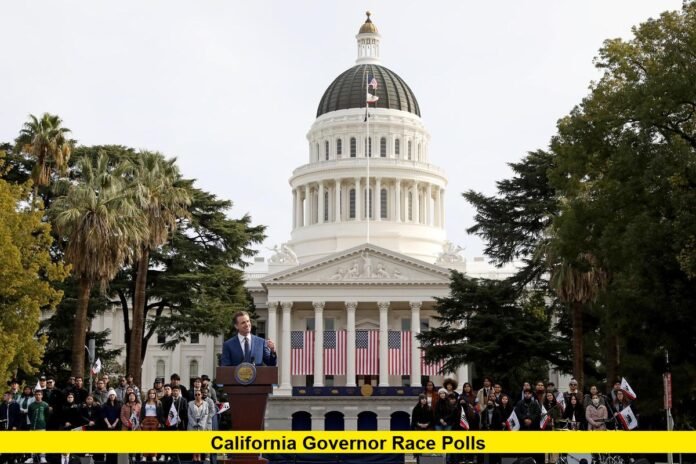

The latest california governor race polls are painting a striking picture of uncertainty in one of the most closely watched statewide elections in the United States. With the 2026 primary drawing nearer, voter preferences remain divided, no candidate has established a commanding lead, and the political balance of the race continues to shift in unexpected ways.
What makes this contest particularly compelling is the combination of a crowded candidate field, a unique election system, and a growing number of voters who have yet to make up their minds.
An Open Seat Changes Everything
The upcoming election marks the first time in years that California voters will choose a new governor without an incumbent on the ballot. Term limits prevent the current governor from seeking reelection, leaving the field open to a wide range of candidates from both major parties.
This has created a rare moment in California politics—one where the outcome is not easily predictable and where early polling does not point to a clear frontrunner.
In recent survey snapshots, several candidates are clustered within a narrow margin, often separated by only a few percentage points. No single figure has managed to consolidate broad statewide support, and that fragmentation is defining the race.
Republican Candidates Show Competitive Strength
One of the most notable trends emerging from recent polling data is the relatively strong performance of Republican contenders. In a state that has consistently voted Democratic in statewide races, this development is drawing attention.
Republican candidates such as Steve Hilton and Chad Bianco are polling at or near the top in some surveys. Their support appears more concentrated, allowing them to stand out in a divided field.
This does not necessarily indicate a statewide partisan shift, but it does highlight how vote consolidation can influence early polling numbers—especially in a system where multiple candidates from one party split the vote.
Democratic Field Remains Fragmented
On the Democratic side, the race features several well-known figures, each attracting a portion of the electorate but none dominating the field.
Candidates including Katie Porter, Tom Steyer, and Eric Swalwell are all drawing measurable support. However, that support is spread across multiple campaigns, preventing any one candidate from breaking ahead.
Polling trends suggest that Democratic voters are still weighing their options. Many appear open to different candidates, and that flexibility is contributing to the overall uncertainty reflected in the numbers.
How the Top-Two Primary System Shapes the Race
California’s election structure adds another layer of complexity. The state uses a top-two primary system, meaning all candidates—regardless of party—appear on the same ballot. The two candidates with the most votes advance to the general election.
This system creates scenarios that differ from traditional partisan primaries. It opens the possibility that candidates from the same party could face each other in the general election, depending on how the vote is distributed.
Given the current polling landscape, analysts are closely watching whether a split Democratic vote could allow two Republican candidates to advance, or whether a late shift in voter preferences could consolidate support around fewer candidates.
Undecided Voters Hold the Balance
A significant portion of the electorate remains undecided, and that group could ultimately determine the direction of the race.
Recent polling indicates that a notable share of voters has not yet committed to a candidate. This level of indecision is higher than what is typically seen at this stage in a gubernatorial race.
Undecided voters often become more engaged as campaigns intensify, debates take place, and media coverage increases. Their eventual choices can dramatically alter polling standings, especially in a race where margins are tight.
Campaign Developments Add Uncertainty
The campaign trail has already seen developments that are influencing voter perception and candidate momentum.
One of the most discussed issues involves controversy surrounding a Democratic candidate, which has led to internal party tension and shifting political dynamics. The situation has affected endorsements and raised questions about campaign viability, adding another layer of unpredictability.
Meanwhile, other candidates are working to expand their reach through policy proposals, public appearances, and targeted outreach efforts aimed at undecided voters.
Key Issues Driving Voter Decisions
While personalities and campaign narratives are playing a role, policy issues remain central to voter decision-making.
Among the topics shaping the race:
- Cost of living and housing affordability
- Public safety and crime
- Economic growth and job creation
- Climate and environmental policy
- Education and infrastructure
Candidates are tailoring their messages to address these concerns, often emphasizing different priorities depending on their political base.
Regional Dynamics Across the State
California’s size and diversity mean that voter preferences can vary significantly by region.
Urban areas, suburban communities, and rural regions each bring distinct political perspectives. Candidates who can build broad coalitions across these areas may have an advantage as the race progresses.
Polling data suggests that no single candidate currently dominates across all regions, reinforcing the idea that the contest remains highly competitive.
Momentum Could Shift Quickly
One of the defining characteristics of this race is how fluid it remains. With no candidate firmly ahead, momentum can change rapidly.
Factors that could influence the trajectory include:
- Debate performances
- Endorsements from influential figures
- Campaign advertising strategies
- Voter turnout efforts
- News events that capture public attention
In such an environment, even small gains in support can have significant consequences.
National Attention on California
The California governor’s race is not just a state-level contest—it is being closely watched across the country.
As the largest state in the U.S., California often plays a leading role in shaping policy trends and political narratives. The outcome of this election could provide insights into voter sentiment heading into future national elections.
The possibility of an unconventional general election matchup has only heightened interest among political observers.
What Current Polling Suggests
The most recent california governor race polls highlight several key takeaways:
- The race is highly competitive, with multiple candidates within reach of the top spots
- No candidate has established a dominant lead
- Republican candidates are benefiting from more unified support
- Democratic candidates remain competitive but divided
- A substantial portion of voters is still undecided
These factors combine to create a race that is both unpredictable and closely contested.
Looking Ahead to the Primary
As the primary election approaches, campaigns are expected to intensify their efforts to connect with voters and differentiate themselves from competitors.
The coming months will likely see increased campaign activity, including:
- Expanded outreach initiatives
- More detailed policy proposals
- Greater media visibility
- Heightened voter engagement
This period will be critical in determining which candidates can build the momentum needed to secure a spot in the general election.
Why This Election Matters
Beyond the immediate outcome, the 2026 California gubernatorial race carries broader significance.
It reflects shifting political dynamics, evolving voter priorities, and the impact of electoral systems on candidate competition. The results could influence how future campaigns are structured and how parties approach similar races.
For voters, the election represents an opportunity to shape the direction of the state on key issues that affect daily life.
The Bottom Line
California’s race for governor is unfolding as one of the most competitive and uncertain elections in recent memory. With a crowded field, divided voter support, and a large number of undecided voters, the outcome remains far from decided.
As campaigns continue to develop and voters become more engaged, the dynamics reflected in current polling could change significantly.
The weeks ahead will be crucial in determining who gains momentum and who ultimately advances in this closely watched contest.