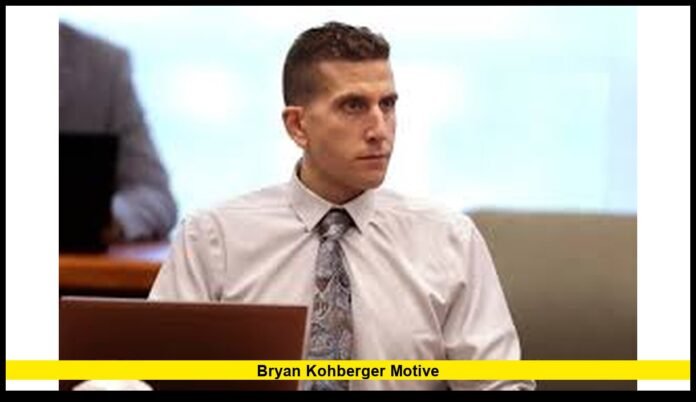

As of January 2026, no verified or official motive has been publicly identified for Bryan Kohberger’s actions in the Idaho murders.
The question of bryan kohberger motive continues to draw national attention long after the Idaho murders case reached its legal conclusion. Even with a guilty plea, life sentences, and years of investigation, officials have not publicly identified a verified reason for why Bryan Kohberger killed four University of Idaho students. This article presents a fresh, in-depth examination of the case, focused entirely on confirmed facts, official statements, and the continuing impact of an unanswered motive, written for a U.S. audience and updated through January 2026.
A Case That Changed a Community
In the early hours of November 13, 2022, four University of Idaho students were fatally stabbed inside their off-campus home in Moscow, Idaho. The victims were Madison Mogen, Kaylee Goncalves, Xana Kernodle, and Ethan Chapin. The crime stunned the small college town and quickly became one of the most closely followed criminal investigations in recent U.S. history.
The brutality of the attack, the absence of immediate suspects, and the fact that two roommates survived intensified public concern and media attention. For weeks, fear and uncertainty spread throughout the community as students left campus, parents demanded answers, and law enforcement worked around the clock to identify a suspect.
The Arrest and Legal Outcome
On December 30, 2022, Bryan Christopher Kohberger was arrested in Pennsylvania after investigators linked him to the crime through forensic, digital, and surveillance evidence. Kohberger, who was pursuing a doctoral degree in criminology at Washington State University, was charged with four counts of first-degree murder and one count of felony burglary.
After lengthy pretrial proceedings, Kohberger entered a guilty plea in July 2025. In exchange, the death penalty was removed from consideration. He was sentenced later that month to four consecutive life sentences without the possibility of parole, plus additional prison time related to the burglary charge.
From a legal standpoint, the case reached its conclusion. From an emotional and psychological standpoint, however, many questions remained unresolved.
The Central Question: Motive
Despite the scope of the investigation and the severity of the sentence, the bryan kohberger motive has never been officially disclosed or confirmed. Prosecutors and investigators have stated that while the evidence clearly established Kohberger’s guilt, it did not conclusively explain why he committed the murders.
Authorities have emphasized that motive is not required to secure a conviction under Idaho law. As a result, the court process focused on proving actions, timelines, and responsibility rather than psychological reasoning.
What Investigators Have Confirmed
Law enforcement agencies involved in the case have consistently confirmed several key points related to motive:
- No verified personal relationship existed between Kohberger and any of the victims
- No evidence of a romantic, financial, or professional connection was established
- No robbery or financial gain was involved
- No documented disputes, threats, or confrontations preceded the crime
Investigators reviewed social media activity, phone records, location data, and witness accounts but did not uncover a confirmed explanation for Kohberger’s actions.
Evidence That Proved Guilt, Not Intent
The investigation produced a significant amount of evidence that established how the crime occurred. This included:
- DNA evidence connecting Kohberger to a knife sheath found at the scene
- Cell phone data placing him in the area during critical time windows
- Surveillance footage showing a vehicle consistent with his car near the home
- Digital records indicating attempts to limit or remove data
While this evidence was central to the prosecution’s case, it did not reveal Kohberger’s reasoning or emotional state leading up to the murders. Officials have been clear that evidence can demonstrate actions without explaining intent.
Background Information Without a Causal Link
Publicly confirmed information about Kohberger’s background has been widely discussed, but authorities have cautioned against drawing conclusions from it.
Confirmed details include:
- Kohberger pursued studies in psychology and criminology
- He previously struggled with substance abuse earlier in life and later recovered
- Acquaintances described him as socially reserved
Investigators have stated that none of these factors were presented as causes of the crime. Background context alone does not equal motive, and no direct connection has been established between Kohberger’s past and the killings.
The Role of Silence
One of the most significant reasons the motive remains unknown is Kohberger’s refusal to explain his actions. During court proceedings, sentencing, and post-conviction processes, he did not provide statements clarifying why he committed the murders.
Legal experts note that when a defendant remains silent, motive may never be fully understood. Without voluntary disclosure or new evidence, investigators are limited to what can be proven through records and physical findings.
Impact on Victims’ Families
For the families of the victims, the lack of a confirmed motive has been one of the most painful aspects of the case. While the guilty plea and life sentences ensured accountability, many family members have expressed that justice alone does not bring closure.
Not knowing why their children were targeted has left families with unanswered questions that may never be resolved. This absence of explanation continues to shape how they process grief and remembrance.
The University of Idaho Community
The University of Idaho has worked to heal and move forward, but the impact of the crime remains visible. Memorials, scholarships, and annual remembrance events honor the victims and reinforce their lasting presence within the campus community.
University leaders have focused on student safety, mental health resources, and rebuilding trust. At the same time, they have acknowledged that the unanswered motive has contributed to lingering unease among students and staff.
Public and Professional Interest
The unresolved motive has sustained widespread and long-term public interest in the case. True crime audiences, criminology students, legal professionals, and behavioral researchers continue to examine the events, not because responsibility or guilt is in question, but because the underlying intent behind the crime remains unclear.
For professionals in criminal justice and behavioral science, motive plays a critical role in understanding patterns of violent behavior. Clear insight into why a crime occurred can help identify warning signs, assess potential risks, and inform prevention strategies aimed at reducing future harm. In this case, the absence of a confirmed motive limits the ability to draw broader conclusions or apply lessons to similar situations.
Legal experts also note that the case highlights the difference between legal resolution and psychological understanding. While the justice system successfully established accountability and delivered life sentences, it could not provide the explanatory insight that often helps communities, researchers, and policymakers make sense of extreme acts of violence.
As a result, the lack of a defined motive continues to drive discussion and analysis across professional fields and public forums alike, reinforcing why the case remains a subject of study and debate even after its legal conclusion.
Media Coverage and Public Narratives
Since Bryan Kohberger’s sentencing, the case has continued to receive extensive attention through documentaries, books, and long-form media projects. These works largely focus on reconstructing the timeline of events, examining the investigative process, and documenting the broader social and emotional impact of the crime on the victims’ families, the University of Idaho community, and the nation.
Several documentary productions released after sentencing revisit key moments in the investigation, including early law enforcement challenges, forensic breakthroughs, and the legal proceedings that led to Kohberger’s guilty plea and life sentences. Similarly, books published in the aftermath provide detailed accounts of Kohberger’s background, the sequence of events surrounding the murders, and the scale of the investigation that ultimately resolved the case in court.
While these narratives contribute to public understanding and preserve a historical record of the case, they do not introduce any new, verified information regarding motive. None of the documentaries or books present evidence confirmed by law enforcement that explains why the murders occurred. Instead, they rely on publicly available records, interviews, and analysis to frame the story.
Officials and investigators have consistently reiterated that media narratives, regardless of depth or popularity, do not replace official findings. They have cautioned the public against interpreting storytelling, analysis, or reconstructed scenarios as definitive explanations, emphasizing that the official position remains unchanged: the motive behind the crimes has not been determined or publicly confirmed.
Why Motive May Remain Unknown
Experts in violent crime investigations acknowledge that some cases never result in a clearly defined motive, even after convictions and sentencing. This often occurs when key explanatory elements are absent or unavailable.
- The offender does not cooperate.
When a defendant chooses not to provide statements explaining their actions, investigators are limited to physical and digital evidence, which may establish responsibility but not intent. In this case, Bryan Kohberger has not offered any explanation for his actions. - No digital or written explanations exist.
Investigators search extensively for journals, messages, online posts, or other records that might reveal planning or reasoning. In the Idaho case, no verified digital or written materials explaining motive were recovered or disclosed. - Psychological evaluations do not yield definitive conclusions.
While psychological assessments may be conducted for legal purposes, they do not always provide clear answers about intent or reasoning. In this case, no psychological findings explaining motive have been made public.
In the Idaho murders case, all of these factors apply. Without voluntary disclosure from Kohberger or the emergence of new, verified evidence, authorities have stated that the motive may never be publicly known, leaving this aspect of the crime unresolved despite the legal conclusion.
Current Status as of January 2026
As of January 2026, the legal and investigative status of the case is settled, though questions surrounding motive remain unresolved.
- Bryan Kohberger is serving multiple life sentences in Idaho custody.
Following his guilty plea in 2025, Kohberger was sentenced to four consecutive life terms without the possibility of parole, along with additional prison time related to burglary. He remains incarcerated under the supervision of the Idaho Department of Correction. - No new evidence related to motive has been released.
Since sentencing, law enforcement agencies have not disclosed any new findings that clarify why the murders occurred. No additional documents, statements, or investigative updates have provided insight into intent. - Authorities continue to state that the official motive remains unknown.
Prosecutors and investigators have reaffirmed that while the evidence established guilt beyond doubt, it did not explain Kohberger’s reasoning. Without voluntary disclosure or new material evidence, officials have indicated that the motive may never be publicly identified. - The legal case is closed, but public attention remains strong.
Although no further court proceedings are expected, the case continues to attract national interest. Ongoing discussion reflects the lasting impact of the crime and the unresolved questions that remain central to how it is remembered.
Why the Question Endures
The bryan kohberger motive remains a central and enduring topic because it represents the final unanswered element of a criminal case that is otherwise legally complete. The justice system delivered accountability through convictions and life sentences, but it could not provide an explanation that helps people understand why the violence occurred. This gap between legal resolution and human understanding continues to draw attention long after the courtroom proceedings ended.
For the victims’ families, the absence of a motive means that grief exists alongside unanswered questions. While responsibility has been assigned, the lack of explanation complicates the process of meaning-making that often follows traumatic loss. Many families have expressed that knowing why can matter as much as knowing who.
For the University of Idaho community, the unresolved motive shapes how the crime is remembered. Memorials, safety reforms, and remembrance efforts coexist with lingering uncertainty, reinforcing that healing is not only about time but also about understanding.
For the broader public, the case continues to be discussed because it challenges expectations of closure. Crimes of this magnitude are often assumed to come with clear explanations, and when they do not, they prompt ongoing reflection, debate, and examination. As a result, the unanswered motive continues to influence how the case is studied, remembered, and understood across the country.
Conclusion
More than three years after the killings that devastated a university community and captured national attention, the motive behind Bryan Kohberger’s actions remains officially undisclosed. Despite an exhaustive multi-agency investigation, a guilty plea in 2025, and multiple life sentences without the possibility of parole, authorities have publicly confirmed that they still do not know why the crime occurred. Investigators and prosecutors have repeatedly stated that no personal connection, financial incentive, or documented conflict linked Kohberger to the victims, and that critical questions about intent went unanswered in court because he did not provide any explanation. The absence of a confirmed motive continues to leave an enduring void for the victims’ families, who have expressed that legal closure brought accountability but not emotional closure. It also affects the University of Idaho community, where memorials and scholarships honor the lives lost but the lack of understanding continues to shape campus healing and safety discussions. Nationally, the unresolved question of motive fuels ongoing public interest, academic debate, and professional inquiry into violent crime patterns. Three years on, the unanswered motive remains one of the most discussed aspects of the case, underscoring how deeply the search for meaning persists in the aftermath of one of the most shocking and deeply felt crimes in recent U.S. history.