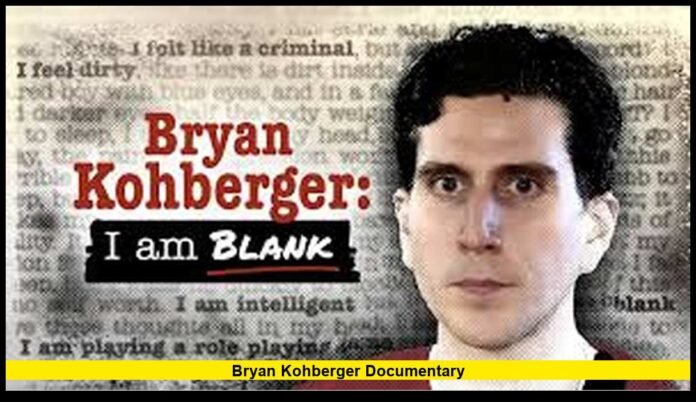

The bryan kohberger documentary trend has surged across streaming platforms as renewed public attention focuses on one of the most disturbing college-town crimes in recent U.S. history. With multiple long-form documentary projects now available, viewers are revisiting the University of Idaho murders with a deeper lens, examining not only what happened but how the case unfolded, how families were affected, and how the crimes continue to shape conversations about violence, justice, and true-crime storytelling.
These documentaries do not revisit rumors or online theories. Instead, they rely on confirmed court outcomes, verified timelines, and firsthand accounts that were unavailable during the early days of the investigation. For many Americans, this marks the first opportunity to understand the full scope of the tragedy from beginning to end.
The Crime That Changed a College Community
In November 2022, four University of Idaho students were found stabbed to death inside an off-campus residence in Moscow, Idaho. The victims were Madison Mogen, Kaylee Goncalves, Xana Kernodle, and Ethan Chapin. The brutality of the crime and the absence of immediate suspects sent shockwaves through the small college town and across the country.
Law enforcement launched a wide-ranging investigation that involved local police, state authorities, and federal support. Weeks later, investigators identified Bryan Christopher Kohberger, a criminology doctoral student at Washington State University, as the primary suspect.
Kohberger was arrested in late December 2022 and charged with four counts of first-degree murder and one count of felony burglary. The case drew immediate national attention due to the severity of the crime and Kohberger’s academic focus on criminal behavior.
How Documentaries Are Reframing the Case
Recent documentaries approach the case with the benefit of hindsight and legal resolution. Instead of focusing solely on shock value, these productions aim to provide structure, context, and emotional clarity.
They explore:
- The timeline of events leading up to the murders
- How investigators narrowed in on the suspect
- The impact of the case on victims’ families
- The psychological and social ripple effects within the community
By organizing verified facts into a coherent narrative, the documentaries help audiences understand how the investigation progressed step by step, without relying on speculation.
Inside Kohberger’s Background and Behavior
One of the most discussed aspects of the documentaries is their examination of Bryan Kohberger’s personal and academic life before the murders.
Viewers learn about his background as a graduate student studying criminology and criminal justice. The documentaries outline his academic interests, classroom interactions, and behavioral patterns that later became points of scrutiny during the investigation.
Former classmates and acquaintances describe interactions that, in hindsight, felt unusual. These accounts are presented as context rather than conclusions, allowing viewers to see how small details gained significance only after the crimes came to light.
The documentaries also explore Kohberger’s actions following the murders, including how his behavior drew attention during the investigation phase.
The Role of Online Attention and Public Scrutiny
Another major theme addressed is the role of online engagement and public speculation. The case became one of the most discussed true-crime topics on social media, forums, and discussion groups.
Documentaries examine how online communities dissected evidence, timelines, and theories in real time. While some online discussions helped keep public attention focused on the victims, others fueled misinformation and emotional strain for families.
These projects highlight the tension between public curiosity and responsible storytelling, raising broader questions about how high-profile criminal cases are consumed in the digital age.
Victims’ Families at the Center
A defining feature of the recent documentaries is their emphasis on the victims rather than the perpetrator. Family members of the slain students share personal memories, grief, and the long-term impact of loss.
These interviews give audiences a clearer understanding of who the victims were beyond headlines — their ambitions, friendships, and relationships. Families also speak about the emotional toll of the investigation, the court process, and living under constant public attention.
By centering these voices, the documentaries aim to restore humanity to a story often reduced to crime statistics and legal filings.
New Perspective From Kohberger’s Family
In parallel with documentary releases, members of Kohberger’s family have offered public reflections that add another dimension to the narrative.
His sister has spoken about his earlier struggles, including experiences with bullying and substance abuse during adolescence. She described how he eventually appeared to turn his life around through education, making the crimes even more difficult for the family to comprehend.
She also stated clearly that the family had no prior knowledge of his involvement in the murders and emphasized that they would have reported concerns had they existed. These statements underscore how acts of extreme violence often devastate multiple families simultaneously.
True-Crime Storytelling Under the Microscope
The popularity of the bryan kohberger documentary projects has reignited debate about the true-crime genre itself.
Supporters argue that these documentaries serve an important role by preserving facts, honoring victims, and educating the public about criminal investigations. Critics worry about oversaturation, desensitization, and the risk of turning real suffering into entertainment.
The documentaries address these concerns directly by slowing the narrative pace, focusing on verified developments, and minimizing dramatization.
Why Public Interest Remains Strong
Even after legal proceedings concluded with Kohberger receiving four consecutive life sentences without the possibility of parole, interest in the case has not faded.
For many viewers, the documentaries provide closure by answering lingering questions about how the crime occurred and how justice was carried out. For others, they prompt reflection on campus safety, mental health, and the warning signs of violent behavior.
The continued interest reflects a broader societal need to understand how such tragedies happen and how they might be prevented in the future.
The Lasting Impact of the Case
The University of Idaho murders permanently altered lives, families, and a community. The documentaries now circulating serve as records of that impact, preserving the facts while allowing space for grief, accountability, and reflection.
They do not offer easy answers or simplified conclusions. Instead, they present a clear, factual narrative that acknowledges complexity, pain, and the enduring consequences of violence.
As more viewers engage with these films, the focus remains on remembrance, understanding, and respect for those whose lives were lost.
What stood out to you most from the documentaries? Join the conversation and stay connected for future updates as the story continues to resonate nationwide.